
Mineral Complexes for Sleep & Stress: A Clear-Eyed Review
Mineral complexes marketed for sleep and stress are among the most purchased supplement categories worldwide. The core ingredients - magnesium, zinc, and sometimes potassium - have genuine physiological roles in nervous system function. The question worth asking honestly is: what does the clinical evidence actually show, and who benefits most?
Mechanism: How Minerals Influence Sleep and Stress
Magnesium is the best-studied mineral in this context. It acts as a natural antagonist at NMDA receptors and supports GABA receptor function - both mechanisms associated with calmer neural signaling and reduced anxiety. Magnesium also regulates the hypothalamic-pituitary-adrenal (HPA) axis, which governs cortisol release in response to stress.
Zinc plays a modulatory role in GABA-A receptor function and is involved in melatonin synthesis pathways. Potassium supports cellular membrane potential and is critical for smooth muscle relaxation, including in blood vessels - relevant to the cardiovascular dimension of stress.
These are real mechanisms, not marketing claims. The question is whether supplementation moves the needle in people with normal or mildly deficient mineral status.
RCT Evidence
A randomized controlled trial by Abbasi et al. (2012) tested magnesium supplementation in elderly adults with insomnia and found improvements in sleep time, sleep efficiency, early morning awakening, and insomnia severity, as well as reductions in serum cortisol concentration compared to placebo. This is among the stronger pieces of evidence supporting magnesium for sleep.
For zinc, the evidence for sleep specifically is more limited, though deficiency is associated with altered sleep architecture in observational research. Combined ZMA preparations (zinc, magnesium, B6) are widely used in sports contexts, with one trial showing modest improvements in sleep quality in football players (Brilla & Conte, 2000).
Effective Dose and Timing
For magnesium, the doses used in sleep RCTs are typically in the range of 250-500 mg elemental magnesium per day taken in the evening. Form matters: magnesium glycinate and magnesium malate are better absorbed than magnesium oxide, which is cheaper but has lower bioavailability.
SELF Potassium Magnesium 120 vegan caps provides a combination of both minerals in a vegan-suitable form. BIOTECHUSA Calcium Zinc Magnesium 100tab combines all three with calcium for broader mineral coverage. 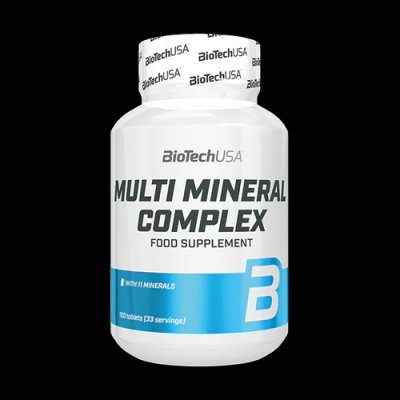 BIOTECHUSA Multi Mineral Complex€14.90 In stock 100tabl is a more comprehensive formulation for those who prefer a single multi-mineral product.
All are available in the mineraalikompleksid category at maxfit.ee. Evening dosing aligns with the body's natural preparation for sleep and may produce the most practical benefit.
Who Benefits
The evidence is strongest for individuals who are deficient or at the low end of normal range for these minerals. Groups at higher risk include:
- Older adults (absorption declines with age)
- Highly active individuals (sweat losses during exercise can be substantial)
- People under chronic stress (cortisol itself depletes magnesium)
- Those with poor dietary quality or restrictive diets
For people with genuinely optimal mineral status consuming varied whole-food diets, the sleep and stress benefit of additional supplementation is less certain.
Honest Verdict
Mineral complexes are not sleep aids in the pharmacological sense. They will not knock you out or sedate you. But for those who are deficient or at the lower end of sufficiency, correcting that gap with a well-formulated mineral complex may genuinely improve sleep quality and stress resilience over weeks of consistent use. The evidence is real, if modest, and the safety profile is excellent at recommended doses.
Do not expect overnight effects. Think of it as correcting a physiological foundation rather than treating a symptom.
FAQ
How long does it take for mineral complexes to improve sleep?
In RCTs showing benefit, improvements typically emerged over 4-8 weeks of consistent daily use. Single-dose effects are unlikely to be noticeable unless you are severely deficient.
Can I take mineral complexes alongside melatonin?
Generally yes - they work through different mechanisms and there is no known pharmacological conflict. Magnesium supports baseline nervous system calmness, while melatonin signals circadian timing. Some people find the combination more effective than either alone.
Is there a risk of taking too much magnesium?
Excessive magnesium from supplements (not food) can cause loose stools or diarrhea, particularly with oxide forms. Sticking to 350-400 mg of elemental magnesium per day from supplements is a conservative and well-tolerated range for most adults.
References
Abbasi, B., Kimiagar, M., Sadeghniiat, K., Shirazi, M. M., Hedayati, M., & Rashidkhani, B. (2012). The effect of magnesium supplementation on primary insomnia in elderly: a double-blind placebo-controlled clinical trial. Journal of Research in Medical Sciences, 17(12), 1161-1169. https://pubmed.ncbi.nlm.nih.gov/23853635/
Brilla, L. R., & Conte, V. (2000). Effects of a novel zinc-magnesium formulation on hormones and strength. Journal of Exercise Physiology Online, 3(4), 26-36.



