Mineral Complexes Side Effects & Safety: What to Know
Mineral complexes — products combining two or more essential minerals like magnesium, zinc, calcium, and potassium — are among the most widely used supplements in sports nutrition and general health. When used appropriately, they fill real dietary gaps. But mineral complexes safety requires careful thought because excess intake of individual minerals can cause harm, and the minerals in a complex can interact with each other and with medications.
Common Side Effects
The most frequently reported side effects of multi-mineral supplements are gastrointestinal:
- Nausea and stomach upset: Common with minerals like magnesium, iron, and zinc, especially on an empty stomach.
- Diarrhoea or loose stools: Magnesium (particularly oxide forms) and high-dose zinc can have a laxative effect.
- Constipation: Calcium and iron supplements, in contrast, may slow bowel motility.
- Metallic aftertaste: Zinc and iron supplements often produce this.
These effects are generally dose-related and can be reduced by taking the supplement with food and choosing well-absorbed mineral forms (chelates, citrates, glycinates).
Rare but Notable Effects
- Zinc toxicity: Chronically elevated zinc intake can suppress copper absorption, potentially causing copper deficiency anaemia and neurological symptoms (Willis et al., 2005). This is relevant when zinc is taken separately on top of a multi-mineral complex.
- Calcium excess: Very high calcium intake over time has been associated with kidney stone formation and, in some studies, with cardiovascular effects at pharmacological doses.
- Magnesium excess (hypermagnesaemia): Rare in people with normal kidney function, but a concern in individuals with kidney disease.
Upper Safe Limits
Regulatory tolerable upper intake levels (ULs) have been established for individual minerals. Key values relevant to multi-mineral supplements include:
- Zinc: tolerable UL for adults is around 40 mg/day from all sources
- Magnesium from supplements: tolerable UL approximately 350 mg/day (supplemental; food magnesium is not included in this limit)
- Calcium: tolerable UL approximately 2500 mg/day from all sources
Multi-mineral complexes typically deliver moderate amounts of each mineral well within these limits. Problems arise when a complex is stacked on top of other mineral-containing products (other supplements, fortified foods).
Drug and Nutrient Interactions
- Antibiotics (quinolones, tetracyclines): Minerals like calcium, magnesium, and zinc can bind to and significantly reduce the absorption of these antibiotics. Separate by at least two hours.
- Thyroid medications (levothyroxine): Calcium and magnesium can reduce absorption. Take thyroid medication on an empty stomach, and take minerals at a different time.
- Bisphosphonates (for osteoporosis): Calcium and magnesium interfere with bisphosphonate absorption.
- Zinc and copper: High zinc intake can reduce copper absorption (Willis et al., 2005). Multi-mineral products with zinc should ideally include a small amount of copper.
Who Should Be Cautious
- People with kidney disease: Impaired ability to excrete minerals means toxicity risk is elevated for magnesium, potassium, and calcium.
- Anyone already taking single-mineral supplements: Total mineral intake can exceed ULs when layering products.
- Individuals on multiple prescription medications: Due to the broad interaction potential of minerals with drug absorption.
- Haemochromatosis (iron overload disorder): Avoid iron-containing complexes.
Quality and Contamination
The form of mineral matters. Chelated forms (bisglycinate, citrate, malate) generally have higher bioavailability than inorganic oxides. Look for third-party tested products and check that the label lists elemental mineral content per serving — not just the total weight of the salt.
At maxfit.ee you can find well-formulated multi-mineral options including SELF Potassium Magnesium 120 vegan caps, BIOTECHUSA Calcium Zinc Magnesium 100tab, and 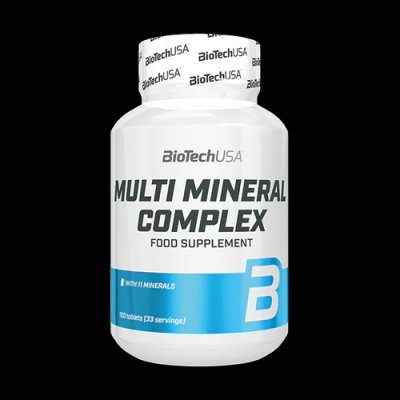 BIOTECHUSA Multi Mineral Complex€14.90 In stock 100tabl.
See the full range at maxfit.ee/en/category/mineraalikompleksid.
Summary Table
| Consideration | Detail |
|---|---|
| Common side effects | GI upset, diarrhoea, constipation |
| Key upper limits | Zinc ~40 mg/day; Mg supplements ~350 mg/day |
| Key interactions | Antibiotics, thyroid meds, bisphosphonates |
| Who should be cautious | Kidney disease, iron overload, polypharmacy |
| Best practice | Take with food; separate from medications |
FAQ
Can I take a mineral complex every day?
For most healthy adults, a well-formulated multi-mineral complex at recommended serving sizes is safe for daily use. The key is to account for minerals from food and other supplements when calculating total daily intake to avoid exceeding upper limits.
Why does a mineral supplement cause nausea?
Minerals taken on an empty stomach — especially magnesium, zinc, and iron — can irritate the stomach lining and stimulate gastric acid secretion, leading to nausea. Always take mineral complexes with food to reduce this risk.
Are organic (chelated) forms better?
Chelated minerals (amino acid chelates, citrates, glycinates) are generally associated with higher bioavailability and gentler gastrointestinal tolerability compared to inorganic forms like oxides and sulphates, though individual response varies.
References
Willis, M. S., Monaghan, S. A., Miller, M. L., McKenna, R. W., Perkins, W. D., Levinson, B. S., Bhushan, V., Kroft, S. H. (2005). Zinc-induced copper deficiency: a report of three cases initially recognized on bone marrow examination. American Journal of Clinical Pathology, 123(1), 125–131. https://pubmed.ncbi.nlm.nih.gov/15762288/
Rude, R. K., Singer, F. R., Gruber, H. E. (2009). Skeletal and hormonal effects of magnesium deficiency. Journal of the American College of Nutrition, 28(2), 131–141. https://pubmed.ncbi.nlm.nih.gov/19828898/
King, J. C., Cousins, R. J. (2006). Zinc. In Shils M. E. et al. (Eds.), Modern Nutrition in Health and Disease (10th ed.). Lippincott Williams and Wilkins. — Cited from: Solomons, N. W. (2001). Dietary sources of zinc and factors affecting its bioavailability. Food and Nutrition Bulletin, 22(2), 138–154.



