
Mineral Complexes: Latest Research & Evidence Update
Mineral complexes — multi-mineral supplements combining two or more inorganic micronutrients in a single product — have long been a staple of general health and sports nutrition. Recent years have produced meaningful new data on several key minerals, shifted some consensus positions, and left other questions firmly open. This update summarises what the evidence actually says.
What Recent Trials Show
Magnesium
Magnesium remains one of the most-studied minerals. A 2021 meta-analysis of randomised controlled trials found that magnesium supplementation significantly reduced fasting blood glucose concentrations in people with type 2 diabetes or at risk of it (Veronese et al., 2021). For athletes and active adults, a separate line of research indicates magnesium may support muscle recovery and reduce markers of exercise-induced inflammation, though effect sizes vary by form (glycinate and malate show greater bioavailability than oxide).
Zinc
Zinc's role in immune function is well established. What recent research has clarified is the dose-response relationship: a systematic review found that zinc supplementation at doses above the recommended dietary allowance did not confer additional immune benefit and may impair copper absorption at chronic high intakes (Gammoh & Rink, 2017). This finding has practical implications for multi-mineral formulas that stack zinc at high doses.
Calcium
The calcium story has grown more nuanced. Large cohort analyses raised concerns that supplemental calcium (rather than dietary calcium) may be associated with cardiovascular risk in some populations, though the evidence is inconsistent and the absolute risk small. Current guidance leans toward meeting calcium needs through food first and using supplements only when diet falls short.
Shifts in Consensus
The most notable shift in recent years concerns form matters more than most people assumed. Inorganic forms (oxides, carbonates) have consistently lower bioavailability than organic chelates (glycinates, citrates, malates) in head-to-head absorption studies. Products that list magnesium oxide as the primary form may deliver substantially less elemental mineral than the label suggests once absorption is accounted for.
A second shift: the interaction between minerals is increasingly recognised as clinically important. High-dose calcium can reduce zinc absorption; high-dose zinc can deplete copper; iron and calcium compete for the same transporter. Well-formulated mineral complexes now increasingly separate competing minerals (for example, calcium and magnesium may be best taken at different times) or use forms and doses that minimise interference.
Still-Open Questions
Several questions remain unresolved by current data:
- Optimal dosing for athletes: most RCTs use sedentary or clinical populations; whether athletes need higher mineral intakes remains debated.
- Long-term safety of chronic combined supplementation: most trials run 8 to 24 weeks; decade-scale data are sparse.
- Synergistic versus additive effects: does combining several minerals in one product produce outcomes better than each alone, or simply additive? The evidence is thin.
What It Means Practically
For most healthy adults eating a varied diet, a foundational mineral complex primarily addresses common shortfalls: magnesium (widely under-consumed in Western diets), zinc (risk group: vegetarians, heavy exercisers), and occasionally potassium. Calcium supplementation should be selective.
Choosing a product with chelated or organic mineral forms is supported by bioavailability data. SELF Potassium Magnesium 120 vegan caps combines two commonly depleted minerals in a vegan-friendly format. BIOTECHUSA Calcium Zinc Magnesium 100tab and 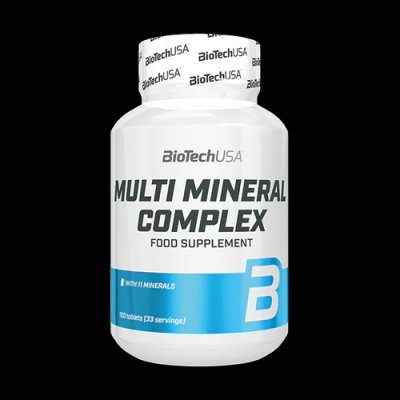 BIOTECHUSA Multi Mineral Complex€14.90 In stock 100tabl are broader-spectrum options available at maxfit.ee.
Splitting a combined complex across two daily doses — morning and evening — can also reduce competitive inhibition between minerals.
Bottom Line
Mineral complexes remain a rational supplement choice for bridging common dietary gaps, particularly for magnesium and zinc. Recent research has raised the bar on formulation quality: form, dose, and mineral interactions all matter. Choose products using bioavailable chelated forms, avoid megadosing individual minerals without reason, and prioritise food as the primary mineral source. Browse the mineral complexes category at maxfit.ee for current in-stock options.
References
Veronese, N., Pizzol, D., Demurtas, J., Smith, L., & Rabito, G. (2021). Effect of magnesium supplementation on glucose metabolism in people with or at risk of diabetes: a systematic review and meta-analysis of double-blind randomized controlled trials. European Journal of Nutrition, 60(5), 2521-2533.
Gammoh, N. Z., & Rink, L. (2017). Zinc in infection and inflammation. Nutrients, 9(6), 624. https://pubmed.ncbi.nlm.nih.gov/28629136/
FAQ
Are mineral complexes better than single-mineral supplements?
It depends on your shortfall. If you are deficient in only one mineral, a single-mineral product allows precise dosing. Mineral complexes are convenient for addressing multiple common gaps simultaneously, but watch for forms and doses that may interfere with each other.
Which mineral form is most bioavailable?
Organic chelates (glycinates, malates, citrates) generally outperform inorganic forms (oxides, carbonates) in absorption studies. For magnesium, glycinate and malate are well supported.
Can you take a mineral complex with food?
Yes, and for most minerals food improves tolerance and has minimal effect on absorption. The main exception is iron, which is better absorbed on an empty stomach but causes nausea for many people, making the trade-off personal.



