Mineral Complexes Myths vs Facts
Mineral complexes — products combining several minerals in a single tablet or capsule — are among the most widely marketed supplements. Claims range from immune support and energy to bone health and hormonal balance. But between marketing language and scientific evidence lies a gap that is worth examining. This article takes five common myths about mineral complexes and matches them against what the evidence actually shows.
Common Myths Examined
Myth 1: A Single Multi-Mineral Complex Covers All Your Mineral Needs
Partially true, with important caveats. Multi-mineral products typically include calcium, magnesium, zinc, iron, selenium, and sometimes trace elements like copper, manganese, and chromium. However, individual dose amounts are often lower than what monoproduct supplements provide.
For most healthy adults with a varied diet, a multi-mineral complex can bridge minor dietary gaps. Where it falls short: people with clinically confirmed deficiency in a single mineral (e.g. severe iron deficiency anaemia) typically need much higher doses of that individual mineral than a multi-mineral can provide — often needing a dedicated supplement.
Myth 2: More Minerals in One Product Always Means Better Absorption
False. Several minerals compete for the same intestinal transport proteins. Calcium and iron are the best-documented example: calcium inhibits non-haem iron absorption when co-ingested (Cook et al., 1991). Zinc and copper compete similarly. A product delivering calcium and iron in the same dose at significant amounts creates a net absorption compromise for both.
Well-formulated multi-mineral products separate these competing pairs or use chelated forms (bisglycinate, gluconate) that are less subject to competitive inhibition. This is why product quality varies significantly — ingredient form matters as much as dose.
Myth 3: Chelated Minerals Are Always Markedly Better
Mostly true, but context-dependent. Chelated minerals (amino acid chelates, bisglycinate forms) generally show better bioavailability than inorganic salts (oxide, sulphate) in controlled studies. Magnesium bisglycinate vs magnesium oxide is a well-studied example. However, the magnitude of the bioavailability advantage varies considerably between minerals and study conditions. For some minerals (e.g. selenium as selenomethionine vs selenite), the difference is large and clinically meaningful; for others it is modest.
At typical supplemental doses, the practical difference in clinical outcomes between a chelated and a non-chelated form may be small if the dose is substantially higher in the cheaper form — total elemental mineral dose matters alongside bioavailability.
Myth 4: Mineral Complexes Can Reverse Fatigue and Low Energy
Depends on the cause. Fatigue has many causes — poor sleep, overtraining, stress, depression, viral illness, and nutritional deficiency being among them. If fatigue is caused by iron deficiency anaemia, correcting iron levels will improve energy substantially. If fatigue has non-nutritional causes, supplementing minerals will not correct it.
Marketing language implying that any mineral complex will revitalise energy is misleading. The benefit is specific to those who are genuinely deficient in a mineral relevant to energy metabolism (iron, magnesium, iodine — all needed for ATP production and mitochondrial function). Testing before supplementing is the sensible approach.
Myth 5: Once You Take a Mineral Complex, Your Dietary Choices Don't Matter
False. Mineral supplements are additive to diet, not replacements for it. The bioavailability of minerals from whole foods is often superior to supplements — haem iron from meat is absorbed at roughly twice the rate of non-haem iron from supplements. Phytonutrients, fibre, and food matrix effects in whole foods influence mineral metabolism in ways that no supplement can replicate. A mineral complex is best used as a top-up for a diet that is mostly adequate, not as a license to eat poorly.
What the Evidence Actually Shows
For most healthy adults with a genuinely varied diet:
- Magnesium is the mineral most commonly suboptimal in European populations (Vormann, 2003), and a targeted magnesium supplement often makes more sense than a broad complex
- Zinc and selenium deficiency risk is meaningful in Northern and Eastern Europe
- Iron should only be supplemented after documented deficiency
- Broad-spectrum mineral complexes like SELF Potassium Magnesium 120 vegan caps, BIOTECHUSA Calcium Zinc Magnesium 100tab, and
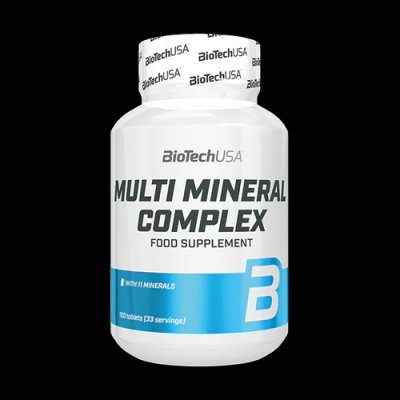 BIOTECHUSA Multi Mineral Complex€14.90 In stock 100tabl (available at maxfit.ee/et/category/mineraalikompleksid) serve best as general insurance and are appropriate for those who cannot individualise their supplement stack
Grey Areas
- Timing and meal composition dramatically affect mineral absorption — taking a mineral complex with a high-phytate, high-fibre meal reduces bioavailability noticeably for some minerals
- Upper tolerable limits: multi-mineral products rarely risk exceeding upper limits for individual minerals, but combined intake from fortified foods + diet + supplement should be tracked for copper, vitamin D, and selenium
Bottom Line
Mineral complexes are useful, safe, and practical. They are most appropriate as dietary insurance for people who eat well but want a safety net for subclinical gaps. They are not replacements for food, do not overcome absorption competition from poorly formulated single-pill solutions, and do not correct large clinical deficiencies on their own. Choose chelated forms where possible, take with food, separate from medications, and address confirmed deficiencies with targeted monoproduct supplements at therapeutic doses.
References
Cook, J. D., Dassenko, S. A., & Whittaker, P. (1991). Calcium supplementation: effect on iron absorption. American Journal of Clinical Nutrition, 53(1), 106–111. https://pubmed.ncbi.nlm.nih.gov/1984334/
Vormann, J. (2003). Magnesium: nutrition and metabolism. Molecular Aspects of Medicine, 24(1–3), 27–37. https://pubmed.ncbi.nlm.nih.gov/12537987/
Hunt, J. R. (2003). Bioavailability of iron, zinc, and other trace minerals from vegetarian diets. American Journal of Clinical Nutrition, 78(3 Suppl), 633S–639S.
FAQ
Is a multi-mineral complex or individual mineral supplements better?
It depends on your situation. For general dietary insurance, a multi-mineral complex is practical and cost-effective. For confirmed single-mineral deficiency, a dedicated high-dose supplement of that mineral is usually needed. Both approaches can complement each other.
Can you take a mineral complex every day?
Yes, for most people, multi-mineral supplements formulated at typical doses are safe for daily use. Avoid products that provide iron in significant amounts unless you have confirmed iron deficiency, as excess iron accumulates in the body.
Do I need to take mineral supplements with food?
Yes — taking minerals with food generally improves tolerance and, for some minerals like calcium, also improves absorption by stimulating stomach acid. Separate from medications by at least 1–2 hours.



