
Is Long-Term Mineral Complexes Use Safe?
Mineral complexes — products combining multiple minerals such as calcium, magnesium, zinc, potassium, selenium, and others in a single formula — are among the most widely used supplements globally. Their appeal is practical: address potential dietary gaps in multiple minerals at once. But the question of whether long-term use is safe, and whether any minerals in typical formulas deserve monitoring, is worth answering carefully.
What Long-Term Studies Show
The safety profile of multi-mineral supplementation at typical dietary-support doses is generally reassuring. Large population studies and epidemiological data do not show adverse health outcomes from long-term use of mineral complexes containing minerals at or near the recommended daily intake levels.
Where the evidence becomes more nuanced is at higher doses. The case of selenium is instructive: selenium has a narrow safety window, and long-term supplementation above the tolerable upper level is associated with increased risk of type 2 diabetes in some studies (Stranges et al., 2007). Most quality mineral complex formulas stay well below this upper limit, but it illustrates why dose matters.
Zinc is another mineral where chronic excess has real consequences — long-term high-dose zinc supplementation can deplete copper by competitive inhibition, potentially causing neurological complications. Again, the doses in typical multi-mineral products are generally within safe ranges, but awareness matters.
For magnesium, potassium, and calcium at supplemental doses — the minerals most commonly combined in complex formulas — the long-term safety data across multiple studies is good, provided total intake from all sources stays within tolerable limits.
Upper Safe Limits Over Time
Each mineral has its own tolerable upper intake level. In a multi-mineral complex, the total intake from the supplement plus diet determines whether limits are being approached. This is the key arithmetic to run for long-term users:
- Calcium (diet + supplement combined should generally stay below 2,500 mg/day for adults).
- Zinc (supplemental zinc above the tolerable upper limit over months disrupts copper status).
- Selenium (the tolerable upper level is low relative to potency — well-formulated products use modest amounts).
- Iron (some multi-mineral formulas include iron; postmenopausal women and adult men typically do not need additional iron and should check whether a formula includes it).
For most healthy adults using a quality formula at the recommended dose, staying within limits is not a concern — the design of responsible products anticipates this. The risk appears most in users who stack multiple supplements without accounting for cumulative mineral intake.
Do You Need to Cycle?
For the majority of minerals in typical complex formulas, cycling is not necessary from a physiological standpoint. Water-soluble minerals (like magnesium and potassium) are excreted relatively efficiently when excess is present. Fat-soluble minerals or those with accumulation potential (iron, selenium, some forms of calcium) warrant more attention to cumulative dose but not necessarily cycling.
The rationale for taking breaks is practical rather than evidence-based: reassessing whether you still need supplementation, confirming with periodic blood work, or simply a dietary review that finds gaps are now covered by food. These are good practices — but not based on a known harm from continuous use at labelled doses.
SELF Potassium Magnesium 120 vegan caps combines two commonly depleted minerals — practical for those whose diet is low in both. BIOTECHUSA Calcium Zinc Magnesium 100tab covers the classic mineral triad in a single tablet. 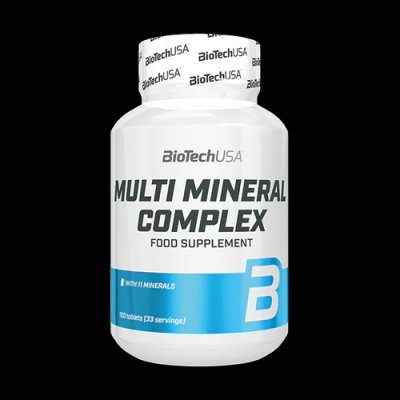 BIOTECHUSA Multi Mineral Complex€14.90 In stock 100tabl is a broader-spectrum formula for those wanting more comprehensive coverage.
Browse mineral complex options at maxfit.ee/et/category/mineraalikompleksid.
Monitoring
For healthy adults using mineral complexes at standard doses without stacking multiple high-dose mineral supplements, routine monitoring is not strictly necessary. However, periodic blood tests — every one to two years — that include serum levels of key minerals (zinc, selenium, ferritin if iron is in the formula) and a basic metabolic panel are prudent for anyone on long-term supplementation regimens.
Signs of possible excess for specific minerals worth watching:
- Zinc excess: Reduced sense of taste or smell, nausea, reduced immune function paradoxically
- Selenium excess: Hair loss, brittle nails, garlic-smelling breath at toxic levels
- Magnesium excess: Diarrhoea is the early signal in otherwise healthy people (kidneys excrete excess very effectively)
These signs of excess typically appear only at doses well above what most multi-mineral formulas provide.
Honest Verdict
Mineral complexes at typical supplemental doses are well tolerated long-term in healthy adults based on available evidence. The safety concern is not with the category itself but with cumulative intake — specifically if you are also eating a mineral-fortified diet and taking multiple individual mineral supplements alongside a complex. In that scenario, certain minerals (selenium, zinc, iron, calcium) can reach problematic levels.
Used sensibly — as a dietary gap-filler at the labelled dose, without stacking excessive amounts of individual minerals on top — mineral complexes are a practical and safe long-term supplement category.
FAQ
Should I take a mineral complex with or without food?
Most minerals absorb better with food, and taking minerals with a meal also reduces the risk of gastrointestinal side effects. Calcium carbonate requires stomach acid to dissolve, so food-triggered acid production is beneficial. The main exception: iron should be separated from calcium and dairy by at least two hours.
Is it safe to take a mineral complex every day for years?
For most adults at a single labelled dose, yes. The concern is whether total mineral intake from all sources exceeds tolerable upper levels. Periodic dietary review and occasional blood work are prudent additions to long-term use.
Do I need all the minerals in a complex, or should I take individual minerals?
This depends on your actual dietary gaps. Targeted individual mineral supplementation based on confirmed deficiency is more precise, but a broad-spectrum complex is practical when multiple minerals may be low and testing is not available. Not everyone needs every mineral in a formula, but the doses in most quality complexes are low enough that including unnecessary minerals does not cause harm.
References
Stranges, S., Marshall, J. R., Natarajan, R., Donahue, R. P., Trevisan, M., Combs, G. F., & Reid, M. E. (2007). Effects of long-term selenium supplementation on the incidence of type 2 diabetes. Annals of Internal Medicine, 147(4), 217-223. https://pubmed.ncbi.nlm.nih.gov/17620655/
Reid, I. R., Bristow, S. M., & Bolland, M. J. (2015). Calcium supplements: benefits and risks. Journal of Internal Medicine, 278(4), 354-368. https://pubmed.ncbi.nlm.nih.gov/26174589/



