Mineral Complexes for Women: Benefits and Considerations
Minerals do not get the attention of protein or vitamins, but they underpin nearly every physiological process — from bone density to hormone synthesis, immune function, and energy production. Women face specific mineral challenges that shift across life stages: menstruation increases iron requirements, pregnancy dramatically raises demands for several minerals simultaneously, and the hormonal changes of menopause alter bone mineral density. A well-chosen mineral complex can help fill gaps, but knowing what to look for matters.
Why Women May Need a Mineral Complex
Dietary surveys consistently show that many women in Europe and North America do not reach recommended intakes for iron, magnesium, calcium, and iodine through diet alone. Time pressure, vegetarian or restricted diets, and life-stage changes all contribute.
The case for targeted supplementation is strongest where dietary gaps are well documented. A broad mineral complex provides a practical way to address multiple gaps in one product, particularly for women who do not track individual nutrients.
Hormonal and Life-Stage Notes
Menstruating women
Regular blood loss during menstruation means menstruating women have higher iron requirements than men of the same age. Iron deficiency is the most common nutritional deficiency globally and particularly prevalent among women of reproductive age. A study of European women found that a significant proportion had depleted iron stores even without frank anaemia (Milman et al., 2012).
Magnesium may also play a role in premenstrual symptoms; some small trials have suggested that magnesium supplementation modestly reduced premenstrual complaints, though evidence remains inconclusive.
Peri- and post-menopause
Falling oestrogen accelerates bone mineral loss. Calcium and vitamin D are the cornerstone interventions, but magnesium is also involved in bone metabolism. A meta-analysis of calcium supplementation found benefits for bone density in postmenopausal women (Tai et al., 2015). Note: calcium supplementation is most effective alongside adequate vitamin D; many mineral complexes now include both.
Athletes and highly active women
Sweating increases losses of magnesium, sodium, potassium, and zinc. Women who train intensively may need more than sedentary women, particularly for magnesium, which is widely used in muscle and nerve function.
Dose Considerations
Dose requirements vary substantially by life stage, dietary baseline, and health status. No single dose fits all women. General principles:
- Iron: Needs are higher during menstruation; blood testing for ferritin before and during supplementation is strongly advisable to avoid over-supplementation.
- Magnesium: Excess magnesium from food alone is unlikely to cause harm; from supplements, high doses can cause loose stools.
- Calcium: Very high doses — substantially above dietary reference values — are associated with potential cardiovascular concerns; staying within recommended ranges is prudent.
- Zinc: Important for immune function and skin health; doses above the tolerable upper intake level for extended periods can suppress copper absorption.
Pregnancy and Safety Notes
Pregnancy dramatically raises requirements for folate, iron, iodine, and several other micronutrients. Standard multi-mineral complexes are not formulated for pregnancy and should not replace dedicated prenatal supplements. Vitamin A (retinol) in particular can be teratogenic in high doses; women who may become pregnant should avoid supplements with high preformed retinol content.
If in doubt about what is appropriate during pregnancy, consult a midwife or physician. This article is not a substitute for medical advice in pregnancy.
Bottom Line
For most non-pregnant women who eat a varied but imperfect diet, a mineral complex provides a low-risk way to address common gaps — particularly for magnesium and zinc. SELF Potassium Magnesium 120 vegan caps combines two frequently deficient minerals in one product and is suitable for active women. BIOTECHUSA Calcium Zinc Magnesium 100tab covers three key minerals together. 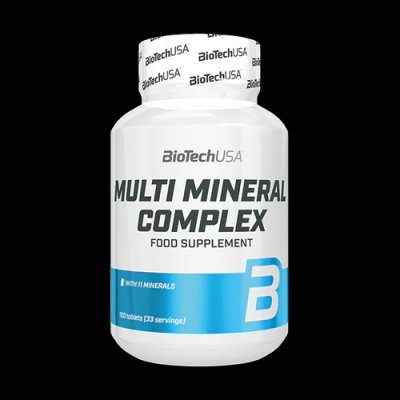 BIOTECHUSA Multi Mineral Complex€14.90 In stock 100tabl offers a broader spectrum. All are available at maxfit.ee. Iron should ideally be assessed separately before supplementing, rather than included in a general complex at levels that may not match individual needs.
FAQ
Do I need a women-specific mineral supplement, or is a general one fine?
Women-specific formulas typically have higher iron and sometimes lower calcium than men's versions, reflecting different requirements. However, a general mineral complex with appropriate iron levels can work fine if it matches your needs. The most important step is checking what you actually need rather than assuming a gender-labelled product is automatically correct for you.
Can I take a mineral complex at the same time as my other supplements?
Some interactions are worth noting: calcium and iron compete for absorption when taken together, and zinc and copper compete. If taking several minerals separately, spacing them across the day reduces potential competition. A combined formula is formulated with this in mind, but very high-dose iron should still be taken separately from calcium.
Is magnesium really helpful for sleep and muscle cramps in women?
Magnesium has some evidence for both applications. Low magnesium status is associated with sleep disruption in population studies, and magnesium supplementation has shown modest effects on self-reported sleep quality in some trials. For muscle cramps, the evidence is mixed — some trials show benefit, others do not. The safety profile of supplemental magnesium within recommended amounts is good.
References
Milman, N., Taylor, C. L., Merkel, J., & Feingold, K. R. (2012). Iron status in Danish women, 1984-2012: a cohort study. European Journal of Haematology, 90(6), 517-523.
Tai, V., Leung, W., Grey, A., Reid, I. R., & Bolland, M. J. (2015). Calcium intake and bone mineral density: systematic review and meta-analysis. BMJ, 351, h4183. https://pubmed.ncbi.nlm.nih.gov/26420598/
Prince, R. L., Austin, N., Devine, A., Dick, I. M., Bruce, D., & Zhu, K. (2008). Effects of ergocalciferol added to calcium on the risk of falls in elderly high-risk women. Archives of Internal Medicine, 168(1), 103-108. https://pubmed.ncbi.nlm.nih.gov/18195202/



