Mineral Complexes After 50: What Changes and Why It Matters
After the age of 50, the body's relationship with minerals changes in several important ways. Absorption efficiency declines for some minerals, renal excretion patterns shift, and physiological requirements for certain nutrients increase while others should be moderated. Understanding these changes is essential for choosing a mineral complex that genuinely supports health in this life stage — rather than one that provides unnecessary or even counterproductive doses.
Age-Related Changes in Mineral Needs
Calcium and vitamin D
Bone density reaches its peak in the third decade of life and declines thereafter. For women, the rate of bone loss accelerates sharply after menopause due to declining oestrogen. Adequate calcium intake alongside vitamin D (which regulates calcium absorption) is important — though increasingly the evidence suggests that calcium supplements alone, without vitamin D co-supplementation, have limited benefit for bone density (Tang et al., 2007). Moreover, recent evidence has raised questions about calcium supplementation and cardiovascular risk; this is an evolving debate and underscores the importance of prioritising calcium from food first.
Magnesium
Magnesium deficiency is common in older adults due to reduced dietary intake, decreased intestinal absorption, and increased renal losses. Magnesium is involved in over 300 enzymatic reactions including those governing blood pressure regulation, glucose metabolism, and nerve function. Clinical research indicates that magnesium supplementation may modestly reduce blood pressure in hypertensive individuals (Kass et al., 2012). The form of magnesium matters for tolerability: glycinate and malate forms tend to have better GI tolerance than oxide.
Zinc
Zinc is essential for immune function, wound healing, and sensory perception. Dietary surveys consistently show suboptimal zinc intake in older populations, partly due to reduced meat consumption and partly due to age-related changes in absorption. Zinc deficiency is associated with impaired immune response — a significant concern for older adults. However, long-term high-dose zinc (above typical supplement doses) can suppress copper absorption and should be avoided.
Iron (a note of caution)
Unlike many nutrients, iron requirements decline after menopause in women. Most older adults do not need iron supplementation unless blood tests confirm deficiency. Multi-mineral complexes for seniors should generally have low or no iron — high iron in general multiminerals is a red flag for products not formulated specifically for older adults.
What to Look for in a Mineral Complex
For adults over 50, a quality mineral complex should:
- Include magnesium in a bioavailable form (glycinate, malate, or citrate rather than oxide)
- Include zinc, but at a moderate dose (10–25 mg) paired with a small amount of copper to prevent depletion
- Avoid high-dose calcium in single-dose supplements — if calcium is included, smaller amounts in multiple doses are preferable
- Be iron-free or very low in iron unless specifically indicated
- List all mineral forms, not just the mineral name
SELF Potassium Magnesium 120 vegan caps, BIOTECHUSA Calcium Zinc Magnesium 100tab, and 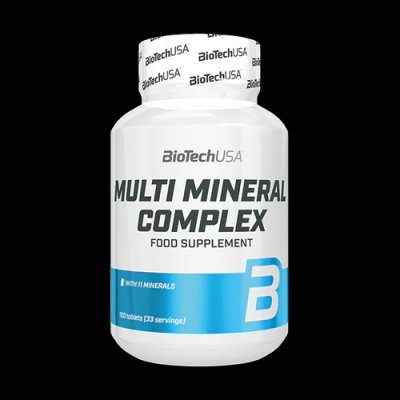 BIOTECHUSA Multi Mineral Complex€14.90 In stock 100tabl are mineral complex options available at maxfit.ee. Browse the full /et/category/mineraalikompleksid range to compare formulas.
Dose and Safety
One of the most common mistakes with mineral supplementation is assuming that more is better. For fat-soluble vitamins (A, D, E, K), excess accumulates. For minerals, excess can have different consequences:
- Excess calcium may impair magnesium and zinc absorption and has been studied in the context of kidney stone risk
- Excess zinc displaces copper and may impair immune function paradoxically
- Excess selenium (which is sometimes included in broad mineral complexes) can cause selenosis at doses modestly above requirements
The general principle: a mineral complex for seniors should aim for coverage of common shortfalls (magnesium, zinc, potassium) at doses grounded in physiological requirements — not for maximising the number of minerals on the label.
Interactions with Medications
Older adults often take multiple prescription medications, and mineral supplements can interact with several:
- Calcium reduces absorption of thyroid hormone (levothyroxine), bisphosphonates (osteoporosis drugs), and certain antibiotics. Timing separation of at least 2 hours is recommended.
- Magnesium can reduce the effectiveness of some antibiotics (fluoroquinolones, tetracyclines). High-dose magnesium with certain blood pressure medications may cause additive lowering of blood pressure.
- Zinc interferes with absorption of some antibiotics. If taking prescription medications, consult your pharmacist about the best timing for mineral supplementation.
When to Supplement
Mineral complex supplementation makes most sense for adults over 50 who:
- Have dietary restrictions that limit food variety
- Follow a plant-based diet with limited dairy and meat
- Have documented low serum magnesium or zinc on laboratory testing
- Are physically active and want to support electrolyte balance and recovery
For those with diverse, balanced diets, targeting only the specific minerals most likely to be deficient (particularly magnesium and zinc) is often a more rational approach than a broad multi-mineral.
FAQ
Are multi-mineral complexes safe to take daily?
For most older adults, a well-formulated multi-mineral complex is safe for daily use. The key is choosing a formula appropriate for your age and sex: general-purpose multiminerals often have high iron, which is inappropriate for most older adults. Look for products labelled for adults or seniors.
Can I take a mineral complex alongside a multivitamin?
Many multivitamins already contain minerals. Taking both a multivitamin and a separate multi-mineral can lead to excessive intakes of certain nutrients. Check the combined totals of each mineral before doubling up.
Does taking minerals with food affect absorption?
For most minerals, taking with food improves tolerability and generally does not significantly reduce absorption. Calcium is an exception — smaller doses (500 mg or less) with food optimise absorption. Magnesium is typically well-absorbed with or without food.
References
Tang, B. M., Eslick, G. D., Nowson, C., Smith, C., & Bensoussan, A. (2007). Use of calcium or calcium in combination with vitamin D supplementation to prevent fractures and bone loss in people aged 50 years and older: a meta-analysis. Lancet, 370(9588), 657-666. https://pubmed.ncbi.nlm.nih.gov/17720017/
Kass, L., Weekes, J., & Carpenter, L. (2012). Effect of magnesium supplementation on blood pressure: a meta-analysis. European Journal of Clinical Nutrition, 66(4), 411-418. https://pubmed.ncbi.nlm.nih.gov/22318649/
Haynes, E. N., Bhattacharya, A., Kuhnell, P., Smith, T., & Gupta, R. (2009). Biomarkers of metal exposure in older adults. Environmental Health Perspectives, 117(12), 1937-1943.



