
Why Mineral Complexes Are a Smart Starting Point for Beginners
If you are just starting out with exercise or supplements, mineral complexes are one of the most sensible and safest first choices. Minerals are essential micronutrients — they participate in hundreds of enzymatic reactions, muscle function, energy production, and bone health. Mineral complexes combine several key minerals into a single product, making daily supplementation straightforward.
What Mineral Complexes Do
Minerals serve multiple core functions in the body:
- Magnesium supports muscle relaxation, energy metabolism, and sleep quality.
- Zinc is required for immune function, testosterone levels, and wound healing.
- Calcium supports bone and tooth strength and is critical for muscle contraction.
- Potassium regulates fluid-electrolyte balance and blood pressure.
Athletes have higher mineral requirements than sedentary individuals because intense training causes mineral losses through sweat (Maughan et al., 2004).
How to Start Taking Mineral Complexes
Beginners are advised to follow simple guidelines:
- Choose a quality product — look for a complex that includes magnesium, zinc, calcium, and potassium.
- Take with food — most mineral complexes absorb better when consumed with a meal.
- Start at the recommended dose — only exceed the manufacturer's dose with medical guidance.
- Stay consistent — building up mineral reserves takes time; most people notice effects after several weeks.
At maxfit.ee you can find SELF Potassium Magnesium 120 vegan caps, BIOTECHUSA Calcium Zinc Magnesium 100tab, and 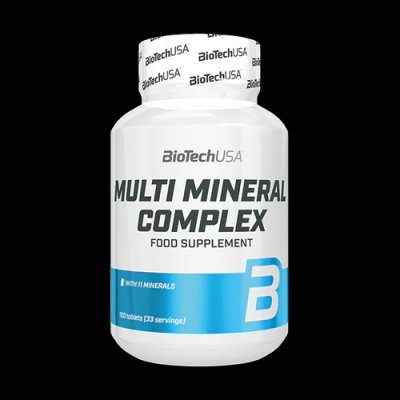 BIOTECHUSA Multi Mineral Complex€14.90 In stock 100tabl — all well suited for beginners.
What to Expect and When
The effects of mineral complexes are not immediate. Most people need 4–8 weeks of regular use before noticing a meaningful difference. Common first changes include:
- Better sleep quality — particularly from magnesium
- Reduced muscle cramps after exercise
- More stable energy levels throughout the day
Important note: a mineral complex complements a balanced diet — it does not replace one.
Common Beginner Mistakes
1. Doubling up without checking overlap. Some multivitamins already contain minerals. Taking two complexes simultaneously may lead to excessive intake, especially for iron and vitamin A.
2. Taking on an empty stomach. Many minerals, particularly iron and zinc, can irritate the digestive tract when taken without food.
3. Taking calcium and iron simultaneously. Calcium reduces iron absorption. If you are taking both, keep them at least two hours apart (Hallberg et al., 1991).
4. Unnecessary iron supplementation. Men and postmenopausal women generally do not need extra iron without a medical indication.
Choosing a Product as a Beginner
When selecting your first mineral complex, consider the following:
| Criterion | What to Look For |
|---|---|
| Mineral form | Chelate or citrate forms absorb better than oxides |
| Serving size | One to two capsules per day is sufficient for beginners |
| Additives | Minimal fillers and artificial colours |
| Brand reliability | Products from certified manufacturers (e.g. BIOTECHUSA, OstroVit, SELF) |
Browse our mineral complexes selection at maxfit.ee.
Summary
Mineral complexes are a safe and practical choice for beginners. Start at a moderate dose, take with food, and be consistent. Most people notice improvements within 4–8 weeks.
FAQ
Are mineral complexes safe for daily use?
Yes, most mineral complexes are designed for daily use at recommended doses. The key is not to exceed the suggested daily amount.
Can I take a mineral complex together with a multivitamin?
Depending on the products, combining them could result in excessive intake of certain nutrients (e.g. vitamin A, iron, zinc). Always check the contents of both products before combining.
What is the best time to take a mineral complex?
Most mineral complexes are best taken with breakfast or lunch. Products containing magnesium also work well in the evening before bed.
References
Maughan, R. J., Shirreffs, S. M., & Leiper, J. B. (2004). Errors in the estimation of hydration status from changes in body mass. Journal of Sports Sciences, 22(6), 559-567. https://pubmed.ncbi.nlm.nih.gov/15768725/
Hallberg, L., Brune, M., & Rossander, L. (1991). Iron absorption in man: ascorbic acid and dose-dependent inhibition by phytate. American Journal of Clinical Nutrition, 53(1), 112-119. https://pubmed.ncbi.nlm.nih.gov/1984335/
Volpe, S. L. (2013). Magnesium and the athlete. Current Sports Medicine Reports, 12(4), 208-213.



