How to Maximize Mineral Complexes Absorption
Buying a quality mineral complex is only half the equation. How much of what you swallow actually reaches the bloodstream depends on timing, form, food combinations, and which other nutrients you take at the same time. This guide explains the key factors that determine mineral absorption and how to optimise them.
What Limits Absorption
Mineral absorption is controlled by a combination of physiological and dietary factors:
Competition between minerals: Minerals often share transport proteins. Calcium and magnesium compete for absorption in the small intestine. Zinc and iron compete for the same transporters. Taking large doses of one can reduce uptake of the other.
Phytates: Found in whole grains, legumes, and seeds, phytic acid binds to minerals (especially zinc, iron, and calcium) and reduces their bioavailability. Soaking, fermenting, or sprouting plant foods reduces phytate content.
Oxalates: Present in spinach, rhubarb, and some other vegetables, oxalic acid binds calcium and reduces its absorption from those specific foods.
Gastric pH: Minerals generally dissolve and absorb best in an acidic environment. People with low stomach acid (including those on proton pump inhibitors) may have reduced mineral absorption.
Vitamin D status: Vitamin D is essential for calcium absorption in the gut. Deficiency in vitamin D reduces calcium absorption efficiency.
Cofactors That Help
Certain micronutrients enhance mineral absorption:
Vitamin C significantly enhances non-haem iron absorption. Taking vitamin C-rich foods or a supplement alongside iron markedly increases uptake.
Vitamin D is required for efficient intestinal calcium absorption and is important for phosphorus metabolism.
Magnesium and zinc tend to complement each other - combined products like BIOTECHUSA Calcium Zinc Magnesium 100tab and 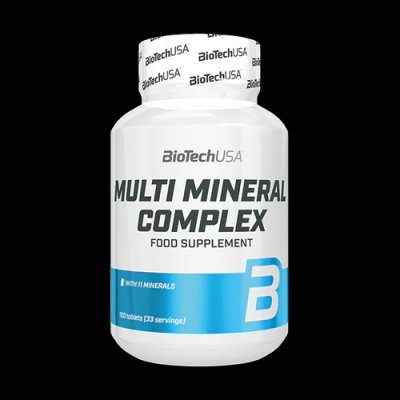 BIOTECHUSA Multi Mineral Complex€14.90 In stock 100tabl are designed with these synergies in mind.
Protein: Certain amino acids (histidine, cysteine, methionine) form complexes with minerals that enhance solubility and absorption. This is why chelated minerals (bound to amino acids) often show better bioavailability than inorganic forms.
Form and Timing Effects
The chemical form of a mineral significantly affects how well it absorbs:
| Mineral | Better-absorbed forms | Less-absorbed forms |
|---|---|---|
| Magnesium | Glycinate, malate, citrate | Oxide |
| Zinc | Picolinate, bisglycinate, gluconate | Oxide |
| Iron | Bisglycinate, gluconate | Ferrous sulphate (effective but more GI side effects) |
| Calcium | Citrate (especially on empty stomach) | Carbonate (needs stomach acid) |
For a multi-mineral complex, look for products that use better-bioavailable forms where possible. SELF Potassium Magnesium 120 vegan caps provides both key electrolyte minerals in a convenient form.
Browse the full mineral complexes range at maxfit.ee.
Timing considerations:
- Calcium carbonate: take with food (needs stomach acid)
- Calcium citrate: can be taken without food
- Magnesium glycinate or malate: well tolerated any time; evening may aid sleep
- Iron: best absorbed on empty stomach but take with food if GI issues arise
- Multi-mineral complexes: most formulated for use with food
Food Pairings
Enhance absorption:
- Take iron alongside citrus juice, kiwi, or bell pepper (vitamin C sources)
- Take calcium at different times from your iron supplement
- Pair fat-soluble minerals (those in lipid-based formulas) with a meal containing healthy fats
Reduce absorption (avoid):
- Do not take iron with coffee, tea, or dairy
- Avoid taking zinc and calcium together in large doses
- Do not take mineral supplements with bran or foods very high in phytates
Practical Tips
-
Split your multi-mineral dose: If your complex is a once-daily product, splitting into morning and evening doses can improve individual mineral uptake because saturable transport mechanisms are not overwhelmed at once.
-
Check for competing supplements: If you take separate calcium, magnesium, zinc, and iron, look at the total daily amounts and whether you are creating unwanted competition.
-
Consider chelated forms: While chelated minerals typically cost more, they often deliver meaningfully better absorption per mg, which can offset the extra cost.
-
Hydration matters: Minerals dissolve in water and are transported in aqueous solution. Adequate hydration supports efficient absorption.
-
Consistency beats perfection: Taking a good mineral complex regularly at a practical time beats the theoretically optimal protocol if the latter is too complicated to maintain.
FAQ
Should I take mineral complexes with or without food?
It depends on the specific minerals. Most multi-mineral products are formulated to be taken with food, which improves tolerability. Calcium citrate is an exception - it absorbs well without food. Iron generally absorbs best without food but GI tolerance is better with food.
Can I take all my supplements - protein shake, multivitamin, and mineral complex - at the same time?
For convenience, this is often fine. However, very high doses of calcium from a protein shake or dairy can compete with iron absorption. If you supplement iron specifically for deficiency, separate it by a couple of hours from your calcium intake.
How do I know if my mineral complex is working?
Blood tests for specific minerals (magnesium, ferritin for iron, serum zinc) are the most reliable measure. Subjective indicators like energy, muscle cramp frequency, or immune resilience are less precise but still informative over time.
References
Hunt, J. R. (2003). Bioavailability of iron, zinc, and other trace minerals from vegetarian diets. American Journal of Clinical Nutrition, 78(3 Suppl), 633S-639S.
Holick, M. F. (2007). Vitamin D deficiency. New England Journal of Medicine, 357(3), 266-281. https://pubmed.ncbi.nlm.nih.gov/17634462/



