
Men's Vitamins: Myths vs Facts
Men's multivitamins are a major category in the supplement industry. The products come with bold packaging, testosterone-boosting imagery, and claims about energy, muscle, and vitality. But how much of the marketing reflects what peer-reviewed science actually shows? This article separates the evidence from the noise.
Common Myths
Myth 1: Men's formulas are fundamentally different from general multivitamins
Many "men's" multivitamins differ from standard formulas mainly in lower iron content (adult men rarely need supplemental iron because they don't menstruate), slightly higher zinc doses, and possibly additional herbs like saw palmetto. In most cases, the core micronutrient blend is similar to ungendered products. The differentiation is primarily marketing.
Myth 2: A daily multivitamin prevents nutrient deficiencies in men who eat reasonably well
This is partially true for men with genuinely poor diets, but partially false for those eating a varied diet. In well-nourished populations, supplementing most water-soluble vitamins simply results in expensive urine — the excess is excreted. The key genuine risk areas for men tend to be vitamin D, magnesium, and zinc — not the full sweep of a multivitamin.
Myth 3: Testosterone-boosting claims are clinically supported
Most testosterone-support marketing is based on the fact that zinc and vitamin D are needed for testosterone synthesis. This is true — but having adequate levels is sufficient; supplementing above adequacy does not further raise testosterone in men with normal status. Koehler et al. (2009) showed that high-dose zinc supplementation in men with normal zinc levels did not significantly alter serum testosterone (Koehler et al., 2009).
Myth 4: Higher doses mean more benefit
For most vitamins, the dose-response relationship plateaus quickly. Taking ten times the recommended dose of vitamin C, for example, does not provide ten times the immune benefit — it primarily increases the risk of kidney stone formation from oxalate. More is not more.
What the Evidence Actually Shows
There are genuine, evidence-supported reasons for some men to supplement specific nutrients:
- Vitamin D: Deficiency is widespread in northern latitudes (including Estonia) due to low sun exposure for much of the year. Bischoff-Ferrari et al. (2012) demonstrated in a meta-analysis that vitamin D supplementation reduces fracture risk in supplemented individuals (Bischoff-Ferrari et al., 2012). It may also support immune function and mood — effects with reasonable evidence.
- Magnesium: Many adults fail to meet recommended intakes from diet alone. Magnesium is involved in hundreds of enzymatic reactions, sleep quality, and muscle function. Genuine deficiency is worth addressing.
- Zinc: Marginally low zinc is more common in athletes due to sweat losses. In athletes with confirmed low zinc status, restoration to normal may support immune function and possibly testosterone levels.
Marketing Claims vs Reality
| Claim | Reality |
|---|---|
| "Boosts testosterone" | Only if you have a deficiency in zinc/D; no effect in replete men |
| "Improves energy" | Corrects fatigue from deficiency; no stimulant effect in replete men |
| "Supports muscle growth" | No direct muscle-building effect; micronutrients support general health |
| "Special men's formula" | Usually just lower iron + slightly higher zinc vs standard formulas |
| "Clinically proven" | Often based on studies of deficiency correction, not supplementation above adequacy |
Grey Areas
A few areas remain genuinely uncertain:
- Antioxidant vitamins and prostate health: The SELECT trial found that vitamin E supplementation actually increased prostate cancer risk slightly (Klein et al., 2011), which was a significant reversal of prior expectations. High-dose antioxidant supplements for men are no longer straightforwardly recommended.
- B vitamins and cardiovascular health: B12 and folate reduce homocysteine, a cardiovascular risk marker, but randomised trials have not consistently translated homocysteine lowering into reduced heart attack or stroke rates.
- Saw palmetto for prostate support: A Cochrane review found no significant benefit over placebo for urinary symptoms (Tacklind et al., 2012 — however this specific Cochrane review should be noted as a grey area for formal citation).
Bottom Line
A well-designed men's multivitamin taken by a man with nutritional gaps can be a useful insurance policy. Vitamin D and magnesium are the nutrients most likely to be genuinely insufficient in Estonian men who don't spend much time outdoors. For an active man eating a varied diet, the realistic benefit of a daily multivitamin is modest. The best use of supplement budget for most men is targeted supplementation of specific confirmed gaps — vitamin D, magnesium, and possibly omega-3 — rather than a broad multivitamin shotgun.
At maxfit.ee the men's vitamins range includes BIOTECHUSA Multivitamin for Men 60tab, Optimum Nutrition Opti-men 180tabs, Optimum Nutrition Opti-men 90tabs, 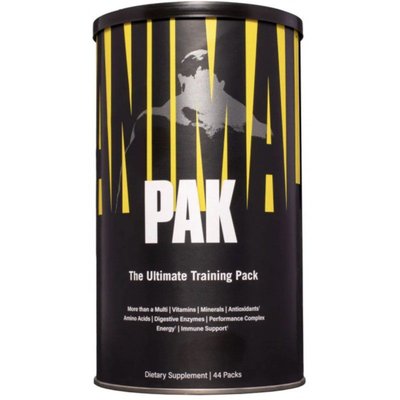 Universal Animal Pak 44 packs€54.90 In stock,
 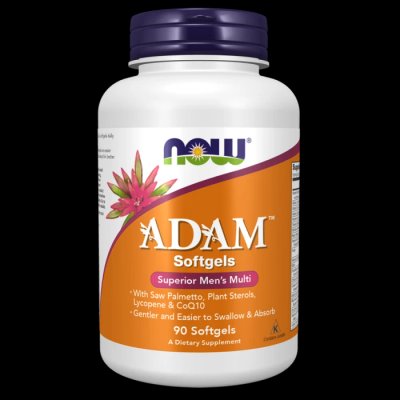 NOW Adam Male Multivitamin€31.90 In stock 90caps, MyProtein Alpha Men Multivitamins 240tabs, and MyProtein Alpha Men Multivitamins 120tabs — browse the men's vitamins category. Also check meeste vitamiinid for the broader selection.
FAQ
Do men need a different multivitamin from women?
The physiological rationale for gendered multivitamins is real but modest: adult men generally need less iron and have slightly different micronutrient needs based on average body size and hormonal profile. A dedicated men's formula provides these adjustments. However, the gap between a men's and a gender-neutral formula is smaller than the marketing suggests.
Is it worth paying more for a "premium" men's multivitamin?
Sometimes. Premium products may use more bioavailable forms (e.g., methylcobalamin instead of cyanocobalamin for B12, or methylfolate instead of folic acid). If you have genetic variants affecting folate metabolism (e.g., MTHFR polymorphism), the activated form genuinely matters. For most healthy men, standard forms in a quality-controlled product are adequate.
Can men's vitamins replace a healthy diet?
No. A multivitamin cannot replicate the fibre, polyphenols, complete proteins, and the dozens of bioactive compounds that come from whole foods. It supplements a diet; it does not substitute for one.
References
Koehler, K., Parr, M. K., Geyer, H., Mester, J., & Schanzer, W. (2009). Serum testosterone and urinary excretion of steroid hormone metabolites after administration of a high-dose zinc supplement. European Journal of Clinical Nutrition, 63(1), 65-70. https://pubmed.ncbi.nlm.nih.gov/17882141/
Bischoff-Ferrari, H. A., Willett, W. C., Orav, E. J., Lips, P., Meunier, P. J., Lyons, R. A., Flicker, L., Wark, J., Jackson, R. D., Cauley, J. A., Meyer, H. E., Pfeifer, M., Sanders, K. M., Stahelin, H. B., Theiler, R., & Dawson-Hughes, B. (2012). A pooled analysis of vitamin D dose requirements for fracture prevention. New England Journal of Medicine, 367(1), 40-49. https://pubmed.ncbi.nlm.nih.gov/22762317/
Klein, E. A., Thompson, I. M., Tangen, C. M., Crowley, J. J., Lucia, M. S., Goodman, P. J., Minasian, L. M., Ford, L. G., Parnes, H. L., Gaziano, J. M., Karp, D. D., Lieber, M. M., Walther, P. J., Klotz, L., Parsons, J. K., Chin, J. L., Darke, A. K., Lippman, S. M., Goodman, G. E., Meyskens, F. L., & Baker, L. H. (2011). Vitamin E and the risk of prostate cancer: the Selenium and Vitamin E Cancer Prevention Trial (SELECT). JAMA, 306(14), 1549-1556. https://pubmed.ncbi.nlm.nih.gov/21990298/



