
Is Long-Term Men's Vitamins Use Safe?
Multivitamins for men are among the most widely consumed supplements worldwide. The question of whether long-term men's vitamins use carries risks is legitimate — and the answer depends heavily on which nutrients are involved, at what doses, and whether you are already replete.
What Long-Term Studies Show
Large observational studies and randomised controlled trials have examined long-term multivitamin use over periods of a decade or more. The Physicians' Health Study II, an RCT with over 14,000 male physicians, found that daily multivitamin use over a mean 11.2 years was not associated with any significant increase in adverse health events (Gaziano et al., 2012). A separate analysis from the same cohort reported a modest reduction in total cancer incidence in men who took a daily multivitamin (Gaziano et al., 2012).
That said, not every nutrient behaves the same over time. Fat-soluble vitamins (A, D, E, K) accumulate in tissue. Vitamin A from retinol at chronically high doses has been associated with reduced bone mineral density in long-term cohort analyses (Feskanich et al., 2002). Water-soluble B vitamins and vitamin C are generally excreted when surplus, making long-term toxicity from standard doses unlikely.
Upper Safe Limits Over Time
Regulatory bodies have established tolerable upper intake levels (ULs) for many micronutrients. A standard men's multivitamin is typically formulated to stay within or near these limits, so for most healthy men the risk of chronic toxicity from a standard product is low. The main nutrients to watch over months and years are:
- Vitamin A (retinol): UL is set at 3,000 mcg RAE/day for adults. Check whether your product uses retinol or beta-carotene — the latter does not carry the same bone-density concern.
- Iron: Many men's formulas intentionally omit or minimise iron because adult males are rarely iron-deficient and excess iron may contribute to oxidative stress over time.
- Zinc: Chronic intake well above requirements can interfere with copper absorption.
Products like BIOTECHUSA Multivitamin for Men 60tab and Optimum Nutrition Opti-men 180tabs are formulated with these considerations in mind. Always check the label for retinol vs. beta-carotene and iron content.
Do You Need to Cycle?
For water-soluble vitamins there is no physiological rationale for cycling. For fat-soluble vitamins, cycling is sometimes suggested as a precaution, but there is no strong clinical evidence that taking a break from a standard-dose multivitamin is necessary or beneficial in healthy adults. If you take a high-dose single-nutrient supplement (for example, a separate high-dose vitamin A), periodic breaks make more practical sense than cycling a balanced multivitamin.
Athletes training year-round often take multivitamins consistently without cycling. Products such as Universal Animal Pak 44 packs or 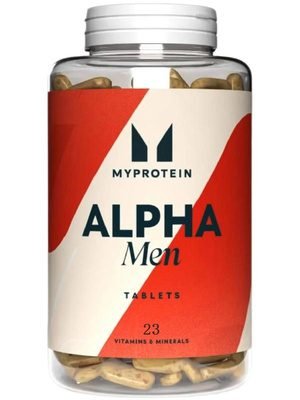 MyProtein Alpha Men Multivitamins€19.90 In stock 240tabs are designed for continuous daily use at the label dosage.
Monitoring
If you plan to take a men's multivitamin for years, a baseline blood panel and a periodic re-check (every 1-2 years) is a practical step. Look at serum 25-OH-D (vitamin D), ferritin (iron stores), and zinc/copper if your product contains high doses of either. This is especially relevant if you stack your multivitamin with single-nutrient supplements.
Available at maxfit.ee, you can browse the full men's vitamins range to compare formulations before committing to a product long-term.
Honest Verdict
For most healthy men, taking a balanced men's multivitamin at label doses continuously is considered safe based on available evidence. The main risks arise from chronic excess of fat-soluble nutrients — particularly retinol — and excess iron in men who are already replete. Choosing a well-formulated product, staying within serving directions, and doing occasional bloodwork are the sensible safeguards. There is no compelling evidence that healthy men need to cycle a standard multivitamin.
References
Gaziano, J. M., Sesso, H. D., Christen, W. G., Bubes, V., Smith, J. P., MacFadyen, J., ... & Buring, J. E. (2012). Multivitamins in the prevention of cancer in men: the Physicians' Health Study II randomized controlled trial. JAMA, 308(18), 1871-1880. https://pubmed.ncbi.nlm.nih.gov/23162860/
Feskanich, D., Singh, V., Willett, W. C., & Colditz, G. A. (2002). Vitamin A intake and hip fractures among postmenopausal women. JAMA, 287(1), 47-54. https://pubmed.ncbi.nlm.nih.gov/11754708/
Blumberg, J. B., Bailey, R. L., Sesso, H. D., & Ulrich, C. M. (2018). The evolving role of multivitamin/multimineral supplement use among adults in the age of personalized nutrition. Nutrients, 10(2), 248. https://pubmed.ncbi.nlm.nih.gov/29470410/
FAQ
Can men take a multivitamin every day indefinitely?
For the majority of healthy men, daily use of a standard men's multivitamin at the label dose appears safe based on long-term trial data. Periodic bloodwork is a sensible precaution if you use it for many years.
Should men avoid iron in their multivitamin?
Most men's formulations already reduce or omit iron. Unless a blood test confirms iron deficiency, choosing a men's formula without added iron or with minimal iron is generally advisable for long-term use.
Is there a difference between men's and general multivitamins for long-term safety?
Yes. Men's-specific formulas are typically lower in iron and may adjust other nutrients to match male physiology. For long-term use, a product formulated for men is preferable to a generic or women's multivitamin.



