
Why Men's Vitamins Interactions Matter
Men's vitamins interactions are one of the most underestimated aspects of supplementation. A multivitamin designed for men may contain a dozen or more micronutrients, each with its own absorption dynamics, drug interactions, and competitive or synergistic relationships with other nutrients. Taking a men's multivitamin without considering these interactions can lead to reduced effectiveness or, in some cases, interference with medication.
This article covers the most clinically relevant interactions for men who are otherwise healthy, active, and taking common medications or supplements alongside their multivitamin.
Drug Interactions: Vitamins and Common Medications
Fat-soluble vitamins (A, D, E, K) and medications. Vitamin K is the classic example: men taking warfarin (a blood thinner) must be aware that vitamin K directly counteracts warfarin's anticoagulant effect. Even moderate increases in vitamin K intake from a multivitamin can alter INR values. Men on anticoagulant therapy should consult their prescriber before taking any supplement containing vitamin K.
Vitamin E at high doses and anticoagulants. High-dose vitamin E (above the amounts in standard multivitamins) has mild anticoagulant effects and can amplify the effect of blood-thinning medications including aspirin and warfarin.
Zinc and antibiotics. Zinc can reduce the absorption of certain antibiotics, particularly tetracyclines and fluoroquinolones. Men taking these antibiotics should separate zinc intake by at least two hours from their antibiotic dose.
Calcium and tetracyclines. Similarly, calcium in a multivitamin can bind tetracycline-class antibiotics and reduce their bioavailability. Spacing is the practical solution.
Magnesium and certain medications. Magnesium can reduce the absorption of bisphosphonates (used for bone density), some antidiabetic medications, and digoxin. Men taking these should discuss timing with their doctor.
Nutrient Competition and Synergy Within a Men's Multivitamin
Zinc and copper compete. Zinc and copper share an intestinal absorption transporter (metallothionein-mediated). High supplemental zinc can deplete copper over time if copper is not also present in the multivitamin. Good-quality men's multivitamins include copper alongside zinc for this reason.
Calcium and iron compete. Calcium inhibits non-haem iron absorption when taken simultaneously. Men who are trying to maintain healthy iron status should not take an iron supplement at the same time as a calcium-heavy supplement or meal.
Vitamin D and vitamin K work together. Vitamin D increases calcium absorption, and vitamin K2 directs that calcium into bones and away from arterial walls. Men supplementing with vitamin D — particularly at higher doses common in Nordic latitudes — benefit from ensuring adequate vitamin K2 intake.
B vitamins are broadly synergistic. B vitamins work as a group in energy metabolism, and deficiency in one (e.g., B12) can partly mask deficiency in another (e.g., folate). A comprehensive B-complex within a men's multivitamin is preferable to high-dose single B vitamins for most men.
Vitamin C enhances iron absorption. Men with borderline iron status benefit from consuming vitamin C alongside iron-containing meals.
Food Effects on Men's Vitamin Absorption
Fat-soluble vitamins need dietary fat. Vitamins A, D, E, and K are fat-soluble and require fat in the same meal for efficient absorption. Taking a men's multivitamin with a fat-free breakfast or on an empty stomach meaningfully reduces absorption of these vitamins. A meal containing eggs, nuts, avocado, or olive oil is a good pairing.
Grapefruit and drug-metabolising enzymes. Grapefruit contains furanocoumarins that inhibit CYP3A4, a key liver enzyme that metabolises many drugs and some fat-soluble vitamins. Men taking statins, calcium channel blockers, or certain antiretrovirals should be aware of this interaction and discuss grapefruit consumption with their prescriber.
Alcohol and B vitamin depletion. Regular alcohol consumption reduces absorption and increases excretion of B vitamins, particularly B1 (thiamine), B6, and folate. Men who drink regularly may have higher B vitamin requirements than the standard multivitamin provides.
Coffee and some minerals. Coffee has been shown to reduce iron and zinc absorption when consumed simultaneously. Spacing coffee consumption an hour away from the multivitamin is a practical precaution.
Who Must Be Most Cautious
- Men taking prescription anticoagulants (warfarin, newer direct anticoagulants)
- Men on statin therapy with high-dose niacin supplements (both affect liver enzymes)
- Men with kidney disease (accumulation of fat-soluble vitamins and minerals is a concern)
- Men taking multiple individual supplements in addition to a multivitamin (risk of exceeding safe upper intakes for some nutrients)
Practical Rules for Men's Vitamin Supplementation
- Take fat-soluble vitamins with a meal containing fat — not on an empty stomach.
- Separate from antibiotics by at least two hours when zinc or calcium is in the multivitamin.
- If on anticoagulant therapy, do not change vitamin K intake without discussing it with your prescriber.
- Do not stack a standalone zinc supplement on top of a zinc-containing multivitamin without checking total zinc intake — sustained high zinc can deplete copper.
- Include vitamin K2 if supplementing vitamin D at doses above standard multivitamin levels.
Products available at maxfit.ee include BIOTECHUSA Multivitamin for Men 60tab, Optimum Nutrition Opti-men 180tabs, and 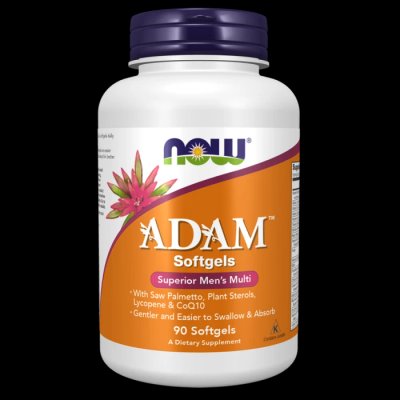 NOW Adam Male Multivitamin€31.90 In stock 90caps from the men's vitamins category.
FAQ
Can I take a men's multivitamin every day long-term?
For most healthy men, a standard men's multivitamin taken daily with food is well-tolerated long-term. Fat-soluble vitamins (A and E in particular) can accumulate at very high supplement doses, so staying within recommended amounts matters. If you take additional single-nutrient supplements, check for overlap.
Should I take my men's multivitamin in the morning or evening?
Morning with breakfast tends to work well because the meal provides fat for fat-soluble vitamin absorption and food reduces any potential nausea. Evening is also fine. Consistency matters more than exact timing.
Does a men's multivitamin replace eating vegetables?
No. Multivitamins provide isolated micronutrients but do not replicate the fibre, phytochemicals, and food matrix effects of whole vegetables. They are a complement to a healthy diet, not a replacement.
References
Solomons, N. W. (2001). Competitive interaction of iron and zinc in the diet: consequences for human nutrition. Journal of Nutrition, 116(6), 927-935.



