
Why Men's Vitamin Deficiencies Often Go Unnoticed
Micronutrient deficiencies in men rarely announce themselves dramatically. More often they manifest as slow-creeping symptoms — persistent fatigue, lower training performance, or mood changes — that are easy to attribute to stress or poor sleep. Understanding the signs of men's vitamins deficiency and knowing who is at elevated risk can help you decide whether targeted supplementation makes sense.
Common Deficiency Symptoms
The most frequently documented micronutrient shortfalls in men in Northern and Western European populations include vitamin D, magnesium, zinc, and vitamin B12.
Vitamin D: Symptoms of low vitamin D status can include persistent fatigue, low mood, reduced bone density, and impaired immune response. A large cross-sectional study found that vitamin D insufficiency was common in Northern European men across all age groups, particularly in winter months (Cashman et al., 2016). Estonia's latitude means sun exposure from October to March is insufficient for endogenous vitamin D synthesis.
Magnesium: Low magnesium intake is associated with muscle cramps, poor sleep quality, increased irritability, and heightened fatigue during exercise. Athletes who sweat heavily are at greater risk of a functional deficit even without clinical deficiency.
Zinc: Signs of zinc insufficiency can include reduced testosterone production, slower wound healing, increased susceptibility to infections, and loss of taste or smell. Men have higher zinc requirements than women because of zinc's role in testosterone metabolism.
Vitamin B12: Men following plant-based diets or who have reduced stomach acid (common with age or certain medications) are vulnerable to B12 depletion, which can lead to fatigue, neurological changes, and anaemia.
At-Risk Groups
Certain groups of men face meaningfully higher risk of low micronutrient status:
- Athletes and men who exercise intensely: Sweating increases zinc and magnesium losses. High energy expenditure may also raise demands for B vitamins involved in energy metabolism.
- Men over 50: Absorption of B12 and vitamin D tends to decline with age. Testosterone-related zinc demands also remain relevant.
- Men eating restricted diets: Vegetarian and vegan men are particularly vulnerable to B12, zinc, and iron shortfalls. Men on low-calorie cuts may also fall short on several micronutrients.
- Men with limited sun exposure: Office workers, those living at northern latitudes like Estonia, or men who cover their skin regularly are at elevated risk of vitamin D insufficiency.
- Men with high alcohol intake: Alcohol impairs absorption and increases excretion of several vitamins including B1, B6, and folate.
How Deficiency Is Tested
A standard blood panel can reveal most common micronutrient deficiencies. Vitamin D (25-OH-D) and B12 have established clinical reference ranges. Zinc and magnesium testing is available but less routinely offered; functional deficiency can exist even within the broad normal serum range. Men concerned about micronutrient status should request a targeted panel from their physician.
Nordic and Estonian Context
Estonia's northerly latitude creates a specific challenge for vitamin D. The sun angle from roughly October through March does not provide adequate UVB radiation for skin synthesis. Terviseamet (the Estonian Health Board) acknowledges the population-level risk and recommends vitamin D supplementation for most adults during autumn and winter months. Iodine and selenium are also lower in Nordic soils than the global average, potentially affecting intake through locally grown food.
When to Supplement vs. Diet
For most healthy men eating a varied diet that includes animal proteins, legumes, vegetables, and fortified foods, major deficiencies are uncommon. However, marginal shortfalls are frequent and can have subtle performance and wellbeing impacts without crossing clinical thresholds.
A quality men's multivitamin provides a convenient baseline top-up. At maxfit.ee you can find Optimum Nutrition Opti-men 180tabs, NOW Adam Male Multivitamin 90caps, and 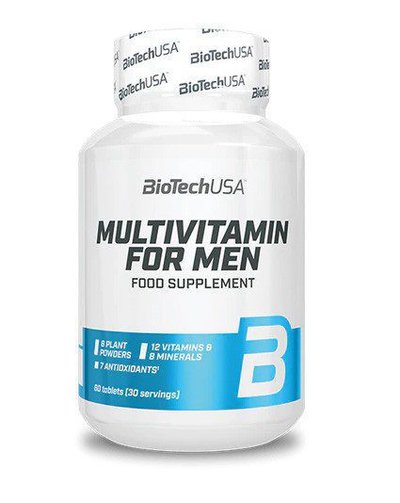 BIOTECHUSA Multivitamin for Men€17.90 In stock 60tab — formulations designed with men's specific micronutrient needs in mind. These products are available at maxfit.ee/en/category/vitamiinid-meestele-vitamiinikompleksid.
Supplementing is most justified when:
- Blood work confirms a documented shortfall
- Your diet has known gaps (vegan, very low calorie, limited variety)
- You train intensively and sweat heavily
- You live at a northern latitude and get limited sun exposure
Multivitamins are not a substitute for a varied diet, but they can fill meaningful gaps when diet alone falls short.
FAQ
How do I know if I actually need a men's multivitamin?
The clearest signal is a blood test showing documented insufficiency. Absent a test, men who exercise regularly, eat a restricted diet, or live in northern climates like Estonia have the strongest rationale for a men's vitamin supplement to cover likely marginal shortfalls.
Can I just take individual vitamins instead of a multivitamin?
Yes. If testing confirms a specific deficiency (e.g. vitamin D or B12), a standalone supplement may be more precise and cost-effective. A multivitamin is most practical when multiple micronutrients may be marginal and testing all of them individually is impractical.
Is there a risk of taking too many vitamins?
Fat-soluble vitamins (A, D, E, K) accumulate in the body and can cause toxicity at very high doses over time. Water-soluble vitamins (B-complex, C) are excreted more readily, but very high doses of B6 and niacin carry specific risks. A quality multivitamin at the recommended daily serving is designed to stay within safe ranges, but stacking multiple supplements on top of a multivitamin can push certain nutrients too high.
References
Cashman, K. D., Dowling, K. G., Skrabakova, Z., Gonzalez-Gross, M., Valtuena, J., De Henauw, S., ... & Kiely, M. (2016). Vitamin D deficiency in Europe: pandemic? American Journal of Clinical Nutrition, 103(4), 1033–1044. https://pubmed.ncbi.nlm.nih.gov/26864360/
Volpe, S. L. (2013). Magnesium and the athlete. Current Sports Medicine Reports, 12(4), 274–279.
Prakash, A. D., Karmali, R., Festing, M. F. W., & Bhattacharya, B. (2006). Zinc and testosterone: a review of the evidence. Journal of Trace Elements in Medicine and Biology, 20(1), 3–18.



