
Melatonin for Weight Management: What the Evidence Actually Shows
Melatonin weight management claims have grown in online wellness communities, partly because of the well-documented relationship between sleep deprivation and metabolic dysfunction. This article separates the indirect sleep-metabolism link from the more direct question: does supplementing with melatonin meaningfully change body composition?
The Proposed Mechanism: Sleep, Hormones, and Body Weight
Melatonin is a hormone produced primarily by the pineal gland in response to darkness, signalling the body to prepare for sleep. Its role in sleep-wake regulation is well-established and supported by decades of research.
The proposed link to weight management runs through sleep quality. Poor sleep is associated with dysregulation of leptin and ghrelin — hormones that regulate hunger and satiety — leading to increased appetite and caloric intake (Spiegel et al., 2004). If melatonin improves sleep quality, the reasoning goes, it might indirectly support better appetite regulation and, by extension, weight management.
Additionally, some animal studies and early human research have suggested that melatonin may influence fat cell biology directly, particularly brown adipose tissue activation and mitochondrial function. However, translating rodent findings to human clinical outcomes requires caution.
An Honest Look at the Evidence
For its primary purpose — improving sleep onset latency and sleep quality, especially in shift workers and jet-lag contexts — melatonin has solid, replicated evidence. A meta-analysis found that melatonin modestly reduced sleep onset latency and increased total sleep duration compared to placebo (Ferracioli-Oda et al., 2013).
For weight management specifically, the picture is less clear. Some small studies in postmenopausal women found that melatonin supplementation was associated with modest reductions in fat mass and increases in lean mass over one year compared to placebo (Amstrup et al., 2016). These findings are interesting, but the mechanism is not fully understood and the study population was specific.
Larger, general-population RCTs specifically targeting body weight outcomes with melatonin are limited. The current evidence is insufficient to recommend melatonin as a weight management tool for the general population.
Effect Sizes and Realistic Expectations
For people with genuine sleep difficulties — particularly delayed sleep onset, shift work disorder, or jet lag — melatonin can improve sleep quality, which in turn may support healthier hormonal regulation and reduce late-night appetite. This indirect benefit is plausible and mechanistically sound.
For people who already sleep well, melatonin supplementation is unlikely to produce any meaningful weight management effect. The effect sizes in the limited body composition trials are small, and effects in the general population without sleep problems have not been established.
Products such as ICONFIT Capsules Melatonin N90, BIOTECHUSA Melatonin 90tab, and 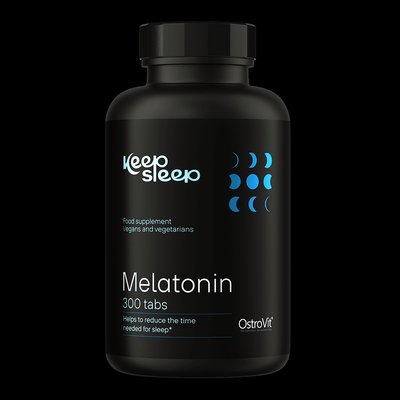 OstroVit Keep Sleep Melatonin€8.90 In stock 300tabs are available at maxfit.ee for those who want to address sleep quality as part of a broader health strategy.
Better Levers for Weight Management
If body composition is the primary objective, the highest-leverage interventions remain:
- Caloric balance — a sustained modest deficit drives fat loss.
- Protein intake — sufficient protein preserves muscle during a deficit.
- Resistance training — the primary stimulus for lean mass.
- Sleep quality — improving sleep if it is poor can reduce appetite dysregulation and support recovery.
Melatonin fits into the fourth category: if sleep is genuinely impaired, addressing it may remove a metabolic headwind. It is a supporting actor, not a direct weight management tool.
For those exploring sleep support options, the melatonin category at MaxFit offers a range of formulations.
FAQ
Can melatonin directly cause fat loss?
Not in any direct, established way. The proposed mechanism is indirect: better sleep supports healthier appetite hormones (leptin and ghrelin), which may reduce overeating. For people who already sleep well, there is no meaningful evidence of a direct fat-loss effect.
What is a reasonable dose of melatonin for sleep support?
Studies generally use doses from 0.5 mg to 5 mg taken 30 to 60 minutes before bed. Lower doses (0.5 to 1 mg) are often sufficient for improving sleep onset and may cause less morning grogginess than higher doses. Product labels specify manufacturer-recommended serving sizes.
Is melatonin safe for long-term use?
Short-term use (weeks to a few months) is generally considered safe in adults. Long-term safety data for continuous high-dose supplementation is limited. As with any supplement, it is worth reviewing with a healthcare provider if you plan to use it for an extended period, especially alongside other medications.
References
Spiegel, K., Tasali, E., Penev, P., & Van Cauter, E. (2004). Brief communication: Sleep curtailment in healthy young men is associated with decreased leptin levels, elevated ghrelin levels, and increased hunger and appetite. Annals of Internal Medicine, 141(11), 846-850. https://pubmed.ncbi.nlm.nih.gov/15583226/
Ferracioli-Oda, E., Qawasmi, A., & Bloch, M. H. (2013). Meta-analysis: melatonin for the treatment of primary sleep disorders. PLOS ONE, 8(5), e63773. https://pubmed.ncbi.nlm.nih.gov/23691095/



