Melatonin for Vegans: What the Science Says
Melatonin is a hormone the body produces naturally — primarily in the pineal gland in the brain. It regulates the sleep-wake cycle. Vegans and vegetarians often ask whether their diet affects melatonin production and whether supplementation is necessary.
Why Plant-Based Diets May Fall Short
Melatonin is synthesised from tryptophan, an essential amino acid. Excluding tryptophan-rich animal foods (such as turkey or dairy) does not automatically cause deficiency — plant-based eaters can obtain tryptophan abundantly from legumes, nuts, tofu, and seeds. However, research has found that some vegans have lower blood tryptophan levels compared to omnivores (Davey et al., 2003).
Another factor is vitamin B12, needed for neurotransmitter synthesis. B12 deficiency — common in vegans without supplementation — may indirectly affect sleep and sleep quality.
Vegan-Friendly Sources
The vast majority of melatonin supplements are synthetic and therefore vegan. Animal-derived melatonin sources are rare in the supplement market.
Tart cherries (particularly Montmorency) and walnuts contain natural melatonin, but the amounts obtained from food are small and inconsistent.
Synthetic melatonin supplements are vegan-friendly and reliable. ICONFIT Capsules Melatonin N90, 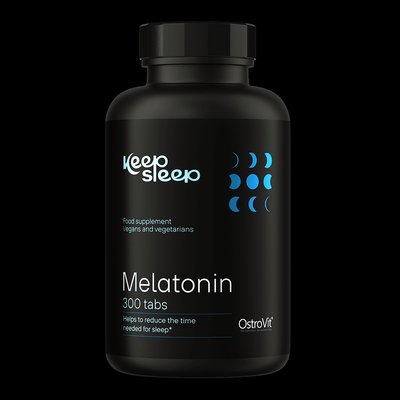 OstroVit Keep Sleep Melatonin€8.90 In stock 300tabs, and BIOTECHUSA Melatonin 90tab are all available at maxfit.ee — always check the product label for vegan confirmation.
Dose Targets
Research on melatonin efficacy shows that lower doses are often sufficient for reducing sleep onset time. A meta-analysis by Ferracioli-Oda et al. (2013) found that melatonin meaningfully reduced sleep onset time in primary sleep disorders. Low doses (below one milligram) may produce similar effects to higher doses with less next-morning grogginess.
For sleep onset support, doses of 0.5 to 3 milligrams taken thirty minutes to one hour before bed are commonly studied.
What to Combine
Melatonin is often paired with:
- L-theanine — may help promote relaxation
- Magnesium — associated with sleep quality in various studies
- Ashwagandha — an adaptogen that may support stress reduction
ICONFIT Capsules Good Sleep N90 contains multiple sleep-supporting ingredients and is vegan-friendly.
Choosing a Vegan Product
When selecting a melatonin supplement, look for:
- A clear vegan label or certification
- A simple ingredient list with no gelatin capsule shell
- Third-party testing marks
Bottom Line
Vegans are not necessarily deficient in melatonin, but tryptophan and B12 intake deserve attention. Synthetic melatonin supplements are generally vegan-friendly and evidence-backed for sleep support. A low dose taken thirty minutes before bed is a good starting point.
FAQ
Do vegans always need a melatonin supplement?
Not necessarily. Most vegans can obtain adequate tryptophan through a varied plant-based diet. Supplementation is helpful for sleep difficulties, jet lag, or high-stress periods.
Is melatonin habit-forming?
Studies suggest that short-term melatonin use does not produce signs of tolerance or dependence. Longer-term use should be discussed with a doctor.
When is the best time to take melatonin?
Most experts recommend taking it thirty minutes to one hour before the desired bedtime.
References
Davey, G. K., Spencer, E. A., Appleby, P. N., Allen, N. E., Knox, K. H., & Key, T. J. (2003). EPIC-Oxford: lifestyle characteristics and nutrient intakes in a cohort of 33 883 meat-eaters and 31 546 non meat-eaters in the UK. Public Health Nutrition, 6(3), 259-269. https://pubmed.ncbi.nlm.nih.gov/12740075/
Ferracioli-Oda, E., Qawasmi, A., & Bloch, M. H. (2013). Meta-analysis: melatonin for the treatment of primary sleep disorders. PLOS ONE, 8(5), e63773. https://pubmed.ncbi.nlm.nih.gov/23691095/
Buscemi, N., Vandermeer, B., Hooton, N., Pandya, R., Tjosvold, L., Hartling, L., Baker, G., Klassen, T. P., & Vohra, S. (2005). The efficacy and safety of exogenous melatonin for primary sleep disorders: a meta-analysis. Journal of General Internal Medicine, 20(12), 1151-1158. https://pubmed.ncbi.nlm.nih.gov/16423108/



