
Why Stack with Melatonin?
Melatonin is the body's primary circadian signal: its rise at dusk tells the brain it is time to prepare for sleep. Supplemental melatonin is widely used to shorten sleep-onset latency, particularly in shift workers, travelers crossing time zones, and people with delayed sleep phase. But melatonin alone addresses only the circadian trigger — it does not directly relax the nervous system, quiet anxious thinking, or deepen slow-wave sleep in everyone.
This is where melatonin stacking becomes relevant. Thoughtful combinations can target multiple pathways simultaneously — circadian timing, GABAergic relaxation, cortisol wind-down — while poor combinations may undermine the effect or introduce unwanted side effects.
Evidence-Based Synergies
Magnesium
Magnesium supports NMDA receptor regulation and GABA activity, both involved in relaxation and sleep architecture. Low dietary magnesium is common in Northern Europe due to soil depletion and dietary patterns. A combination of melatonin and magnesium (along with zinc) was evaluated by Rondanelli et al. (2011) in an older adult population with insomnia; the combination was associated with better sleep quality scores compared with placebo (Rondanelli et al., 2011). This makes magnesium a natural first addition to a melatonin stack.
L-Theanine
L-theanine, an amino acid found in green tea, promotes alpha-wave activity in the brain — a state associated with calm alertness. Combined with melatonin at bedtime, it may smooth the transition to sleep without morning grogginess. It works on a different pathway than melatonin, making the combination non-redundant.
GABA
Gamma-aminobutyric acid is the brain's primary inhibitory neurotransmitter. Oral GABA does cross the blood-brain barrier to some extent, though absorption varies. For individuals who experience difficulty quieting mental activity at night, adding a GABA supplement to melatonin may address this residual barrier that melatonin cannot resolve on its own.
Antagonistic Combinations: What to Avoid
Caffeine. Caffeine blocks adenosine receptors, which normally build sleep pressure across the waking day. Taking caffeine within six hours of bedtime directly counteracts melatonin's circadian signal. This is the most common stack mistake.
Alcohol. While alcohol initially promotes drowsiness, it disrupts sleep architecture in the second half of the night, suppressing REM sleep. Combining it with melatonin creates conflicting signals and typically results in fragmented sleep.
High-intensity stimulant pre-workouts. Evening workouts with stimulant-laden pre-workout supplements spike cortisol and norepinephrine, delaying melatonin's effectiveness by hours. If you train in the evening, use stimulant-free pre-workout options.
Other sedatives without guidance. Stacking melatonin with prescription benzodiazepines or sleep medications should only occur under medical supervision — additive central nervous system depression is a real risk.
Timing Within a Stack
Melatonin has a short half-life. Standard supplemental doses are typically taken 30–60 minutes before the desired sleep time. Within a stack, here is a general timing framework:
| Supplement | Timing Before Bed |
|---|---|
| Magnesium | 60–90 minutes |
| L-Theanine | 30–60 minutes |
| GABA | 30–60 minutes |
| Melatonin | 30–60 minutes |
All of the sleep-support components are best taken together in a single pre-sleep window rather than spread across the evening.
Sample Stacks by Goal
Jet lag / circadian reset: Melatonin alone, timed precisely to the destination time zone's night. Adding other supplements complicates timing.
General sleep onset support: Melatonin + magnesium. Simple, evidence-supported, low risk.
Racing mind at night: Melatonin + L-theanine + magnesium. Addresses multiple pathways without sedatives.
Deep recovery for athletes: Melatonin + magnesium + GABA. Targets sleep depth alongside circadian timing.
ICONFIT Capsules Good Sleep N90 combines melatonin with L-theanine in a single capsule and is available at maxfit.ee — convenient for those who want a pre-formulated option. ICONFIT Capsules Melatonin N90 provides melatonin on its own for those who prefer to build their stack modularly. 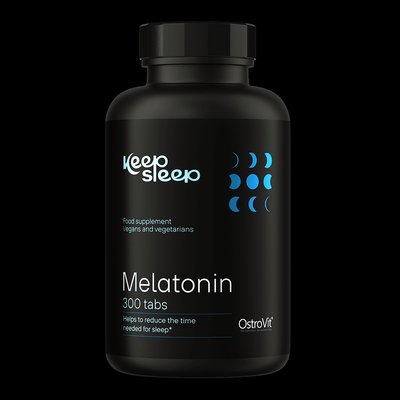 OstroVit Keep Sleep Melatonin€8.90 In stock 300tabs offers a cost-effective supply for long-term use.
Explore the full melatonin and sleep range at maxfit.ee.
What to Avoid: Practical Summary
- Never take stimulants (caffeine, ephedrine-based thermogenics) within six hours of melatonin
- Avoid alcohol on nights you supplement with melatonin
- Do not stack melatonin with prescription sedatives without medical advice
- Avoid taking melatonin at erratic times — consistency with circadian rhythm strengthens its effect
FAQ
What is the best dose of melatonin to start with?
Research suggests low doses are often as effective as higher ones for sleep onset. Starting low and adjusting based on response is a reasonable approach for most adults.
Can I take melatonin and ashwagandha together?
Yes. Ashwagandha addresses HPA axis and cortisol — a complementary mechanism to melatonin's circadian signal. There is no known antagonism between the two.
Does melatonin become less effective over time?
Tolerance to melatonin's sleep-onset effects does not appear to develop in the way it does with some sleep medications. However, if using it nightly for extended periods, taking periodic breaks is a reasonable habit to preserve sensitivity.
References
Rondanelli, M., Opizzi, A., Monteferrario, F., Antoniello, N., Manni, R., & Klersy, C. (2011). The effect of melatonin, magnesium, and zinc on primary insomnia in long-term care facility residents in Italy: a double-blind, placebo-controlled clinical trial. Journal of the American Geriatrics Society, 59(1), 82–90. https://pubmed.ncbi.nlm.nih.gov/21226679/
Ferracioli-Oda, E., Qawasmi, A., & Bloch, M. H. (2013). Meta-analysis: melatonin for the treatment of primary sleep disorders. PLOS ONE, 8(5), e63773. https://pubmed.ncbi.nlm.nih.gov/23691095/



