
The Most Common Melatonin Myths
Myth 1: Melatonin Is a Sleeping Pill
Melatonin is not a sedative or hypnotic in the pharmacological sense. It is a hormone produced naturally by the pineal gland in response to darkness. Its role is chronobiological — it signals to the body that it is night and shifts the timing of sleep, not the ability to sleep per se.
This distinction matters practically: melatonin is most effective for aligning sleep timing (circadian phase shifting) — such as in jet lag, shift work, or delayed sleep phase disorder. For insomnia characterised by difficulty initiating or maintaining sleep in someone already aligned to normal sleep times, the evidence is weaker than for prescription sleep medications.
Myth 2: Higher Doses Work Better
This is perhaps the most consequential myth. Most supplements on the market provide 3–10 mg per dose. Research, however, consistently shows that doses as low as 0.3–0.5 mg are physiologically effective for circadian phase shifting (Lewy et al., 1992). Very large doses flood melatonin receptors beyond their capacity and do not produce proportionally stronger effects.
Starting with a low dose is recommended not only because it is likely effective but also because lower doses result in briefer residual effects — reducing the risk of morning grogginess. Products at maxfit.ee include ICONFIT Capsules Melatonin N90, BIOTECHUSA Melatonin 90tab, and 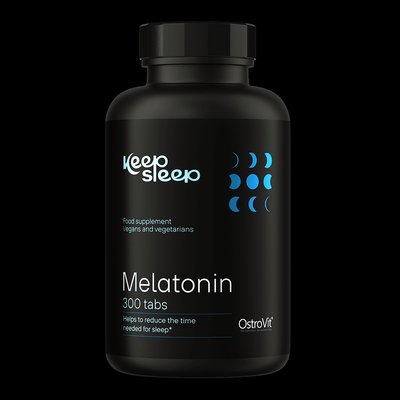 OstroVit Keep Sleep Melatonin€8.90 In stock 300tabs, as well as the
 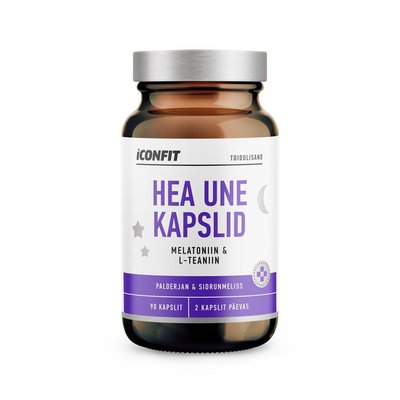 ICONFIT Capsules Good Sleep N90€12.90 In stock which combines melatonin with other sleep-supporting ingredients.
Myth 3: Melatonin Is Addictive
No evidence supports the idea that melatonin creates dependency or tolerance in the way that sedative medications can. Stopping melatonin does not cause withdrawal symptoms or rebound insomnia. It can be taken as needed rather than continuously.
The body's own melatonin production is not permanently suppressed by supplementation — external melatonin may temporarily reduce endogenous signal, but this recovers quickly on discontinuation.
Myth 4: It Works for All Sleep Problems
Melatonin has the strongest evidence for sleep timing issues — jet lag, shift work adaptation, and circadian phase disorders. For general insomnia (difficulty staying asleep, non-restorative sleep), the evidence is more limited. A meta-analysis of randomised trials found modest effects on sleep onset time but smaller effects on total sleep time and sleep quality compared with placebo (Ferracioli-Oda et al., 2013).
Sleep hygiene, cognitive-behavioural therapy for insomnia (CBT-I), and addressing underlying causes remain first-line approaches for chronic insomnia. Melatonin is a useful adjunct, not a cure.
What the Evidence Actually Shows
Melatonin consistently reduces the time it takes to fall asleep (sleep onset latency) in people with circadian misalignment. The effect size for jet lag is well established — studies show reduced jet lag severity and faster adaptation when melatonin is taken at the destination bedtime (Herxheimer & Petrie, 2002). For general insomnia, the effect on sleep onset is real but modest.
Marketing Claims vs Reality
Marketing says: Take 5–10 mg for deep, restorative sleep. Reality: Doses of 0.3–1 mg are physiologically active. Higher doses are not proportionally more effective and may cause morning residual effects.
Marketing says: Melatonin improves overall sleep quality dramatically. Reality: Evidence supports modest improvement in sleep onset. Effects on sleep architecture and quality are smaller and less consistent.
Marketing says: Safe for everyone including children and elderly. Reality: Melatonin is generally well tolerated. However, for children with developmental disorders and older adults with specific conditions, dosing should be discussed with a healthcare provider. For older adults, lower doses are even more appropriate because pineal gland production naturally declines with age.
Grey Areas
- Long-term use: Most trials are short-term. Long-term safety data beyond a few months are limited, though no serious adverse effects have been identified.
- Interaction with light: The effectiveness of melatonin depends heavily on light exposure. Taking melatonin while exposed to bright light (screens, overhead lighting) partially defeats its purpose.
- Timing: Melatonin timing matters more than dose. For phase-advancing (falling asleep earlier), it should be taken several hours before the desired sleep time, not immediately at bedtime.
Bottom Line
Melatonin is a useful, low-risk tool for circadian timing issues — particularly jet lag and shift-work adjustment. It works best at lower doses than most commercial products supply, timing matters as much as dose, and it is not a substitute for good sleep habits. Available at maxfit.ee: NOW Melatonin 1mg Complex 100tabs is a convenient low-dose option alongside BIOTECHUSA Night 60 caps and 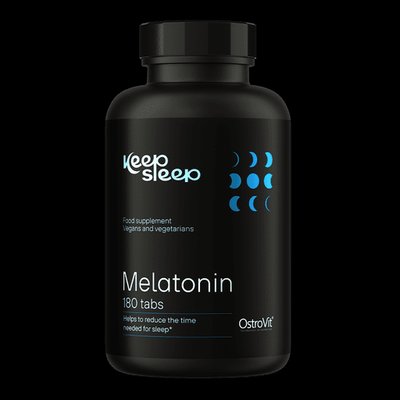 OstroVit Keep Sleep Melatonin€7.90 In stock 60tabs.
FAQ
What is the best dose of melatonin for sleep?
For circadian alignment, doses of 0.3–1 mg have been shown to be physiologically effective. Higher doses (3–10 mg) are widely sold but not proportionally more effective and may produce more morning residual effects.
Can I take melatonin every night?
Short-term nightly use is generally safe. For ongoing sleep issues, identifying and addressing underlying causes is more important than indefinite supplementation. Melatonin is most appropriate for situational use (jet lag, shift changes) rather than nightly chronic use without medical review.
Does melatonin stop working over time?
Unlike prescription sedatives, melatonin does not appear to cause tolerance — its effectiveness does not meaningfully diminish over time at the same dose for most people. If it stops helping, the underlying sleep issue should be re-evaluated.
References
Lewy, A. J., Ahmed, S., Jackson, J. M., & Sack, R. L. (1992). Melatonin shifts human circadian rhythms according to a phase-response curve. Chronobiology International, 9(5), 380–392. https://pubmed.ncbi.nlm.nih.gov/1394610/
Ferracioli-Oda, E., Qawasmi, A., & Bloch, M. H. (2013). Meta-analysis: melatonin for the treatment of primary sleep disorders. PLOS ONE, 8(5), e63773. https://pubmed.ncbi.nlm.nih.gov/23691095/
Herxheimer, A., & Petrie, K. J. (2002). Melatonin for the prevention and treatment of jet lag. Cochrane Database of Systematic Reviews, 2002(2), CD001520.



