
Is Long-Term Melatonin Use Safe? What the Evidence Shows
Melatonin is one of the most widely used supplements for sleep support worldwide. Short-term use is well-studied and generally considered safe. The more nuanced question — is long-term melatonin use safe, and should you cycle it? — deserves a careful look at the evidence without the hype in either direction.
What Long-Term Studies Show
Long-term melatonin safety data comes primarily from two populations: older adults with insomnia and individuals with circadian rhythm disorders (such as shift workers and those with jet lag). Key findings:
- A two-year study in older adults using prolonged-release melatonin found no clinically significant adverse effects on hormonal profiles, laboratory parameters, or cognition compared to placebo (Lemoine et al., 2007).
- Case series and registry data from jet-lag and shift-work populations do not identify organ toxicity with sustained low-dose use.
- The major open question is whether exogenous melatonin affects endogenous pineal melatonin production over time. Animal studies suggest some feedback inhibition is possible at high doses, but human data for low-dose supplementation do not consistently show suppression of endogenous secretion.
The honest summary: at typical supplemental doses, available long-term evidence is reassuring, but studies beyond two to three years in controlled human populations are limited. Long-term use at high doses is less well-characterized.
Upper Safe Limits Over Time
Melatonin doses used in research vary enormously — from 0.1 mg to 10 mg or higher. The dose context matters:
- Physiological doses (0.1–0.5 mg): These closely mimic the range of natural melatonin peaks in healthy young adults. Effects are primarily chronobiotic (they shift the circadian clock) rather than hypnotic (they do not strongly induce sleep). These small doses are considered very low risk for long-term use.
- Pharmacological doses (1–5 mg): Most commercial supplements fall in this range. This is well above physiological levels and primarily produces a sedative effect. Safety data for sustained use at these doses is available up to several months in most studies.
- High doses (5–10 mg+): Used in some clinical research for specific conditions. Long-term safety at these doses is not well established and cannot be generally recommended for unsupervised use.
For practical long-term use, the lowest effective dose is consistently recommended as the starting point.
Do You Need to Cycle Melatonin?
Cycling advice varies widely in the supplement world, and for melatonin specifically there is limited direct evidence from human RCTs that cycling is necessary. However, several considerations support intermittent rather than continuous use:
- Sleep hygiene reliance: Continuous use may reduce the incentive to address underlying sleep issues (light exposure, bedtime consistency, temperature, alcohol).
- Theoretical feedback: Persistent elevation of exogenous melatonin could theoretically blunt circadian sensitivity over time, though this has not been clearly demonstrated at low doses in humans.
- Practical guidance: Most practitioners recommend using melatonin for specific purposes (sleep onset, jet lag, shift work adaptation) rather than as a nightly permanent fixture. Taking a structured break every few months allows you to assess whether the underlying sleep issue has resolved.
Monitoring
For anyone using melatonin continuously for more than a few months:
- Sleep diary: Track subjective sleep quality and daytime alertness. If melatonin stops working or requires dose escalation, this suggests the approach needs review.
- Dose audit: If you started at a high dose, experiment with gradually reducing. Many people find 0.5–1 mg as effective as 5 mg for sleep onset with fewer next-day residual effects.
- Physician check-in: Anyone with hormonal conditions, those taking medications affecting CYP1A2 (the enzyme that metabolizes melatonin), or those over 70 should have regular check-ins when using long-term.
- Children and adolescents: Long-term melatonin use in developing populations should not proceed without pediatric guidance, as the developing circadian system is more sensitive.
Honest Verdict
At low doses (0.5–3 mg), current evidence does not show meaningful safety concerns with prolonged melatonin use in healthy adults. It is one of the most benign supplements available. That said, it is not a substitute for addressing the root causes of poor sleep, and the absence of long-term harm from daily use does not mean daily use is optimal — some people do better using it situationally.
At maxfit.ee the melatoniin category includes ICONFIT Capsules Melatonin N90, 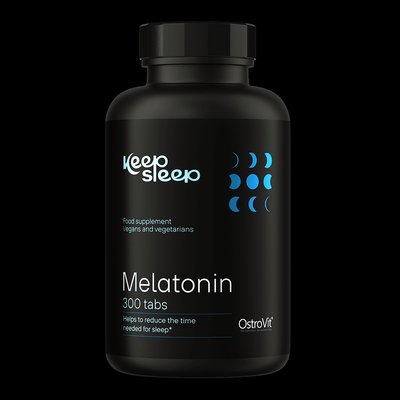 OstroVit Keep Sleep Melatonin€8.90 In stock 300tabs,
 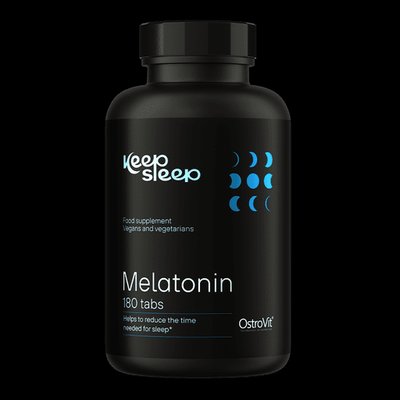 OstroVit Keep Sleep Melatonin€7.90 In stock 180tabs, BIOTECHUSA Melatonin 90tab, and NOW Melatonin 1mg Complex 100tabs — note that the NOW 1 mg option is a particularly practical low-dose choice for those who find higher doses leave them groggy the next morning.
FAQ
Does long-term melatonin use reduce your body's own melatonin production?
Human data at typical supplemental doses do not clearly show suppression of endogenous melatonin production. The pineal gland continues producing melatonin in response to darkness. High-dose or daytime use is more theoretically concerning, but systematic suppression at standard evening low doses has not been convincingly demonstrated.
Is melatonin safe to use every night for years?
Available evidence up to two to three years at low doses in adults suggests no significant harm. Beyond that timeframe, data are limited. Most practitioners recommend the lowest effective dose and periodic reassessment rather than indefinite high-dose nightly use.
Can melatonin interact with other supplements for sleep?
Melatonin and common sleep-support supplements such as magnesium, L-theanine, and ashwagandha do not have known harmful interactions. Their effects may be additive for relaxation. Combining melatonin with alcohol or sedative medications should be avoided.
References
Lemoine, P., Nir, T., Laudon, M., & Zisapel, N. (2007). Prolonged-release melatonin improves sleep quality and morning alertness in insomnia patients aged 55 years and older and has no withdrawal effects. Journal of Sleep Research, 16(4), 372-380. https://pubmed.ncbi.nlm.nih.gov/18036082/
Buscemi, N., Vandermeer, B., Hooton, N., Pandya, R., Tjosvold, L., Hartling, L., Vohra, S., Klassen, T. P., & Baker, G. (2006). Efficacy and safety of exogenous melatonin for secondary sleep disorders and sleep disorders accompanying sleep restriction: meta-analysis. BMJ, 332(7538), 385-393. https://pubmed.ncbi.nlm.nih.gov/16473858/
Garzon, C., Guerrero, J. M., Aramburu, O., & Guajardo, T. (2009). Effect of melatonin administration on sleep, behavioral disorders and hypnotic drug discontinuation in the elderly: a randomized, double-blind, placebo-controlled study. Aging Clinical and Experimental Research, 21(1), 38-42.



