
Melatonin for Women: Benefits and Considerations
Melatonin is the body's primary sleep-regulating hormone, secreted by the pineal gland in response to darkness. As a supplement, melatonin for women is widely used — for jet lag, shift work adaptation, and supporting sleep onset. But the female hormonal environment adds context that makes melatonin's picture somewhat richer than for men.
This guide covers why women may find melatonin particularly relevant, the hormonal interactions worth knowing, sensible dose targets, and what the evidence says about safety at different life stages.
Why Women May Need Melatonin Support
Several factors make sleep quality more variable in women than in men:
- Menstrual cycle: Progesterone and estrogen fluctuate across the cycle, influencing sleep architecture. The luteal phase (second half of the cycle) is associated with more disrupted sleep in many women.
- Perimenopause and menopause: The decline in estrogen and progesterone that occurs during perimenopause significantly disrupts sleep for many women. Melatonin levels also decline with age, compounding the issue.
- Hormonal contraceptives: Some research suggests that hormonal contraceptives may affect the timing and amplitude of melatonin secretion, potentially altering circadian rhythm parameters.
Melatonin supplementation addresses the downstream problem — impaired sleep onset or disrupted sleep architecture — regardless of upstream cause.
Hormonal and Life-Stage Context
Melatonin and the female reproductive hormones interact in several ways. Research suggests that melatonin may play a role in supporting ovarian function and has antioxidant properties that may be relevant to oocyte quality (Tamura et al., 2012). However, this research is exploratory — melatonin is not established as a fertility treatment, and no conclusions about fertility outcomes should be drawn from supplementation at typical sleep doses.
During perimenopause, some research has found that melatonin supplementation may support not only sleep but also mood and quality-of-life markers, though study sample sizes have generally been small (Emet et al., 2016). This is an area where consulting a healthcare provider alongside any supplementation is appropriate.
Dose Considerations
Melatonin is often oversupplemented. A common mistake is equating higher doses with better sleep — but melatonin is a signalling molecule, and the dose needed to signal sleep onset is much lower than many commercial products contain.
Studies consistently show that doses as low as 0.5 to 1 mg are effective for sleep onset timing (Zhdanova et al., 2001). Doses above 3–5 mg produce pharmacological (rather than physiological) levels of melatonin, which may cause morning grogginess and could, in theory, affect hormonal signalling at higher chronic doses.
For sleep onset support, starting at 0.5–1 mg taken 30–60 minutes before target sleep time is a reasonable first approach. If there is no response, gradually increasing to 3 mg is appropriate.
ICONFIT Capsules Melatonin N90 and 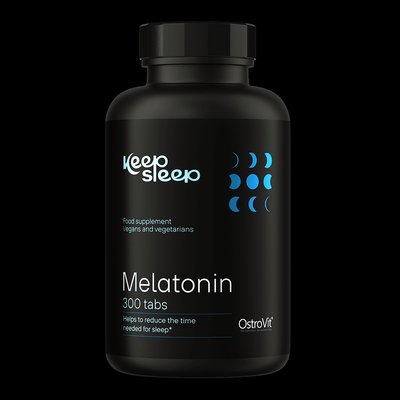 OstroVit Keep Sleep Melatonin€8.90 In stock 60tabs offer low-dose options at maxfit.ee, appropriate for physiological supplementation.
Pregnancy and Safety Notes
Melatonin should not be taken during pregnancy without explicit guidance from a healthcare provider. Animal research suggests melatonin crosses the placenta and may influence fetal circadian development — the implications for humans at supplement doses are not established. Standard precautionary guidance is to avoid it during pregnancy.
During breastfeeding, melatonin is naturally present in breast milk and appears to support infant circadian development, but supplemental doses beyond endogenous levels are not recommended without clinical guidance.
For women who are not pregnant or breastfeeding, short-term melatonin supplementation at appropriate doses has a well-established safety profile.
Practical Tips for Women
- Time your melatonin dose to roughly 30–60 minutes before your intended bedtime, not right when you feel sleepy.
- Keep the dose low — 0.5 to 1 mg is often sufficient for sleep onset support.
- Use it situationally rather than every night unless there is a chronic circadian issue (jet lag, shift work, perimenopausal sleep disruption).
- BIOTECHUSA Night 60 caps provides a combination product for evening relaxation, available at maxfit.ee.
Browse sleep supplements at maxfit.ee/et/category/melatoniin.
Bottom Line
Melatonin for women is well-supported for sleep onset and circadian issues. Women's hormonal variability across the menstrual cycle, perimenopause, and life stages means sleep disruption may be more frequent — making melatonin a relevant tool. Use the lowest effective dose, avoid during pregnancy and breastfeeding without medical guidance, and consider melatonin a situational sleep aid rather than a nightly habit for most users.
FAQ
Is melatonin safe for women long term?
Short- to medium-term use of melatonin at low doses (0.5–3 mg) appears safe in healthy adult women. Data on very long-term use are limited. For chronic sleep problems, addressing root causes (sleep hygiene, stress, hormonal factors) alongside or instead of reliance on melatonin is generally preferable.
Can melatonin affect the menstrual cycle?
At typical supplement doses, there is no robust evidence that melatonin disrupts the menstrual cycle in healthy reproductive-age women. However, it is a hormone, and very high doses in research contexts have shown reproductive effects; this is not relevant to standard supplement doses.
Does melatonin help with perimenopausal sleep problems?
Some evidence suggests melatonin may support sleep quality and mood during perimenopause (Emet et al., 2016). However, perimenopausal sleep disruption often has multiple causes. Consult a healthcare provider for a comprehensive approach.
References
Tamura, H., Takasaki, A., Taketani, T., Tanabe, M., Kizuka, F., Lee, L., Tamura, I., Maekawa, R., Aasada, H., Yamagata, Y., & Sugino, N. (2012). The role of melatonin as an antioxidant in the follicle. Journal of Ovarian Research, 5, 5. https://pubmed.ncbi.nlm.nih.gov/22277103/
Emet, M., Ozcan, H., Ozel, L., Yayla, M., Halici, Z., & Hacimuftuoglu, A. (2016). A review of melatonin, its receptors and drugs. Eurasian Journal of Medicine, 48(2), 135-141. https://pubmed.ncbi.nlm.nih.gov/27551178/
Zhdanova, I. V., Wurtman, R. J., Regan, M. M., Taylor, J. A., Shi, J. P., & Leclair, O. U. (2001). Melatonin treatment for age-related insomnia. Journal of Clinical Endocrinology and Metabolism, 86(10), 4727-4730. https://pubmed.ncbi.nlm.nih.gov/11600532/



