
Melatonin's Role in Energy Metabolism
Melatonin is primarily known as the hormone that regulates the sleep-wake cycle. Produced by the pineal gland in response to darkness, it signals to the body that night has arrived and sleep should follow. What is less commonly discussed is that melatonin also has a role in mitochondrial function — one that connects it indirectly to energy and fatigue.
Research in cellular biology has found that melatonin acts as an antioxidant within mitochondria, helping to protect the organelles responsible for ATP production from reactive oxygen species. Mitochondrial dysfunction and oxidative damage are implicated in the persistent fatigue that accompanies certain conditions (cancer-related fatigue, shift-work disorder, jet lag). In this context, melatonin's mitochondrial protective role becomes relevant beyond simple sleep promotion.
However, the relationship between melatonin and energy in healthy individuals with normal sleep is more nuanced. Taking melatonin does not directly increase ATP production or stimulate wakefulness — quite the opposite, it signals for sleep onset. The route from melatonin to better energy is indirect: better sleep quality leads to better daytime energy and reduced fatigue.
Evidence in Fatigue
Jet lag and shift work: The strongest evidence for melatonin and fatigue relates to circadian disruption. A systematic analysis by Herxheimer and Petrie (2002) found that melatonin is remarkably effective at preventing or reducing jet lag symptoms — which include daytime fatigue — when crossing multiple time zones. This is among the most replicated findings in sleep medicine.
Cancer-related fatigue: Some trials have examined melatonin in oncology patients experiencing severe fatigue. The antioxidant and immunomodulatory mechanisms provide a rationale, and some studies report improvements, though the evidence base remains heterogeneous.
Primary insomnia: When insomnia is the root cause of fatigue, melatonin shows modest but consistent benefit for sleep onset latency (the time taken to fall asleep). Improved sleep continuity translates to less daytime fatigue in most users.
Healthy adults with normal sleep: For people with normal sleep architecture who simply feel tired, melatonin supplementation does not produce meaningful fatigue reduction. The compound addresses circadian and sleep-onset problems — not fatigue as a standalone condition.
ICONFIT Capsules Melatonin N90 and 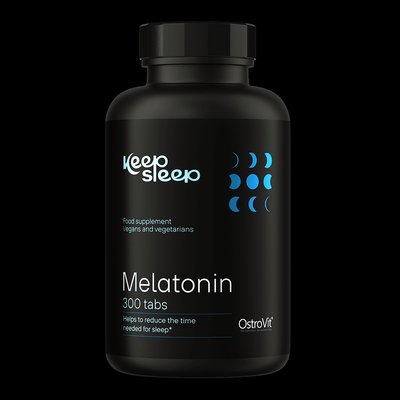 OstroVit Keep Sleep Melatonin€8.90 In stock 180tabs are available at maxfit.ee as reliable melatonin options.
Who Is Likely to Respond
The clearest responders are individuals whose fatigue is directly caused or worsened by circadian disruption or poor sleep onset:
- Shift workers whose schedules conflict with natural daylight cues
- Frequent travellers crossing multiple time zones
- People with delayed sleep phase syndrome who struggle to fall asleep until very late
- Older adults whose endogenous melatonin production declines with age
For athletes, particularly those travelling across time zones for competition, melatonin to manage jet lag and maintain sleep quality is a legitimate, evidence-backed application.
ICONFIT Capsules Good Sleep N90 combines melatonin with other sleep-support ingredients and is another option available at maxfit.ee.
Dose
One of the most common misunderstandings about melatonin is that more is better. The research indicates the opposite. Most studies showing benefit for sleep onset and circadian adjustment used doses between 0.5 mg and 3 mg. High doses (such as 10 mg tablets common in some markets) may actually be less effective for sleep regulation and more likely to cause grogginess the following morning.
BIOTECHUSA Melatonin 90tab and NOW Melatonin 1mg Complex 100tabs represent different dose options for those looking to match clinical research doses.
Timing matters as much as dose: melatonin is most effective when taken one to two hours before the desired sleep time, or at the destination bedtime when managing jet lag.
Realistic Expectations
If your fatigue stems from circadian disruption or difficulty initiating sleep, melatonin can meaningfully help — and the evidence is solid. If your fatigue has other causes (nutrient deficiency, overtraining, anaemia, thyroid issues, psychological stress), melatonin will not address the root cause and will produce little benefit.
Melatonin is also not a stimulant. Expecting it to boost energy the way caffeine does would be a misunderstanding of its pharmacology. Its energy-relevant benefit is upstream: better sleep produces better waking energy, but only if sleep is actually the limiting factor.
FAQ
Can melatonin replace coffee for energy?
No. Melatonin and caffeine act through completely different mechanisms. Melatonin promotes sleep; caffeine blocks adenosine receptors to reduce the perception of tiredness. Using melatonin during waking hours to boost alertness makes no pharmacological sense.
Does melatonin help with chronic fatigue?
For chronic fatigue syndrome and similar conditions, the evidence is mixed and inconclusive. Melatonin may help if poor sleep quality is a contributing factor, but it does not address the underlying pathophysiology of these conditions.
Is it safe to take melatonin every night?
For short-term use and for specific circadian applications (jet lag, shift work), melatonin is well tolerated. Long-term nightly use in otherwise healthy individuals is not well studied. Using the lowest effective dose and cycling off periodically is a conservative approach.
References
Herxheimer, A., & Petrie, K. J. (2002). Melatonin for the prevention and treatment of jet lag. Cochrane Database of Systematic Reviews, (2), CD001520. [PMID: 12076414.]
Reiter, R. J., Tan, D. X., Rosales-Corral, S., & Manchester, L. C. (2013). The universal nature, unequal distribution and antioxidant functions of melatonin and its derivatives. Mini Reviews in Medicinal Chemistry, 13(3), 373-384. https://pubmed.ncbi.nlm.nih.gov/23190034/
Ferracioli-Oda, E., Qawasmi, A., & Bloch, M. H. (2013). Meta-analysis: melatonin for the treatment of primary sleep disorders. PLoS ONE, 8(5), e63773. https://pubmed.ncbi.nlm.nih.gov/23691095/
Melatonin and Mitochondrial Health: The Energy Connection Unpacked
The relationship between melatonin and cellular energy is more nuanced than simply "helps you sleep, therefore you feel better." The direct mitochondrial effects deserve a more detailed look.
Mitochondria are the primary sites of ATP synthesis. They are also major producers of reactive oxygen species (ROS) as a byproduct of the electron transport chain. When ROS accumulate faster than the cell's antioxidant systems can neutralise them, mitochondrial DNA and membrane lipids are damaged, reducing the efficiency of energy production over time.
Melatonin is among the few compounds small enough to enter mitochondria directly. Once inside, it scavenges hydroxyl and peroxynitrite radicals — two of the most damaging ROS species — and stimulates antioxidant enzyme activity (including superoxide dismutase). Reiter et al. (2013) have documented this mitochondria-specific antioxidant role extensively.
What this means practically: in conditions of elevated oxidative stress (intense training, ageing, chronic illness), melatonin's mitochondrial protection could theoretically preserve cellular energy production efficiency. This is the mechanistic basis for claims about melatonin and fatigue reduction — but it is important to note this has been studied in pathological contexts, not in healthy, well-rested adults.
Melatonin Dosage Across Life Stages
Endogenous melatonin production changes dramatically across a lifetime. Children produce very high amounts (which is why they sleep so soundly). Levels begin declining in the early 20s and by age 70, nocturnal melatonin production can be substantially lower than in young adults. This is one reason why older adults often experience lighter, more fragmented sleep.
For older adults, the lower dose range (0.5 mg to 1 mg) is particularly well-suited and often as effective as higher doses. NOW Melatonin 1mg Complex 100tabs available at maxfit.ee matches this clinical research dose precisely.
For managing jet lag across multiple time zones, slightly higher doses of 2 mg to 3 mg taken at the destination bedtime are supported by the Herxheimer and Petrie (2002) review evidence. BIOTECHUSA Night 60 caps and 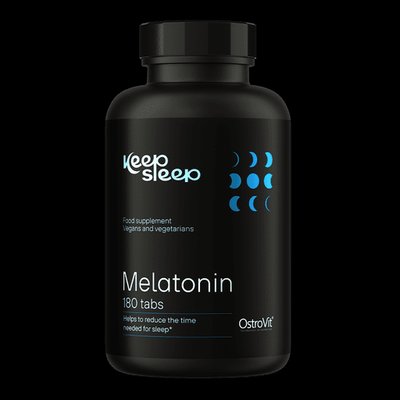 OstroVit Keep Sleep Melatonin€7.90 In stock 60tabs offer product options at this dose range.
Practical Fatigue Management Beyond Melatonin
If fatigue is persistent and sleep-focused interventions are not resolving it, the next step is to investigate root causes rather than layer more supplements:
- Iron and ferritin check: Iron deficiency is a leading cause of fatigue in women and is missed by standard complete blood count if only haemoglobin is checked (ferritin should also be tested).
- Thyroid function: Both hypothyroidism and subclinical thyroid dysfunction cause persistent fatigue.
- Vitamin D status: Severe vitamin D deficiency is associated with musculoskeletal fatigue.
- B12 status: Particularly relevant for vegans, older adults, and those on proton pump inhibitors.
These are medical questions that supplements alone cannot answer. Melatonin can improve sleep efficiency as a contributing piece, but it is not a substitute for investigating the primary cause of persistent fatigue.



