
Signs You Need Melatonin: Deficiency & Who Benefits
Melatonin is a hormone produced by the pineal gland in response to darkness. It does not cause sleep directly — it is a circadian signal that prepares the body for sleep by lowering core body temperature and reducing alertness. When melatonin production is disrupted or insufficient, the result is a misalignment between the internal body clock and external light-dark cycles. Understanding genuine melatonin deficiency helps distinguish those who may benefit from supplementation from those whose sleep issues have different root causes.
What Melatonin Does and Does Not Do
Melatonin regulates the timing of sleep, not its depth or duration in a direct sense. It shifts the circadian phase. This is why it is highly effective for conditions involving circadian misalignment — jet lag, shift work, delayed sleep phase disorder — and less effective for sleep maintenance disorders (waking in the middle of the night) or insomnia driven by anxiety, pain, or poor sleep hygiene.
Deficiency Symptoms to Watch For
Low melatonin levels are associated with:
- Difficulty falling asleep even when tired (prolonged sleep onset latency)
- Waking too early and being unable to return to sleep
- Jet lag after crossing multiple time zones — difficulty synchronising with local time
- Shift work disorder — difficulty sleeping during the day and feeling alert at night
- Seasonal sleep disruption — particularly in northern latitudes with extreme light-dark variation
- Daytime fatigue without an obvious cause
- Delayed sleep phase — naturally feeling sleepy much later than a conventional bedtime (common in teenagers and young adults)
It is important to note that many of these symptoms overlap with other conditions. Low melatonin production is only one possible explanation. Anxiety, depression, poor sleep hygiene, sleep apnoea, and nutrient deficiencies (magnesium, vitamin B6, tryptophan — all cofactors in the melatonin biosynthetic pathway) can produce similar symptoms.
At-Risk Groups
Older Adults
Endogenous melatonin production declines significantly with age. Older adults often report earlier sleep onset and waking, and reduced sleep quality. Research indicates that low-dose melatonin supplementation may modestly improve sleep quality in older adults, particularly those with demonstrably reduced production (Ferracioli-Oda et al., 2013).
Night Shift Workers
Shift workers whose work schedules are misaligned with natural light-dark cycles have chronically disrupted melatonin patterns. Timed melatonin use can help accelerate resynchronisation.
Frequent Travellers
Jet lag — the circadian misalignment after rapid transmeridional travel — is one of the most evidence-supported indications for melatonin. Taking melatonin at the target bedtime of the destination timezone helps advance or delay the circadian phase depending on travel direction.
Adolescents and Young Adults with Delayed Sleep Phase
The adolescent circadian clock is naturally delayed — biological pressure for sleep peaks later at night. Low-dose melatonin taken 1–2 hours before the desired sleep time can gently advance the sleep phase over 1–2 weeks.
Northern Latitude Residents (Estonian and Nordic Context)
In Estonia, Finland, Sweden, and Norway, summer brings nearly continuous daylight and winter brings very short days with long darkness. The extreme photoperiod variation can disrupt melatonin onset timing. During the light summers, blackout curtains are important; the signal to produce melatonin (darkness) may arrive late or not at all. During dark winters, some individuals (those with seasonal affective disorder) have disrupted circadian rhythms in the opposite direction. Low-dose melatonin can help regulate timing during these seasonal extremes.
How Is Melatonin Status Assessed?
There is no routine blood test for melatonin — levels fluctuate dramatically over 24 hours and are most accurately assessed via multiple salivary or urinary samples over the night. In clinical practice, melatonin deficiency is typically assessed through sleep history and circadian symptom patterns rather than laboratory measurement.
When to Supplement vs Addressing Root Causes
Melatonin supplementation is most justified for:
- Jet lag and travel across time zones
- Shift work schedule adjustment
- Delayed sleep phase syndrome
- Age-related decline in sleep quality
- Circadian disruption from extreme seasonal light conditions
Melatonin is less likely to help if:
- The primary issue is sleep maintenance (waking in the night) rather than sleep onset
- Sleep problems stem from anxiety, pain, or depression
- Caffeine, alcohol, or blue-light exposure at night is the disrupting factor
Dose matters: Effective doses for circadian adjustment are typically much lower than those commonly sold — often 0.5–1 mg is sufficient. Doses of 5–10 mg may cause morning grogginess and are generally not more effective for sleep onset than lower doses (Ferracioli-Oda et al., 2013). Products with lower unit doses allow more precise titration.
At maxfit.ee you can find ICONFIT Capsules Melatonin N90, ICONFIT Capsules Good Sleep N90, 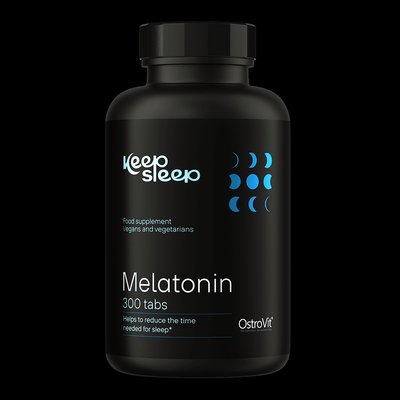 OstroVit Keep Sleep Melatonin€8.90 In stock 300tabs, and
 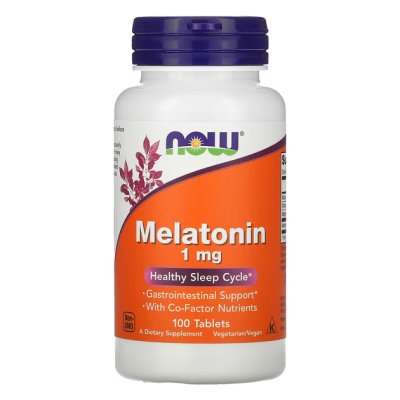 NOW Melatonin 1mg Complex€11.90 In stock 100tabs — the 1 mg option is appropriate for circadian adjustment use.
FAQ
Is melatonin safe to take every night?
Short-to-medium-term nightly use appears safe for most adults. Long-term use (months to years) has not been associated with serious adverse effects in clinical studies, and melatonin is not considered addictive or habit-forming. However, it is worth addressing the root cause of sleep problems rather than relying indefinitely on supplementation.
Does melatonin help you sleep longer, or just fall asleep faster?
Melatonin primarily reduces sleep onset latency (time to fall asleep) rather than extending total sleep time or improving sleep architecture. For circadian rhythm disorders, it also helps align the sleep window with the desired schedule.
Can children take melatonin?
Melatonin is used in paediatric clinical settings, particularly for children with neurodevelopmental disorders affecting sleep. Use in healthy children should only be considered after discussing with a paediatrician.
References
Ferracioli-Oda, E., Qawasmi, A., & Bloch, M. H. (2013). Meta-analysis: melatonin for the treatment of primary sleep disorders. PLoS ONE, 8(5), e63773. https://pubmed.ncbi.nlm.nih.gov/23691095/
Arendt, J., & Skene, D. J. (2005). Melatonin as a chronobiotic. Sleep Medicine Reviews, 9(1), 25-39. https://pubmed.ncbi.nlm.nih.gov/15649736/



