
What Limits Melatonin Absorption
Melatonin absorption is surprisingly efficient after oral ingestion, but several factors determine how much of a dose actually reaches circulation and contributes to sleep onset. Melatonin is a lipophilic indole hormone naturally produced by the pineal gland in response to darkness. When taken as a supplement, it undergoes first-pass metabolism in the liver, which means a significant portion is metabolised before it enters general circulation.
Bioavailability after oral administration is highly variable — estimates range from roughly 15% to 74% depending on individual metabolic rate, liver enzyme activity, and whether the dose was taken with food (Fourtillan et al., 2000). This variability explains why some people find a given dose very effective while others notice little effect. Understanding the factors that influence this variability helps in selecting the right approach.
The dose itself is a key determinant. Exogenous melatonin produces a physiological signal even at very low doses, and the evidence suggests that lower doses — often as low as 0.5 mg — can be sufficient to shift sleep onset in normal-sleeping adults. Higher doses do not proportionally increase the sleep benefit and may leave residual drowsiness the following morning.
Cofactors That Help
No specific dietary cofactor dramatically amplifies melatonin absorption in the way that fat enhances fat-soluble vitamin absorption. However, because melatonin is mildly lipophilic, taking it with a small amount of fat — such as during a light evening snack — may slightly increase its absorption compared with taking it in a completely fasted state.
Tryptophan, an amino acid found in protein-rich foods, is the dietary precursor to serotonin and subsequently to endogenous melatonin. Adequate dietary tryptophan throughout the day supports the biochemical pathway, but this is distinct from supplement absorption.
Form and Timing Effects
Oral immediate-release tablets or sublingual drops are absorbed quickly, with peak plasma levels typically reached within 30 to 60 minutes of ingestion. Sublingual formulations bypass first-pass liver metabolism to some extent, which can result in faster onset and potentially higher bioavailability. For jet lag or shift work, this faster onset may be an advantage.
Extended-release formulations are designed to mimic the gradual overnight rise of endogenous melatonin, making them more relevant for sleep maintenance rather than sleep onset. The trade-off is a slower and lower peak concentration.
At maxfit.ee, ICONFIT Capsules Melatonin N90 and 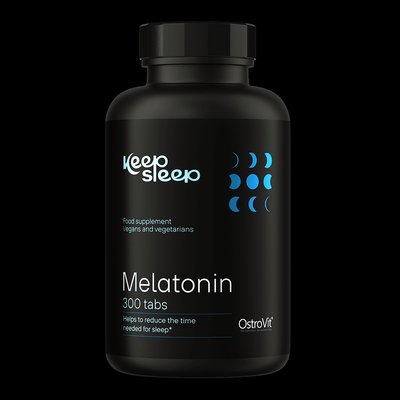 OstroVit Keep Sleep Melatonin€8.90 In stock 300tabs offer convenient daily supplementation. NOW Melatonin 1mg Complex 100tabs provides a low-dose option, well aligned with evidence that lower doses are often sufficient (Ferracioli-Oda et al., 2013).
Food Pairings and Light Exposure
The most significant factor influencing melatonin effectiveness is not diet but light exposure. Blue-spectrum light — emitted by screens and overhead lighting — suppresses endogenous melatonin production and reduces the effectiveness of a supplement dose by activating the same light-sensing mechanisms that counteract melatonin signalling. Taking melatonin while continuing to use bright screens significantly undermines its potential benefit.
Dimming lights and limiting screen exposure in the 60 to 90 minutes before a planned sleep time creates the optimal environment for melatonin to work — both endogenous and supplemental. Food timing also plays a role: eating a large meal close to bedtime diverts metabolic activity and may slightly delay melatonin onset, though this effect is minor compared with light.
Practical Tips
- Take melatonin 30 to 60 minutes before your intended sleep time for immediate-release forms.
- Dim screens and reduce bright light after taking the supplement.
- Start with a low dose; research supports effectiveness at doses as low as 0.5–1 mg.
- Consistency helps regulate the circadian signal over several nights.
Browse the full selection of melatonin supplements at maxfit.ee.
FAQ
What is the best dose of melatonin for sleep?
Evidence supports effectiveness at doses as low as 0.5 to 1 mg. A meta-analysis found that melatonin significantly reduced sleep-onset latency (the time to fall asleep) and improved sleep quality at doses ranging from 0.5 mg to 5 mg (Ferracioli-Oda et al., 2013). Higher doses are not consistently more effective and may increase next-morning grogginess.
Does it matter whether I take melatonin on an empty stomach?
Melatonin is absorbed and effective when taken with or without food. Taking it with a very large meal may slightly delay absorption. A light snack is fine. The most important variable is timing relative to your target sleep window and your light environment.
Can I take melatonin every night?
Short-term use is well-documented as safe and effective. Long-term nightly use is less studied. Most guidance suggests using melatonin situationally — for jet lag, shift work adjustment, or periods of disrupted sleep — rather than as a permanent nightly habit. If you find you need nightly supplementation for extended periods, it is worth discussing sleep hygiene and potential underlying causes with a healthcare provider.
References
Fourtillan, J. B., Brisson, A. M., Gobin, P., Ingrand, I., Decourt, J. P., & Girard, P. (2000). Bioavailability of melatonin in humans after day-time administration of D(7) melatonin. Biopharmaceutics & Drug Disposition, 21(1), 15-22. https://pubmed.ncbi.nlm.nih.gov/11038434/
Ferracioli-Oda, E., Qawasmi, A., & Bloch, M. H. (2013). Meta-analysis: melatonin for the treatment of primary sleep disorders. PLoS ONE, 8(5), e63773. https://pubmed.ncbi.nlm.nih.gov/23691095/
Arendt, J., & Skene, D. J. (2005). Melatonin as a chronobiotic. Sleep Medicine Reviews, 9(1), 25-39. https://pubmed.ncbi.nlm.nih.gov/15649736/



