
Is Long-Term Magnesium Use Safe?
Magnesium is one of the most commonly recommended minerals, and many people take it daily for months or years. The question of long-term safety is reasonable: does continuous supplementation pose any risks, or is it fine to keep going indefinitely?
Short answer: for most healthy adults, long-term magnesium use at typical supplement doses is considered safe and even beneficial. But there are nuances worth understanding.
What Long-Term Studies Show
Several observational and intervention studies have followed magnesium supplementation over extended periods. A notable meta-analysis found that dietary and supplemental magnesium intake is associated with reduced risk of cardiovascular events and type 2 diabetes over time (Fang et al., 2016). Long-term cohort data suggest that sustained adequate magnesium status — not just short-term supplementation — is what drives meaningful health outcomes.
Intervention trials lasting 12 weeks to 6 months consistently show improvements in blood pressure, insulin sensitivity, and sleep quality without adverse effects in healthy participants. No large randomised trial has identified organ toxicity from oral supplementation at common doses.
Upper Safe Limits Over Time
Regulatory bodies establish tolerable upper intake levels (UL) to define the highest amount unlikely to cause adverse effects in the general population. The UL for supplemental magnesium (i.e., from supplements, not food) in adults is set at 350 mg per day by European food safety authorities. Food-sourced magnesium is not included in this limit because excess dietary magnesium is readily excreted by the kidneys.
Exceeding the supplement UL consistently is primarily associated with gastrointestinal symptoms — loose stools and cramping — rather than systemic toxicity. Serious toxicity from oral supplementation in people with normal kidney function is extremely rare.
People with chronic kidney disease are the exception. Impaired renal excretion can allow magnesium to accumulate, leading to hypermagnesaemia. Anyone with kidney disease should consult a physician before long-term supplementation.
Do You Need to Cycle Magnesium?
Unlike stimulants or adaptogenic compounds, magnesium does not cause receptor downregulation or tolerance. It is an essential mineral that participates in over 300 enzymatic reactions. If your body is chronically low — a common situation in people eating processed diets, under high stress, or training intensely — there is no biological reason to stop and restart supplementation on a fixed schedule.
Cycling is sometimes recommended anecdotally but has no support from controlled research. The more clinically relevant question is whether you actually need to supplement at all, which monitoring can answer.
Monitoring
Serum magnesium is a crude marker because the body defends serum levels at the expense of tissue stores. Even when tissue magnesium is low, serum values can appear normal. However, periodic blood tests — every 6 to 12 months if you supplement long-term — are still worthwhile to catch outliers.
Red-blood-cell (RBC) magnesium is a better indicator of tissue status and is available in some lab panels. Signs of potential excess over months include persistent diarrhoea, muscle weakness, or abnormally low blood pressure; if these appear, reduce dose or consult a doctor.
Choosing a Form for Long-Term Use
Not all magnesium forms are equal for sustained daily use. Magnesium citrate, glycinate, and malate are generally better tolerated than magnesium oxide because they have higher bioavailability and cause fewer gastrointestinal issues at equivalent doses.
OstroVit Magnesium Citrate 200g Naturaalne and OstroVit Magnesium Glycinate 90caps are popular options available at maxfit.ee. For those who prefer capsule convenience, 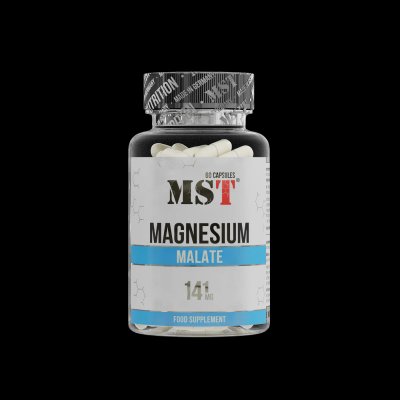 MST Magnesium Malate€15.90 In stock 60caps and
  SELF Potassium Magnesium€19.90 In stock 120 vegan caps are solid choices that combine well-absorbed forms in practical serving sizes.
Honest Verdict
Long-term magnesium supplementation at doses within the established tolerable upper intake level is safe for healthy adults with normal kidney function. There is no compelling reason to cycle it. Periodic monitoring is sensible but not urgent for people without underlying conditions. The main risk is self-selected: gastrointestinal discomfort if you take too much, solved simply by reducing the dose. If you have kidney disease, always consult a doctor before supplementing long-term.
FAQ
Can I take magnesium every day for years?
Yes, for healthy adults with normal kidney function, daily supplementation at or below the tolerable upper intake level for supplemental magnesium is considered safe based on available evidence. Many people do so for years without issues.
Does magnesium build up to toxic levels in the body?
In people with normal kidney function, excess magnesium is efficiently excreted in urine, so accumulation to toxic levels from oral supplements is extremely unlikely. Risk increases significantly only with kidney impairment.
Which magnesium form is best for daily, long-term use?
Forms with higher bioavailability such as magnesium citrate, glycinate, or malate are preferred for daily use because they cause fewer gastrointestinal side effects than magnesium oxide at the same dose.
References
Fang, X., Wang, K., Han, D., He, X., Wei, J., Zhao, L., Imam, M. U., Ping, Z., Li, Y., Xu, Y., Min, J., & Wang, F. (2016). Dietary magnesium intake and the risk of cardiovascular disease, type 2 diabetes, and all-cause mortality: a dose-response meta-analysis of prospective cohort studies. BMC Medicine, 14(1), 210. https://pubmed.ncbi.nlm.nih.gov/27927203/
Rosanoff, A., Weaver, C. M., & Rude, R. K. (2012). Suboptimal magnesium status in the United States: are the health consequences underestimated? Nutrition Reviews, 70(3), 153-164. https://pubmed.ncbi.nlm.nih.gov/22364157/
Verrotti, A., Prezioso, G., Mohn, A., Chiarelli, F., & Verrotti, A. (2014). Magnesium supplementation for children with epilepsy — an updated review. Pharmacological Research, 93, 1-8.



