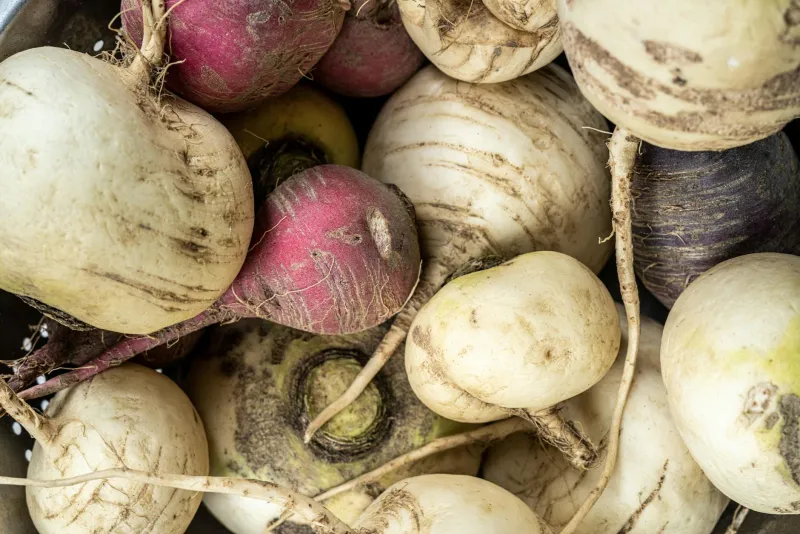
Maca Forms Compared
Maca (Lepidium meyenii) is an Andean root vegetable traditionally consumed as a food and increasingly used as a supplement for energy, endurance and hormonal balance. On the market you will encounter three main maca forms: raw powder, encapsulated powder, and gelatinised (pre-cooked) extract. Understanding the difference helps you get value from your purchase.
Products currently available at maxfit.ee include NOW Maca 500mg 250 veg. caps., NOW Maca 500mg 100 veg. caps., Ostrovit Maca 90tab, BIOTECHUSA Maca 60 caps, and ICONFIT Maca 90caps. Browse the full range at /en/category/maca-et.
Bioavailability Differences
Raw maca powder is the least processed form. It retains all constituents, including raw starches that are harder to digest for some people. Gelatinisation removes the raw starch by applying heat and pressure during processing. This step improves digestibility and concentrates the active compounds (glucosinolates, macamides, macaenes) relative to the whole root weight. For people with sensitive digestion, gelatinised maca is generally better tolerated.
Standardised capsule extracts specify the percentage of bioactive marker compounds, which makes dosing more consistent across batches. A small pilot study found that encapsulated maca extract was associated with reduced psychological symptoms in postmenopausal women (Brooks et al., 2008), suggesting that standardised forms can deliver meaningful amounts of active constituents.
Cost per Effective Dose
Research has used daily amounts ranging from roughly 1.5 g to 3.5 g of maca root equivalent (Gonzales et al., 2002). When comparing products:
- Capsules are convenient but often more expensive per gram of root equivalent than bulk powder.
- Raw powder is the most cost-effective by weight but requires measuring and mixing.
- Gelatinised extract sits in between — slightly more expensive than raw powder but easier on the stomach.
Always compare price per gram of actual maca root equivalent, noting any concentration ratio stated on the label (e.g., a 10:1 extract means 500 mg of extract equals 5 g of raw root).
Which Maca Form for Which Goal
- Energy and endurance: Both raw and gelatinised forms have been used in sports studies. A small randomised trial found an association between maca supplementation and improved endurance performance in trained cyclists (Stone et al., 2009), though sample sizes were small.
- Hormonal balance and libido: Most clinical work has used encapsulated standardised extracts. Capsules are the practical choice for consistent dosing.
- Cooking and smoothies: Raw maca powder integrates easily into oats, shakes, or coffee alternatives. The earthy, malt-like flavour is noticeable.
- Digestive sensitivity: Choose gelatinised maca. Raw powder may cause bloating in some individuals.
What to Look for on the Label
- Root equivalent: Check whether the label states a raw root amount or a concentrated extract ratio.
- Colour: Black, red, and yellow maca are often sold separately. Yellow is the most common and best studied. Red and black maca have been explored for more specific effects (e.g., bone density, male fertility) but the evidence base is smaller.
- Origin: Peruvian Andes maca is the authentic source — look for geographic indication.
- Additives: Capsule fillers vary. Vegan capsules use HPMC (hydroxypropyl methylcellulose) instead of gelatin — check if you need a vegan option.
FAQ
Does maca contain hormones?
No. Maca does not contain oestrogen, testosterone, or other steroid hormones. It is classified as an adaptogen and works through different mechanisms than hormonal supplementation.
Can I take maca every day?
Maca has been used as a daily food staple in the Andes for centuries. Clinical studies using it daily for up to 12 weeks have not reported serious adverse effects in healthy adults. Cycling (e.g., 5 days on, 2 days off) is a common practice among supplement users but is not mandated by the research.
Is maca suitable for vegans?
Maca root is a plant. Raw and gelatinised powders are inherently vegan. For capsules, confirm that HPMC or another plant-based capsule shell is used rather than gelatin.
References
Brooks, N. A., Wilcox, G., Walker, K. Z., Ashton, J. F., Cox, M. B., & Stojanovska, L. (2008). Beneficial effects of Lepidium meyenii (Maca) on psychological symptoms and measures of sexual dysfunction in postmenopausal women are not related to oestrogen or androgen content. Menopause, 15(6), 1157–1162. https://pubmed.ncbi.nlm.nih.gov/18784609/
Gonzales, G. F., Cordova, A., Vega, K., Chung, A., Villena, A., Gonez, C., & Castillo, S. (2002). Effect of Lepidium meyenii (MACA) on sexual desire and its absent relationship with serum testosterone levels in adult healthy men. Andrologia, 34(6), 367–372. https://pubmed.ncbi.nlm.nih.gov/12472620/
Stone, M., Ibarra, A., Roller, M., Zangara, A., & Stevenson, E. (2009). A pilot investigation into the effect of maca supplementation on physical activity and sexual desire in sportsmen. Journal of Ethnopharmacology, 126(3), 574–576. https://pubmed.ncbi.nlm.nih.gov/19781622/



