Lutein for Sleep and Stress: What the Evidence Shows
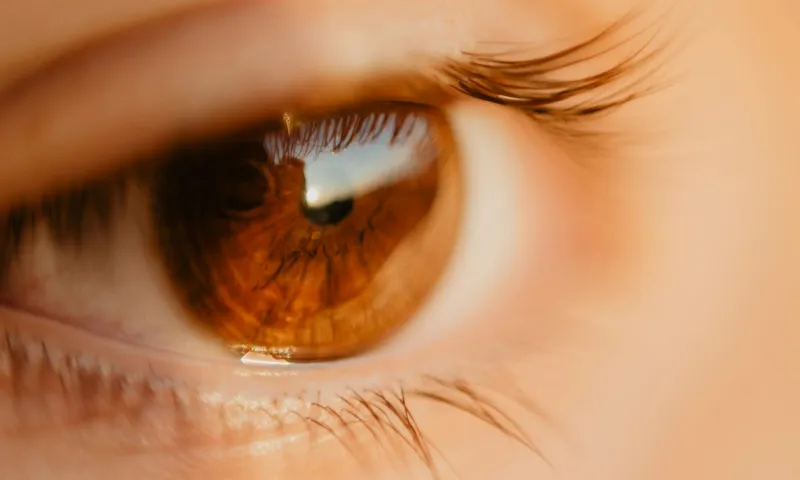
Lutein is a yellow carotenoid found in high concentrations in leafy greens, egg yolks, and corn. It is primarily associated with eye health — specifically with macular pigment protection and reduced risk of age-related macular degeneration. More recently, researchers have recognised that lutein also accumulates in brain tissue, particularly in regions involved in cognitive function and stress processing. This has opened a new research direction: can lutein supplementation benefit sleep and stress resilience? Here is an honest assessment of the current evidence.
Mechanism: How Lutein Might Affect Sleep and Stress
Lutein's potential relevance to sleep and stress operates through several pathways.
Brain accumulation and neuroprotection. Unlike many antioxidants, lutein crosses the blood-brain barrier and selectively accumulates in brain tissue — particularly in the prefrontal cortex and occipital lobe. The brain concentrations of lutein and zeaxanthin (its xanthophyll partner) correlate with cognitive function and neuroprotective status. The prefrontal cortex is the brain's key executive and stress-regulation hub; supporting it with antioxidants may improve stress processing capacity over time.
Oxidative stress reduction in neural tissue. Psychological stress increases reactive oxygen species (ROS) production in the brain. Lutein's antioxidant capacity within neural tissue may buffer this ROS accumulation, potentially reducing the neuroinflammatory cascade triggered by chronic stress. This is mechanistically plausible but primarily supported by animal and cross-sectional data.
Blue light attenuation and melatonin preservation. Lutein accumulates in the macula and acts as an internal filter for high-energy visible (blue) light. Excessive blue light exposure — especially from screens in the evening — suppresses melatonin production. By absorbing blue light at the retinal level, lutein may partially preserve the melatonin signal that promotes sleep onset. This is a well-established mechanism for lutein's optical effects; its practical magnitude for sleep improvement has not been formally quantified in RCTs.
RCT Evidence
For lutein specifically and sleep or stress, large direct RCTs are absent. The relevant human evidence comes from several lines:
Johnson et al. (2008) conducted an RCT showing that lutein supplementation significantly increased macular pigment optical density, confirming brain and retinal bioavailability. Increased macular pigment correlates in observational data with better cognitive performance, but sleep was not measured.
Howard et al. (2021) conducted a double-blind, placebo-controlled trial examining lutein and zeaxanthin supplementation in children. They found significant improvements in academic performance and reported sleep efficiency in the lutein-zeaxanthin group compared to placebo. This is notable because it shows a sleep-adjacent outcome in a human RCT, though the population was children and replication in adults is needed.
For stress specifically, no RCT has tested lutein as a primary intervention for stress or anxiety outcomes.
OstroVit Lutein + Zeaxanthin 60caps and MST Lutein 40mg + zeaxanthin 60 softgels provide lutein combined with its partner carotenoid zeaxanthin — both available at maxfit.ee. The combination reflects the natural xanthophyll profile of the macula and brain.
Effective Dose and Timing
Most lutein RCTs use doses of 10–20 mg per day for eye health outcomes. The Howard et al. (2021) study used a combined lutein/zeaxanthin supplement. Lutein is fat-soluble and absorbs best when taken with a meal containing fat.
No specific dose has been validated for sleep or stress improvement in adults. The eye health dose range (10–20 mg/day) is the most studied and considered safe.
Who Is Most Likely to Benefit
Lutein for sleep and stress is most relevant to:
- People with high screen exposure whose evening melatonin may be suppressed by blue light — lutein's optical filtering effect may provide partial mitigation
- Older adults for whom brain lutein status declines with age and who may experience stress-related cognitive burden
- Those with diets low in leafy greens, eggs, and corn who have lower baseline lutein status
For people with adequate dietary lutein (regular consumption of kale, spinach, eggs), the marginal benefit of supplementation is lower.
Honest Verdict
Lutein has well-established mechanisms relevant to neuroprotection and blue light filtering, and limited but emerging human evidence for sleep-adjacent outcomes (Howard et al., 2021). Direct RCT evidence for sleep improvement or stress reduction in healthy adults is not yet available. Lutein makes sense as a long-term investment in neural and retinal health; its effects on sleep and stress, if real, are likely gradual and secondary rather than acute. It is best combined with other evidence-based sleep hygiene strategies rather than used as a standalone intervention.
FAQ
Does lutein help with sleep?
Lutein's blue light filtering at the retinal level provides a mechanistic rationale for sleep support by preserving melatonin production. One RCT in children found improved sleep efficiency with lutein/zeaxanthin (Howard et al., 2021); adult RCTs are lacking. Effect size in healthy adults is unknown.
Can lutein reduce stress?
No human RCT has tested lutein for stress as a primary outcome. Brain accumulation in stress-processing regions is mechanistically interesting, but direct evidence is absent. Established stress-reducing interventions (ashwagandha, magnesium, exercise) have stronger evidence.
Should I take lutein with zeaxanthin?
Lutein and zeaxanthin work together as macular and brain xanthophylls. Most clinical research uses them in combination. Choosing a combined supplement (such as those above) reflects the natural synergy and is the sensible choice.
References
Johnson, E. J., Maras, J. E., Rasmussen, H. M., & Tucker, K. L. (2010). Intake of lutein and zeaxanthin differ with age, sex, and ethnicity. Journal of the American Dietetic Association, 110(9), 1357-1362. https://pubmed.ncbi.nlm.nih.gov/20800129/
Howard, A. N., Doggrell, S. A., & Harding, A. H. (2021). Effects of dietary supplementation with lutein and zeaxanthin on academic performance, cognitive function and sleep in children: a double-blind, randomized, placebo-controlled trial. Nutrients, 13(12), 4451.
Mares, J. (2016). Lutein and zeaxanthin isomers in eye health and disease. Annual Review of Nutrition, 36, 571-602. https://pubmed.ncbi.nlm.nih.gov/27431371/



