
Why Does Supplement Form Matter?
A vitamin that isn't absorbed doesn't work. Bioavailability — how much of the active ingredient reaches the bloodstream — is the primary determinant of benefit. Different forms impact bioavailability, taste, convenience, and cost in very different ways.
Quick Overview of Main Forms
| Form | Bioavailability | Shelf Life | Convenience | Cost |
|---|---|---|---|---|
| Liquid | High | Shorter | Moderate | Higher |
| Softgel | High (fat-soluble) | Long | Very convenient | Moderate |
| Hard capsule | Good | Long | Convenient | Moderate |
| Tablet | Good | Longest | Very convenient | Low |
| Powder | High | Good (sealed) | Requires mixing | Moderate |
Liquid Supplements: Advantages
Faster Absorption
Liquid supplements require no dissolution — the active ingredient enters the bloodstream more quickly because the stomach dissolution step is partially bypassed. This matters most for:
- Children's supplements (capsule swallowing is difficult)
- Older adults with reduced stomach acid
- Fat-soluble vitamins (A, D, E, K), where the oil-based carrier is integrated
NOW Liquid Vitamin D-3 59ml is an ideal example — vitamin D in an oil carrier offers excellent bioavailability and allows precise dose adjustment drop by drop.
Flexible Dosing
Drops allow exact dose customisation — useful for children, older adults, and anyone requiring graduated doses.
Liquid Supplements: Disadvantages
- Shorter shelf life: opened bottle lasts weeks to a couple of months — tablets last years
- Cost: liquid forms are typically 30–50% pricier per equivalent dose
- Taste: some vitamins (B-vitamins, iron) are unpleasant in liquid form
- Dosing imprecision: counting drops is less accurate than taking a tablet
- Travel: glass bottle is heavy and fragile
Tablets and Capsules: When Do They Win?
Tablet Strengths
- Precise dose: every tablet contains exactly the stated amount
- Long shelf life: typically 2–4 years
- Convenience: fits in a pocket, the best travel format
- Price: lowest per unit
Large B-complex formulas, multivitamins, and minerals are often best in tablet form. BIOTECHUSA Multivitamin for Men 60 Tablets, Optimum Nutrition Opti-Women 120tabs, and 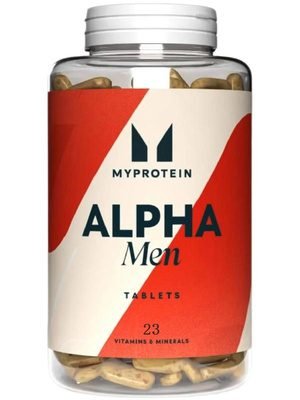 MyProtein Alpha Men Multivitamins€19.90 In stock 240 Tabs exemplify precise, convenient tablet formats.
When Is Liquid Form Better?
| Situation | Better Choice |
|---|---|
| Children under 6 | Liquid |
| Adults with swallowing difficulties | Liquid |
| Vitamin D (fat-soluble) | Softgel or liquid |
| Older adults (low stomach acid) | Liquid or capsule |
| Active athlete (precise dosing) | Tablet or capsule |
| Travel | Tablet |
Softgels: The Best of Both Worlds?
Softgels combine liquid vitamin advantages (excellent bioavailability with an oil-based carrier) with tablet convenience (precise dose, long shelf life, easy to carry). NOW Vitamin D3 5000 IU 120 softgels and ICONFIT Softgel D3-Vitamin 4000 IU N90 are excellent examples — oil-carrier bioavailability in a compact, portable capsule.
Practical Recommendation for Estonian Consumers
For most adults, tablets and capsules are the best choice — precise dosing, long shelf life, and low cost. Consider liquids for vitamin D, children's vitamins, and swallowing difficulties. If you prefer softgels, they are ideal for fat-soluble vitamins.
All forms are available in the vitamins category at maxfit.ee.
FAQ
Does liquid vitamin absorb faster than a capsule?
Yes — liquid absorption begins in the mouth and stomach without a dissolution step. In practice, however, this difference is often small and rarely changes long-term outcomes significantly.
Are powder forms better than tablets?
It depends on the nutrient. Protein powder and electrolytes are best in powder form — volumes are large and fast absorption matters. Vitamins and minerals are generally more convenient as tablets for precision and shelf life.
Is a powdered vitamin as good as a liquid one?
Yes — freeze-dried or powdered vitamins typically have the same bioavailability as liquids but last longer. The best form is simply the one you will actually take consistently.
References
- Gröber, U., Schmidt, J., & Kisters, K. (2015). Magnesium in prevention and therapy. Nutrients, 7(9), 8199–8226.
- Holick, M.F. (2007). Vitamin D deficiency. New England Journal of Medicine, 357(3), 266–281.
- Bolland, M.J., Grey, A., & Reid, I.R. (2018). Should we prescribe calcium or vitamin D supplements to treat or prevent osteoporosis? Climacteric, 18(Suppl 2), 22–31.
- Institute of Medicine. (2011). Dietary Reference Intakes for Calcium and Vitamin D. National Academies Press.
- Scaglione, F., & Panzavolta, G. (2014). Folate, folic acid and 5-methyltetrahydrofolate are not the same thing. Xenobiotica, 44(5), 480–488.