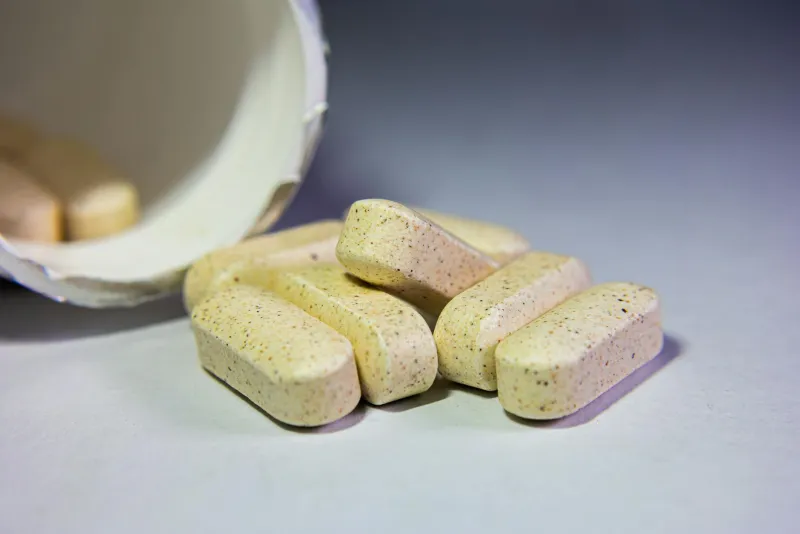
What Is L-Tyrosine?
L-tyrosine is a conditionally essential amino acid that the body synthesizes from phenylalanine. It occurs naturally in high-protein foods — cheese, meat, fish, and certain nuts. Its most important role is as the biochemical precursor for catecholamines: dopamine, noradrenaline (norepinephrine), and adrenaline.
Because catecholamines are linked to motivation, attention, mood, and the stress response, L-tyrosine has become popular both as a cognitive performance enhancer and a sports supplement used during intensive training, high-stress workloads, or periods of sleep deprivation (Young, 2007).
The Dopamine–Focus Connection
Dopamine governs motivation, reward perception, motor coordination, and attention. Noradrenaline regulates wakefulness, reaction time, and stress resilience. Adrenaline activates the fight-or-flight stress response.
All three are synthesized along a single pathway: L-tyrosine → L-DOPA → dopamine → noradrenaline → adrenaline. This means that the availability of tyrosine directly influences all three hormone-neurotransmitter levels during stress and heavy cognitive load.
When stress depletes catecholamine reserves, people feel fatigued, unmotivated, and unable to concentrate. L-tyrosine supplementation is designed to replenish this deficit.
What Does the Research Show?
Cognitive Performance Under Stress
A double-blind study found that L-tyrosine supplementation (150 mg/kg body weight) significantly improved working memory and cognitive flexibility during cold-stress exposure, which is known to deplete catecholamines (Mahoney et al., 2007).
Attention and Short-Term Memory
A military study demonstrated that a single dose of tyrosine (10–15 g) before a high-stress task — overnight watch, cold, deprivation — better preserved decision-making ability and response time (Shurtleff et al., 1994).
Exercise-Related Mental Fatigue
In trials, tyrosine reduced exercise-induced cognitive fatigue (impaired decision-making, reduced motivation). Its effect on physical training outcomes (strength, endurance) is less direct — the primary benefit is cognitive.
Optimal Dosing
| Purpose | Recommended dose | Timing before task |
|---|---|---|
| Mild cognitive support | 500–1000 mg | 30–60 min before |
| Stress resilience under heavy load | 1000–2000 mg | 60 min before |
| Extreme stress (intense training, exam) | up to 150 mg/kg | Single dose only |
L-tyrosine's effect is most measurable when catecholamines are being depleted — i.e., during stress, sleep restriction, caloric restriction, or prolonged fatigue. Its effect in non-stressed, well-rested individuals is more modest.
Top Products at MaxFit
For pre-workout use and mental support during demanding work, OstroVit Tyrosine 210g Orange is a flavored powder option that mixes conveniently. For a nootropic stack approach, OstroVit Braintus Focus 90caps combines tyrosine with other cognitive compounds. Browse the full energy and brain support category at maxfit.ee for additional options.
Smart Combinations
- L-theanine + caffeine — tyrosine adds catecholamine substrate, theanine reduces jitteriness, caffeine provides alertness — together a "clean focus" effect without the crash
- Rhodiola rosea — both act as adaptogens under stress via different mechanisms; combined use may be more effective
- B vitamins (B6, B9, B12) — required as coenzymes in dopamine synthesis pathways; dietary B-vitamin deficiencies can limit tyrosine's effectiveness
- Iron — the enzyme tyrosine hydroxylase requires iron as a cofactor; iron deficiency limits tyrosine's conversion to dopamine
Who Benefits Most from L-Tyrosine?
L-tyrosine is particularly useful for:
- Athletes whose training is both physically and mentally demanding (competitive sports, military, intense strength training)
- People working long hours under high stress, with short sleep, or on caloric restriction
- Vegetarians and vegans with limited intake of meat and dairy (primary tyrosine sources)
- High-stress periods: exams, deadlines, competitions
Safety and Side Effects
L-tyrosine is well tolerated at standard doses (up to 3–4 g per day). Rare side effects include:
- Headache
- Nausea
- Gastrointestinal discomfort
People taking MAO inhibitors (MAOIs) — certain antidepressants — should avoid tyrosine supplementation, as it can trigger a hypertensive crisis. Individuals with thyroid conditions (tyrosine is also a precursor to thyroxine) should consult a doctor before use.
Conclusion
L-tyrosine is a well-researched amino acid whose primary benefit emerges under stress, sleep deprivation, and heavy cognitive load. It helps preserve focus, motivation, and decision-making precisely when these are most needed. Its effect is rooted in supporting catecholamine synthesis — dopamine, noradrenaline, and adrenaline.
FAQ
Can L-tyrosine be taken every day?
Yes, at standard doses (500–2000 mg) L-tyrosine is well tolerated for extended use. However, since its effect is most pronounced during stressful or depleting situations, many athletes and professionals use it situationally rather than daily.
Does L-tyrosine help with sleep deprivation?
L-tyrosine does not replace sleep, but research shows it helps preserve cognitive performance during sleep deprivation better than placebo. Use it as a temporary buffer, not a long-term solution for sleep issues.
Does L-tyrosine improve mood?
L-tyrosine raises dopamine levels, which are linked to mood, but it is not an antidepressant and does not replace medical treatment for mood disorders. Mood improvement is mainly observed in cases of stress-induced decline.
References
- Young, S. N. (2007). L-tyrosine to alleviate the effects of stress? Journal of Psychiatry & Neuroscience, 32(3), 224.
- Mahoney, C. R., Castellani, J., Kramer, F. M., Young, A., & Lieberman, H. R. (2007). Tyrosine supplementation mitigates working memory decrements during cold exposure. Physiology & Behavior, 92(4), 575–582.
- Shurtleff, D., Thomas, J. R., Schrot, J., Kowalski, K., & Harford, R. (1994). Tyrosine reverses a cold-induced working memory deficit in humans. Pharmacology, Biochemistry and Behavior, 47(4), 935–941.
- Deijen, J. B., & Orlebeke, J. F. (1994). Effect of tyrosine on cognitive function and blood pressure under stress. Brain Research Bulletin, 33(3), 319–323.



