L-Theanine for Vegans & Vegetarians
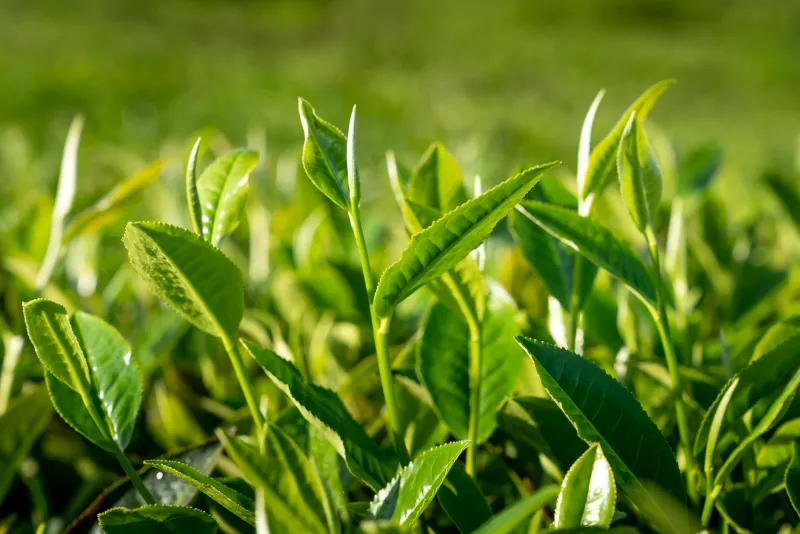
L-theanine is a non-protein amino acid found almost exclusively in the leaves of Camellia sinensis (tea plant) and, to a lesser extent, in certain mushrooms such as Boletus badius. It has attracted significant research interest for its ability to promote a state of calm alertness - relaxation without sedation - and for its synergistic interaction with caffeine. For vegans and vegetarians, l-theanine presents an interesting picture: its primary dietary source is inherently plant-derived, yet many people on plant-based diets still fall short of meaningful amounts from food alone.
Why Plant-Based Diets May Fall Short
Despite being plant-derived, l-theanine is not broadly distributed across plant foods. It is essentially specific to tea. The typical amount in a cup of green tea is estimated at around 20-40 mg, and black tea somewhat less due to oxidation. Several cups of tea per day would be required to reach the doses studied in clinical trials (100-200 mg). For vegans who do not drink tea regularly, or who primarily drink herbal teas (which contain no l-theanine), dietary intake may be negligible.
This is not a classical nutritional deficiency in the way that vitamin B12 can be for vegans, because l-theanine is not an essential amino acid - the body does not require it from diet to function normally. However, if you are seeking its well-studied cognitive and sleep benefits, food alone may not reliably deliver therapeutic amounts, making supplementation relevant for any dietary pattern.
Vegan-Friendly Sources
For vegans seeking l-theanine from food, the main sources are:
- Green tea (highest concentration, especially matcha and gyokuro)
- White tea
- Black tea (lower concentration)
- Certain culinary mushrooms (trace amounts)
For supplemental l-theanine, look for products labeled vegan or VEGE. L-theanine supplements are typically synthesized by microbial fermentation using plant-derived substrates, making them suitable for vegans. ICONFIT Capsules Good Sleep N90 is available at maxfit.ee and combines l-theanine with melatonin and other sleep-supporting ingredients in a plant-friendly capsule format.
Dose Targets
Research on l-theanine has used a wide range of doses:
- For acute calm-alertness (often combined with caffeine): 100-200 mg, typically with 50-150 mg caffeine
- For sleep quality improvement: 200-400 mg taken 30-60 minutes before bed
- For sustained daily use: 100-200 mg/day is common in practice
A double-blind RCT found that 200 mg of l-theanine improved sleep quality, reduced time to fall asleep, and decreased nighttime waking compared with placebo (Hidese et al., 2019). A separate controlled trial demonstrated that combining 100 mg l-theanine with caffeine improved cognitive performance on attention and reaction-time tasks compared with either compound alone (Haskell et al., 2008).
What to Combine
The most evidence-based l-theanine combination is with caffeine. The pair is frequently described as producing alertness that is smoother and more focused than caffeine alone, with reduced jitteriness. This is relevant for vegans who use coffee or tea for cognitive support during work or study.
For sleep applications, l-theanine is often combined with melatonin and/or magnesium, both of which have separate evidence bases for sleep support. Magnesium in particular is commonly supplemented by vegans due to the variable bioavailability from plant foods.
For stress management, l-theanine can be taken alongside adaptogens such as ashwagandha, though the combination has less direct trial evidence than l-theanine alone.
Choosing a Vegan Product
When selecting an l-theanine supplement:
- Confirm the source is Suntheanine (branded fermented l-theanine, the most studied form) or a similar fermentation-derived product
- Check that capsule shells are plant-based (HPMC) rather than gelatin
- Look for third-party quality testing where available
- Dose per capsule: products with 100-200 mg per capsule allow flexible dosing
The /et/category/l-teaniin category at maxfit.ee is the best starting point for finding in-stock options. For a combined sleep formula, /et/category/uni-ja-loogastus offers broader options.
FAQ
Is l-theanine naturally vegan?
Yes. L-theanine is derived from the tea plant (Camellia sinensis) or produced by microbial fermentation. Supplements labeled VEGE or vegan typically use plant-derived capsule shells. Always check the label to confirm if gelatin-free capsules matter to you.
Can l-theanine replace sleep medication?
L-theanine is a food supplement and is not a medication. While evidence suggests it can modestly improve sleep quality in healthy adults (Hidese et al., 2019), it is not a treatment for diagnosed sleep disorders. If you have persistent insomnia, consult a healthcare provider.
Can I combine l-theanine and caffeine as a vegan pre-workout?
Yes. This combination is well-studied and widely used. The typical ratio in trials is 2:1 theanine-to-caffeine (e.g., 200 mg l-theanine with 100 mg caffeine). Many vegans find this smoother than caffeine alone for focus during training or mentally demanding work.
References
Hidese, S., Ogawa, S., Ota, M., Ishida, I., Yasukawa, Z., Ozeki, M., & Kunugi, H. (2019). Effects of L-theanine administration on stress-related symptoms and cognitive functions in healthy adults: a randomized controlled trial. Nutrients, 11(10), 2362. https://pubmed.ncbi.nlm.nih.gov/31623400/
Haskell, C. F., Kennedy, D. O., Milne, A. L., Wesnes, K. A., & Scholey, A. B. (2008). The effects of L-theanine, caffeine and their combination on cognition and mood. Biological Psychology, 77(2), 113-122. https://pubmed.ncbi.nlm.nih.gov/18006208/
Nobre, A. C., Rao, A., & Owen, G. N. (2008). L-theanine, a natural constituent in tea, and its effect on mental state. Asia Pacific Journal of Clinical Nutrition, 17(Suppl 1), 167-168. https://pubmed.ncbi.nlm.nih.gov/18296328/



