Mechanism: How L-Theanine Works in Sport
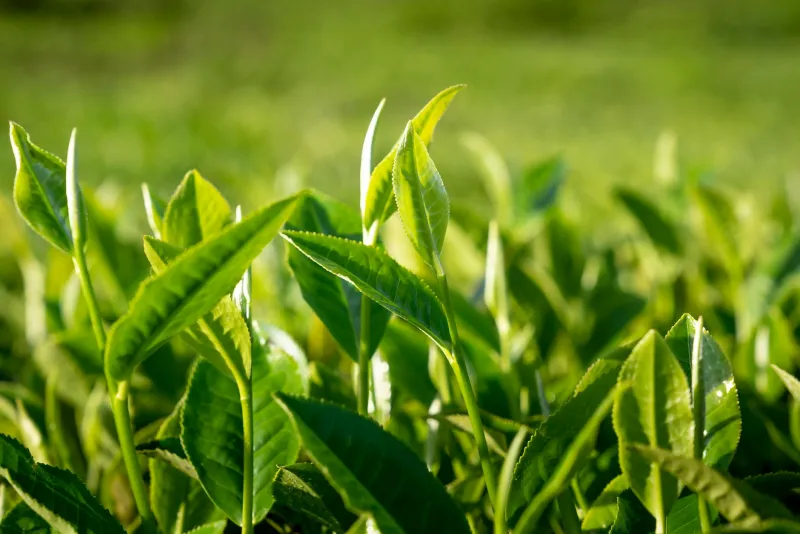
L-theanine is a naturally occurring amino acid found almost exclusively in tea leaves (Camellia sinensis). Unlike most amino acids used in sports nutrition, it is not primarily a building block for muscle protein. Instead, l-theanine works through the central nervous system by modulating neurotransmitter activity.
L-theanine promotes alpha-wave activity in the brain — a relaxed-alert state associated with focused attention without sedation. It increases gamma-aminobutyric acid (GABA), serotonin, and dopamine levels while reducing excitatory glutamate activity. It also crosses the blood-brain barrier efficiently, producing effects within 30–60 minutes of ingestion.
For athletes, the most relevant mechanisms are: attenuating the anxiety and jitteriness often associated with high caffeine intake; supporting cognitive focus during skill-based sports or team game decision-making; and potentially supporting sleep quality — which is foundational to athletic recovery.
Cognitive and Physical Performance Evidence
The most consistently supported application for l-theanine in athletes is in combination with caffeine. Research has demonstrated that the l-theanine and caffeine combination improves sustained attention, reaction time, and accuracy on cognitively demanding tasks compared to caffeine alone (Giesbrecht et al., 2010). Athletes in sports requiring rapid decision-making — racket sports, team sports, combat sports — may find this combination particularly useful.
As a standalone supplement, l-theanine has been shown to reduce perceived stress and cortisol responses to experimental stressors (Kimura et al., 2007). Whether this stress-blunting effect translates to meaningful improvements in training performance or competition outcomes under real-world conditions is less clear.
For sleep quality, which is the most important recovery variable for most athletes, some evidence suggests l-theanine may reduce sleep onset time and improve subjective sleep quality without inducing drowsiness the next day.
Effective Protocol
The most studied and practically relevant dosing approach:
- L-theanine with caffeine: A ratio of approximately 2:1 (l-theanine to caffeine) is commonly cited in research. Many pre-workout formulations use this pairing. Typical doses in studies range from 100–200 mg l-theanine combined with 50–100 mg caffeine.
- Standalone l-theanine for recovery or sleep: Doses of 100–400 mg taken 30–60 minutes before the intended effect (sleep, a stressful event, or a training session) are used in research settings.
- Onset is relatively fast (30–60 minutes); effects last several hours.
Products like ICONFIT Capsules Good Sleep N90 at maxfit.ee provide l-theanine in a combination designed to support sleep and relaxation, which is directly relevant to athletic recovery. See the l-theanine category for available products.
Who Benefits Most
Athletes most likely to benefit from l-theanine supplementation:
- High-caffeine users: Those who rely on caffeine for pre-training energy but experience anxiousness, elevated heart rate, or jitteriness — l-theanine is a practical modifier of these side effects.
- Skill and decision-making sports: Where calm focus matters more than raw arousal — tennis, football, martial arts, esports-adjacent training.
- Athletes with high stress loads: Overtraining and psychological stress can impair recovery; l-theanine's stress-dampening effects may provide modest support.
- Athletes with poor sleep: If sleep quality is the primary bottleneck for recovery, l-theanine is a low-risk tool worth exploring before higher-intervention sleep aids.
Honest Verdict
L-theanine for athletes is genuinely useful in the right context, particularly in the caffeine combination for focus and jitter reduction. The physical performance evidence — strength, power output, aerobic capacity — is weak in isolation; l-theanine is not an ergogenic in the traditional sense. Its value is more indirect: better focus, reduced anxiety, better sleep, and a cleaner caffeine experience can all support athletic performance without directly enhancing physiology.
This makes l-theanine a smart, low-risk addition for athletes who use caffeine, struggle with competition anxiety, or need to prioritise recovery quality.
FAQ
Does l-theanine make you drowsy during training?
No. At standard doses, l-theanine promotes a calm, focused state rather than sedation. When taken with caffeine, it specifically moderates stimulant effects without removing the alertness or energy benefits.
What is the best ratio of l-theanine to caffeine?
Research most often uses a 2:1 l-theanine to caffeine ratio (e.g. 200 mg l-theanine with 100 mg caffeine). This ratio appears to smooth out caffeine side effects while preserving its alertness benefits (Giesbrecht et al., 2010).
Can l-theanine help with competition anxiety?
Some evidence from controlled stress studies supports a modest anxiety-reducing effect (Kimura et al., 2007). Whether this meaningfully improves performance in competition scenarios depends heavily on the individual and the specific sport. It is a low-risk option to try in training simulations before relying on it for competition.
References
Giesbrecht, T., Rycroft, J. A., Rowson, M. J., & De Bruin, E. A. (2010). The combination of L-theanine and caffeine improves cognitive performance and increases subjective alertness. Nutritional Neuroscience, 13(6), 283-290. https://pubmed.ncbi.nlm.nih.gov/21040626/
Kimura, K., Ozeki, M., Juneja, L. R., & Ohira, H. (2007). L-Theanine reduces psychological and physiological stress responses. Biological Psychology, 74(1), 39-45. https://pubmed.ncbi.nlm.nih.gov/16930802/
Haskell, C. F., Kennedy, D. O., Milne, A. L., Wesnes, K. A., & Scholey, A. B. (2008). The effects of L-theanine, caffeine and their combination on cognition and mood. Biological Psychology, 77(2), 113-122. https://pubmed.ncbi.nlm.nih.gov/18006208/



