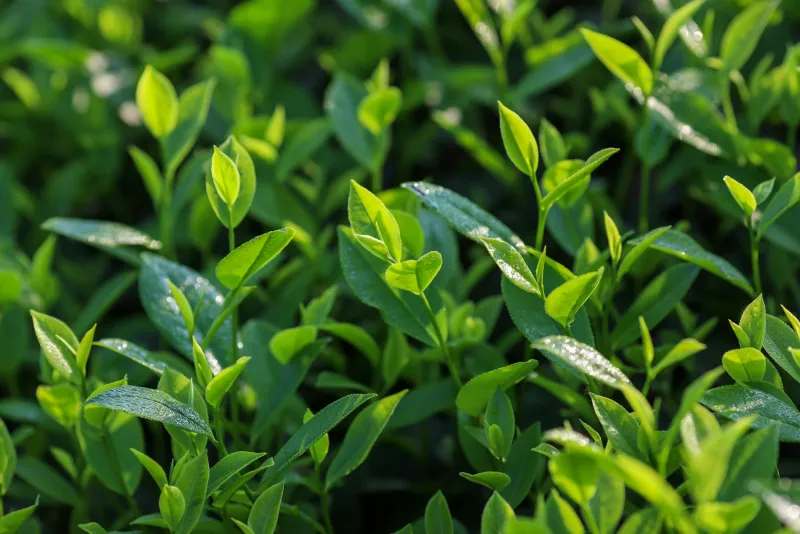
L-Theanine: A Non-Protein Amino Acid from Green Tea
L-theanine is an amino acid found almost exclusively in green tea. It is unique — it is absent from most other foods. L-theanine is known for its calming yet non-sedating effects, influencing brain alpha waves and neurotransmitters, primarily GABA and dopamine. Unlike most amino acids, L-theanine is not an essential nutrient — the body does not require it for survival — but low intake is associated with greater stress sensitivity and impaired sleep.
Deficiency Symptoms
The concept of an "L-theanine deficiency" has no clinical diagnostic category — it is not routinely tested. However, the absence of green tea consumption (the main dietary source) is associated with observable differences:
- Increased stress sensitivity and anxiety — particularly in people who have stopped drinking green tea
- Poor sleep quality with difficulty falling asleep
- Caffeine-related side effects — those consuming caffeine without theanine more often experience palpitations and irritability
- Difficulty relaxing after stressful periods
These signs are highly non-specific. L-theanine intake is not a survival necessity, but it is a pharmacologically active compound whose absence is noticeable especially in people accustomed to regular green tea consumption.
At-Risk Groups
1. People under high stress. One double-blind study found L-theanine reduced subjective stress sensations in resting states (Kimura et al., 2007). People with chronic stress or anxiety may benefit from regular intake to support mental balance.
2. Heavy caffeine users. One of the best-documented combinations in supplementation is caffeine + theanine, which increases attention without typical caffeine side effects (palpitations, irritability) (Owen et al., 2008). People consuming large amounts of caffeine without theanine form the most clearly identifiable risk group.
3. People with sleep difficulties. L-theanine has been associated with better sleep quality and mechanisms supportive of melatonin. It may be particularly useful for those who struggle to mentally wind down before bed.
4. Nordic residents not consuming green tea. In Estonia and Scandinavia, black tea and coffee are the dominant beverages — green tea consumption is lower than in Japan and China. As a result, naturally obtained dietary theanine is, on average, lower for this population.
How L-Theanine Levels Are Assessed
There is no routine clinical L-theanine test. Research studies use plasma amino acid panels, but these are not part of regular health checks. Practical assessment is based on:
- Evaluating green tea consumption habits
- Subjective rating of stress, sleep quality, and anxiety levels
- Caffeine consumption patterns (caffeine-to-theanine ratio)
Nordic and Estonian Context
In Estonia, coffee and black tea dominate beverage habits. Green tea consumption is lower than in Asia. This means that dietary L-theanine intake is, on average, smaller for Estonian residents. In the context of growing stress culture — remote work, digital overload, fast pace of life — an L-theanine supplement is an increasingly relevant option.
When Diet Is Not Enough
Green tea-based intake is the first-line approach. A supplement makes sense when:
- Green tea consumption is low and stress levels are high
- Caffeine supplement without theanine causes side effects
- Sleep difficulties rooted in mental overstimulation
- Desired calm focus during cognitively demanding work
At maxfit.ee you will find ICONFIT Capsules Good Sleep N90 — which contains L-theanine alongside other sleep-supporting compounds. Browse the full L-theanine category.
Summary
An L-theanine "deficiency" in a clinical sense does not exist, but low intake may increase stress sensitivity and caffeine side effects, particularly for those who do not consume green tea. In Nordic countries including Estonia, green tea is less common, making a supplement a sensible choice for many people.
FAQ
Is L-theanine safe for daily use?
Yes, L-theanine has a well-studied safety profile. The commonly consumed dose of 100–200 mg per day is well tolerated and does not cause drowsiness.
Can L-theanine be combined with caffeine?
Yes, this is one of the best-documented supplement combinations — theanine reduces caffeine's side effects (palpitations, irritability) while maintaining attention (Owen et al., 2008).
How many cups of green tea per day provides sufficient theanine?
Theanine content in green tea varies. Generally, two to three cups of green tea per day provides a moderate amount of theanine; this does not replace a concentrated supplement but is a good natural source.
References
Kimura, K., Ozeki, M., Juneja, L. R., & Ohira, H. (2007). L-theanine reduces psychological and physiological stress responses. Biological Psychology, 74(1), 39-45. https://pubmed.ncbi.nlm.nih.gov/16930802/
Owen, G. N., Parnell, H., De Bruin, E. A., & Rycroft, J. A. (2008). The combined effects of L-theanine and caffeine on cognitive performance and mood. Nutritional Neuroscience, 11(4), 193-198. https://pubmed.ncbi.nlm.nih.gov/18681988/
Bardwell, D. A., & Friedlander, A. H. (2009). The neuropharmacology of L-theanine (N-ethyl-L-glutamine): a possible neuroprotective and cognitive enhancing agent. Journal of Herbal Pharmacotherapy, 6(2), 21-30.



