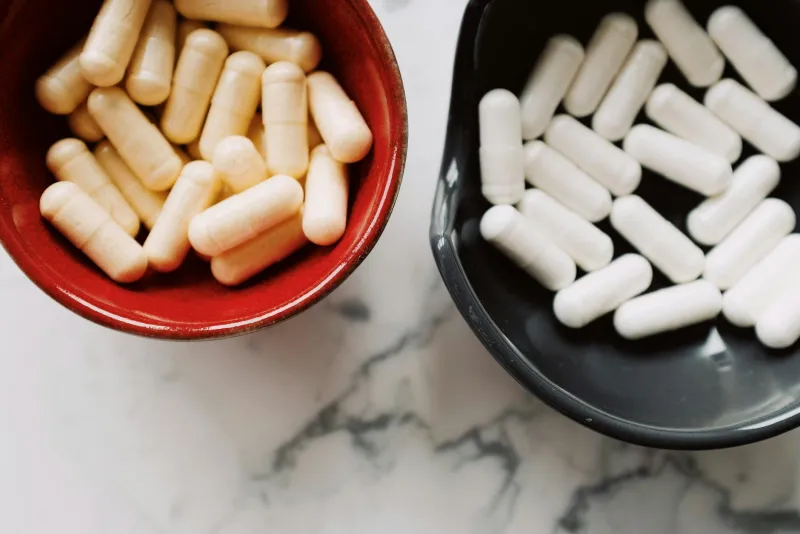
What Is L-Glutamine?
L-glutamine is classified as a conditionally essential amino acid — the body can synthesise it under normal conditions, but demand outpaces production during intense exercise, illness, or physiological stress. It is the most abundant free amino acid in blood plasma and muscle tissue. These biological facts underpin many of the claims made for l-glutamine benefits, though the quality of evidence varies considerably.
Primary Evidenced Benefits
Gut Barrier Integrity
The most consistently supported l-glutamine benefit is its role in maintaining intestinal barrier function. Enterocytes (intestinal cells) use glutamine as their primary fuel source. When glutamine availability drops, intestinal permeability can increase. In clinical settings — particularly critically ill patients and people undergoing chemotherapy — glutamine supplementation has been shown to support mucosal integrity and reduce infection risk (van der Hulst et al., 1993).
For athletes undergoing heavy training, there is biological plausibility that glutamine helps protect the gut during periods of physiological stress, though the evidence base in healthy athletes is more modest.
Immune Support During Intensive Training
Lymphocytes and macrophages (immune cells) rely heavily on glutamine as fuel. During prolonged intense exercise, plasma glutamine concentrations decline, which is associated with increased infection risk — a phenomenon sometimes called the "open window" effect. A meta-analysis found that glutamine supplementation reduced the rate of upper respiratory tract infections in athletes undergoing intensive exercise (Cruzat et al., 2018). The benefit appears most relevant during overreaching training blocks.
Mutant L-Glutamine 300g and OstroVit Glutamine 300g Naturaalne are widely used options for athletes seeking convenient glutamine intake around training. Both are available at maxfit.ee/et/category/l-glutamiin.
Recovery from Muscle-Damaging Exercise
Some research suggests glutamine supplementation may reduce muscle soreness and support recovery following eccentric (muscle-damaging) exercise. A study by Legault et al. (2015) found that glutamine supplementation attenuated force loss and reduced soreness following downhill running, a model of eccentric muscle damage. The effect size was moderate, suggesting a meaningful but not dramatic benefit.
Secondary and Emerging Effects
Glycogen Resynthesis
Glutamine may contribute to glycogen resynthesis post-exercise via gluconeogenesis pathways. Some evidence suggests it can support carbohydrate replenishment, making it potentially useful when carbohydrate intake around training is limited. This is an area of ongoing investigation.
Nitrogen Balance
Glutamine is a major carrier of nitrogen between tissues. Maintaining a positive nitrogen balance is associated with muscle maintenance. In clinical catabolic conditions, glutamine supplementation supports nitrogen retention. In healthy athletes, the effect is less pronounced but may be relevant during hard cutting phases.
Where Evidence Is Weak
- Direct muscle growth: Glutamine is not a particularly anabolic signal in healthy, well-nourished athletes. It should not be expected to drive muscle hypertrophy the way leucine or creatine does.
- Fat loss: No compelling evidence.
- Cognitive performance: Very limited human data.
Who Gains Most
- Athletes in high-volume training blocks prone to upper respiratory infections.
- Individuals with gastrointestinal issues who may have impaired gut barrier function.
- Athletes cutting calories who want to support muscle nitrogen balance.
- People recovering from illness or surgery (in consultation with a healthcare professional).
MST L-Glutamine RAW 500g Maitsestamata and Optimum-nutrition Glutamine 630g offer large-format options for those using glutamine regularly as part of a recovery protocol.
Realistic Expectations
Glutamine is not a muscle-building supplement in the traditional sense. Its clearest value is in maintenance — of gut health, immune function, and recovery capacity during periods of high physiological stress. Used consistently alongside adequate overall protein intake and smart training management, it can contribute to resilience over training cycles.
FAQ
How much L-glutamine should I take?
Research protocols commonly use amounts in the range of 5 g to 10 g per day, taken post-exercise or split across the day. Higher amounts have been used in clinical settings. For healthy athletes focused on recovery and immune support, 5 g per day is a practical starting point.
Does L-glutamine help with leaky gut?
In clinical populations with compromised gut barrier function, glutamine supplementation shows meaningful benefit. Evidence in healthy individuals with mild digestive discomfort is less clear. It is a reasonable option to explore, but should not replace medical evaluation if symptoms are significant.
Is L-glutamine safe?
Glutamine is well-tolerated at research-tested amounts. It is naturally present in protein-rich foods (meat, fish, eggs, legumes), so the body is adapted to handling it. Very high doses (above 40 g/day) are not studied in long-term trials and are not recommended without clinical supervision.
References
van der Hulst, R. R., van Kreel, B. K., von Meyenfeldt, M. F., Brummer, R. J., Arends, J. W., Deutz, N. E., & Soeters, P. B. (1993). Glutamine and the preservation of gut integrity. The Lancet, 341(8857), 1363-1365.
Cruzat, V., Macedo Rogero, M., Noel Keane, K., Curi, R., & Newsholme, P. (2018). Glutamine: metabolism and immune function, supplementation and clinical translation. Nutrients, 10(11), 1564. https://pubmed.ncbi.nlm.nih.gov/30360490/
Legault, Z., Bagnall, N., & Kimmerly, D. S. (2015). The influence of oral L-glutamine supplementation on muscle strength recovery and soreness following unilateral knee extension eccentric exercise. International Journal of Sport Nutrition and Exercise Metabolism, 25(5), 417-426. https://pubmed.ncbi.nlm.nih.gov/25811544/



