L-Citrulline Side Effects & Safety: What You Need to Know
L-citrulline is a non-essential amino acid that has become one of the most popular ingredients in pre-workout and pump supplements. It is a direct precursor to l-arginine in the urea cycle and, by raising arginine levels more effectively than arginine supplementation itself, it increases nitric oxide (NO) production, promotes vasodilation, and may enhance exercise performance and recovery.
Compared with l-arginine, l-citrulline is generally better tolerated, particularly in the gastrointestinal tract. But this does not mean it is without considerations.
Common Side Effects
L-citrulline has a notably favourable tolerability profile compared with many sports supplements:
- Mild gastrointestinal discomfort – the least frequent of the amino acid supplement side effects; nausea or cramping at high doses
- Headache – occasionally reported, possibly related to blood vessel dilation from NO elevation
- Blood pressure changes – because citrulline raises NO and dilates blood vessels, people with already low blood pressure may notice a further drop, particularly at higher doses (Schwedhelm et al., 2008)
Most users tolerate l-citrulline well across the dose range used in sports nutrition research.
Rare Side Effects
- Interaction with erectile dysfunction medications – both citrulline (via NO elevation) and PDE5 inhibitors (sildenafil, tadalafil) lower blood pressure through the same nitric oxide pathway. Combining them can cause excessive hypotension.
- Worsening of sickle cell disease symptoms – some theoretical concern exists because NO elevation can affect red blood cell function in certain conditions. This is a precautionary note, not an established clinical finding.
- Very high dose ammonia accumulation – citrulline is part of the urea cycle. In individuals with urea cycle disorders, supplementation could theoretically worsen ammonia handling. This is a rare genetic condition, not a concern for healthy athletes.
Upper Safe Limits
Acute and short-term studies at doses used in athletic contexts have found a good safety profile. Research in healthy adults has demonstrated that citrulline malate supplementation improved athletic anaerobic performance without serious adverse events (Perez-Guisado & Jakeman, 2010). Long-term data on very high chronic intake are limited but do not flag major concerns in healthy individuals.
Drug and Nutrient Interactions
- Blood pressure medications and nitrates: Additive blood-pressure lowering effect — potentially leading to symptomatic hypotension. If you take antihypertensives, discuss with your doctor.
- PDE5 inhibitors (sildenafil/Viagra, tadalafil/Cialis): Dangerous combination — both act on NO/cGMP pathways to lower blood pressure. Do not combine.
- L-arginine: Citrulline and arginine work synergistically in the urea cycle. Combining them is common in pump products (e.g., MST Amino Pump), and there is no safety concern, but the combined blood-pressure effect may be stronger.
Who Should Avoid L-Citrulline
- People on PDE5 inhibitors – risk of dangerous hypotension
- Those on antihypertensive medications – monitor blood pressure; discuss with your doctor
- Individuals with urea cycle disorders – theoretical but real contraindication; rare
- Pregnant or breastfeeding individuals – insufficient safety data for high supplemental doses
- Those with known sickle cell disease – discuss with a haematologist before use
How L-Citrulline Compares with L-Arginine for Safety
L-citrulline has a clear advantage over l-arginine in one key area: gastrointestinal tolerance. Oral arginine is well known for causing digestive upset, especially at higher doses. Citrulline bypasses the gut-liver first-pass metabolism more effectively and converts to arginine in the kidneys — this route is better tolerated and produces more sustained plasma arginine elevation (Schwedhelm et al., 2008).
For cardiovascular safety, the theoretical concern about post-heart attack patients (documented for arginine) has not been specifically replicated for citrulline. However, individuals with established cardiovascular disease should discuss any vasoactive supplement with their doctor.
Quality and Contamination
When choosing l-citrulline:
- Look for products specifying l-citrulline vs. citrulline malate (a combination with malic acid). Citrulline malate is common in pre-workouts and has its own evidence base; l-citrulline base is more concentrated per gram.
- Check for third-party testing, particularly if you compete in tested sports.
- Review combined products for caffeine, beta-alanine, and other stimulants if you have sensitivities.
At maxfit.ee you will find products such as MST L-citrulline 1100mg 120caps, MST Amino Pump L-Citrulline + L-Arginine 60caps, and 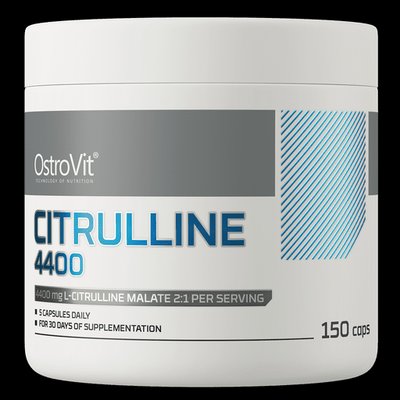 OstroVit Citrulline 4400€15.90 In stock 150caps.
Explore the full range in our l-citrulline category.
FAQ
Is l-citrulline better than l-arginine for pump?
Yes, for most people. Citrulline raises plasma arginine more effectively than arginine itself because it avoids first-pass degradation in the gut and liver. This makes it both better tolerated and more effective for NO production.
How long before training should I take l-citrulline?
Most research uses a window of 60 minutes before exercise. Citrulline malate studies have used a similar pre-exercise window.
Can I take l-citrulline every day?
Short-term daily use in healthy adults appears safe based on available evidence. Very long-term daily supplementation has not been extensively studied, but no major safety signals have emerged.
References
Schwedhelm, E., Maas, R., Freese, R., Jung, D., Lukacs, Z., Jambrecina, A., ... & Boger, R. H. (2008). Pharmacokinetic and pharmacodynamic properties of oral L-citrulline and L-arginine. British Journal of Clinical Pharmacology, 65(1), 51-59. https://pubmed.ncbi.nlm.nih.gov/17662090/
Perez-Guisado, J., & Jakeman, P. M. (2010). Citrulline malate enhances athletic anaerobic performance and relieves muscle soreness. Journal of Strength and Conditioning Research, 24(5), 1215-1222. https://pubmed.ncbi.nlm.nih.gov/20386132/



