What Is L-Citrulline Malate?
L-citrulline malate is a compound that combines the amino acid L-citrulline with malate (the salt of malic acid). Citrulline is produced naturally in the body as part of the urea cycle and is also found in high concentrations in watermelon. Malate participates in the citric acid cycle and plays a role in ATP production — making the combined compound especially interesting for both strength and endurance athletes.
Unlike pure L-citrulline, the malate form is considered to have dual action: it both raises blood arginine levels (via conversion in the kidneys) and supports energy metabolism directly through malate (Pérez-Guisado & Jakeman, 2010).
How Does It Work?
L-citrulline is converted in the kidneys to L-arginine, which is the precursor to nitric oxide (NO). Nitric oxide causes vasodilation — widening of blood vessels — which leads to:
- Increased blood flow to working muscles
- Better delivery of oxygen and nutrients
- Enhanced muscle pump during training
Malate assists in clearing ammonium ions generated during intense exercise, which helps reduce muscle fatigue and the burning sensation in muscles (Bendahan et al., 2002).
What Does the Research Say?
Improved Anaerobic Performance
A landmark study using 8 g of citrulline malate before resistance training showed that the number of repetitions performed to failure increased by up to 53%, and next-day muscle soreness (DOMS) was reduced by approximately 40% (Pérez-Guisado & Jakeman, 2010).
Better Endurance
In prolonged endurance activities — cycling and running — citrulline malate supplementation has been linked to lower lactate levels and improved tolerance of sustained high-intensity efforts (Sureda et al., 2010).
Faster Recovery
The ammonia-buffering mechanism helps reduce the accumulation of metabolic waste products in muscles. Athletes competing across multiple days, or following a dense training schedule, may find recovery noticeably faster.
Optimal Dosing
| Goal | Recommended dose | Timing before training |
|---|---|---|
| General pump / blood flow | 3–4 g | 30–60 min |
| Anaerobic performance | 6–8 g | 45–60 min |
| Endurance + recovery | 6 g | 30–45 min |
Most research uses 6–8 g doses. Start at 3–4 g to assess tolerance, then build up gradually.
L-Citrulline Malate vs Pure L-Citrulline
- Citrulline malate 2:1 (2 parts citrulline, 1 part malate) is the most widely studied sports form.
- Pure L-citrulline is preferred by athletes wanting to avoid the sour malate taste and using lower doses.
- The malate form remains the default choice for performance-oriented supplementation due to the added metabolic support.
At maxfit.ee you'll find several solid options. Olimp Citrulline Malate 200g Cool Lemonade is a well-dosed powder that mixes easily in a pre-workout drink. If you prefer capsules, MST L-Citrulline 1100mg 120caps offers convenient, precise dosing. 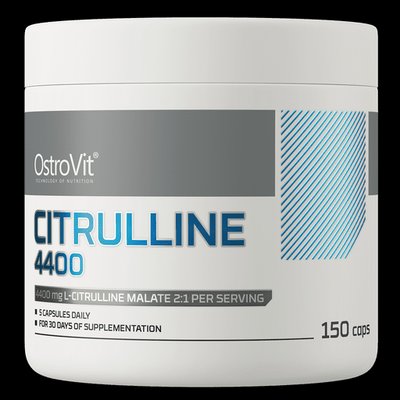 OstroVit Citrulline 4400€15.90 In stock 150 capsules is an economical bulk option for consistent daily use.
Side Effects and Safety
Citrulline malate is generally well tolerated. The most commonly reported side effects at high doses (>10 g) are:
- Mild diarrhea
- Gastrointestinal discomfort
It does not affect blood pressure in healthy individuals in a clinically concerning way, does not alter hormone levels, and does not produce tolerance (no need to cycle it the way you would caffeine).
If you take antihypertensive medication, consult your doctor before use, since the vasodilating effect of elevated nitric oxide could compound blood pressure reduction.
Smart Stacking
- Creatine — the classic combination for strength athletes: citrulline improves blood flow and waste clearance while creatine replenishes ATP stores.
- Beta-alanine — works through a different fatigue mechanism (buffering lactic acid via carnosine); combined with citrulline malate, the two complement each other well.
- Caffeine — standard component of most pre-workout formulas; synergistic with citrulline for alertness and performance.
- EAAs or BCAAs — adding essential amino acids to the pre-workout mix ensures muscle protein synthesis substrate is available during training.
Choosing a Quality Product
- Look for L-citrulline malate 2:1 clearly labeled, or ensure the citrulline content in grams is disclosed (not just the total blend weight).
- Prefer products with third-party testing (GMP-certified, Informed Sport, or similar).
- Avoid products that hide doses behind "proprietary blends" — this makes it impossible to verify you're getting a research-supported amount.
Summary
L-citrulline malate is one of the best-researched pre-workout amino acids with a solid scientific foundation. It is appropriate for both strength and endurance athletes aiming for better pump, reduced fatigue, and faster recovery. Regular use at an optimal dose (6–8 g, 45–60 minutes before training) produces noticeable results within a few weeks.
Browse the full selection in the pre-workout supplements category at MaxFit.
FAQ
When is the best time to take L-citrulline malate?
The optimal timing is 30–60 minutes before training. Taking a higher dose (6–8 g) on an empty stomach or with only a light meal aids absorption. Avoid taking it immediately with a large protein or fat-heavy meal.
Is L-citrulline malate suitable for female athletes?
Yes — the mechanisms of action (blood flow, fatigue reduction, recovery) are not sex-specific, and research includes both male and female subjects. Women training for endurance or strength will benefit equally.
Do I need to cycle citrulline malate like caffeine?
No. L-citrulline malate does not build tolerance and is not habit-forming. It can be used continuously without scheduled off-periods.
References
- Pérez-Guisado, J., & Jakeman, P. M. (2010). Citrulline malate enhances athletic anaerobic performance and relieves muscle soreness. Journal of Strength and Conditioning Research, 24(5), 1215–1222.
- Bendahan, D., Mattei, J. P., Ghattas, B., Confort-Gouny, S., Le Guern, M. E., & Cozzone, P. J. (2002). Citrulline/malate promotes aerobic energy production in human exercising muscle. British Journal of Sports Medicine, 36(4), 282–289.
- Sureda, A., Córdova, A., Ferrer, M. D., Pérez, G., Tur, J. A., & Pons, A. (2010). L-citrulline-malate influence over branched chain amino acid utilization during exercise. European Journal of Applied Physiology, 110(2), 341–351.
- Wax, B., Kavazis, A. N., Weldon, K., & Sperlak, J. (2015). Effects of supplemental citrulline malate ingestion during repeated bouts of lower-body exercise in advanced weightlifters. Journal of Strength and Conditioning Research, 29(3), 786–792.



