L-Citrulline for Women: Benefits & Considerations
L-citrulline is a non-essential amino acid found naturally in watermelon and produced in the body as part of the urea cycle. Unlike L-arginine — the direct precursor to nitric oxide — citrulline bypasses gut and liver metabolism and is converted efficiently to arginine in the kidneys. This gives it superior bioavailability for elevating plasma arginine and, in turn, nitric oxide levels. For women who train, L-citrulline has become one of the most evidence-supported pre-workout ingredients for performance and vascular support.
Why Women May Need L-Citrulline
The vasodilatory benefits of elevated nitric oxide are relevant for any exercising individual, but several factors make L-citrulline particularly interesting for women:
Superior NO elevation vs. arginine. Schwedhelm et al. (2008) demonstrated that oral L-citrulline supplementation raised plasma arginine and produced sustained increases in nitric oxide metabolites more effectively than equimolar oral L-arginine, due to citrulline's avoidance of first-pass hepatic catabolism.
Exercise performance. Perez-Guisado and Jakeman (2010) conducted an RCT in recreational male athletes showing that citrulline malate supplementation significantly reduced muscle fatigue and improved high-repetition performance in multi-set resistance exercise. While this specific study used a male cohort, the mechanism — NO-mediated blood flow and ATP production efficiency — is not sex-specific.
Reduced muscle soreness. The same study found that citrulline malate supplementation was associated with reduced muscle soreness at 24 and 48 hours post-exercise. For women managing high training volumes alongside other life demands, this recovery benefit is practically meaningful.
Ammonia clearance. L-citrulline participates in the urea cycle and supports ammonia detoxification during exercise, reducing the accumulation of fatigue-inducing metabolites.
Hormonal and Life-Stage Notes
Estrogen-mediated endothelial function means that premenopausal women have relatively strong baseline nitric oxide production. The incremental effect of L-citrulline supplementation may therefore be more pronounced in situations where this natural advantage is reduced — during the menstrual phase, in perimenopause and menopause, or during periods of high physiological stress.
In postmenopause, declining estrogen is directly associated with reduced endothelial nitric oxide synthase (eNOS) activity. For women in this stage, L-citrulline's role as an NO precursor takes on greater practical importance for both exercise tolerance and cardiovascular health maintenance.
No direct hormonal interactions with L-citrulline at standard supplement doses have been documented.
Dose Considerations
Most human performance trials have used citrulline malate at doses of 6–8 g taken approximately 60 minutes before exercise. Pure L-citrulline (as opposed to the malate form) is also used, with effective doses around 3–6 g per day. Citrulline malate contains citrulline bonded with malic acid; the malate component may additionally support the citric acid cycle and energy production, though the evidence for additive malate effects is less established.
For women new to citrulline, starting at the lower end (3–4 g) before exercise and assessing tolerance is a practical approach. The compound is generally well tolerated with minimal side effects at recommended doses.
Pregnancy and Safety Notes
L-citrulline is a naturally occurring amino acid and a normal part of dietary intake through foods like watermelon and cucumbers. For pregnant or breastfeeding women, supplemental L-citrulline in isolated concentrated forms should not be used without specific medical guidance. The safety of concentrated citrulline supplementation during pregnancy has not been systematically evaluated in clinical trials.
For healthy, non-pregnant women, L-citrulline at standard doses is well tolerated and safe.
Recommended Products at MaxFit
For women interested in L-citrulline, MaxFit stocks a good selection. MST L-citrulline 1100mg 120caps is a convenient capsule format for daily use or pre-workout dosing. MST Amino Pump L-Citrulline + L-Arginine 60caps combines both NO precursors in a pump-focused formula. 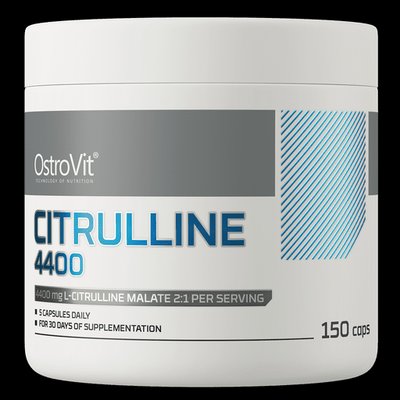 OstroVit Citrulline 4400€15.90 In stock 150caps provides a high-dose capsule option. NOW Foods Arginine 500mg & Citrulline 120caps and Olimp Citrulline Malate 200g Jahutav limonaad are additional options in the citrulline malate format. All are available in the l-sitrulliin category at maxfit.ee.
Bottom Line
L-citrulline is a well-evidenced, highly bioavailable NO precursor that consistently outperforms L-arginine for elevating plasma arginine and nitric oxide. For women who train, it supports performance, reduces training-induced muscle fatigue, and contributes to vascular health — especially meaningful in menopause where endogenous NO production is declining. Dosing of 6–8 g citrulline malate or 3–6 g pure citrulline 45–60 minutes before exercise is the most studied approach. Pregnant and breastfeeding women should avoid isolated supplements without medical advice.
FAQ
Is L-citrulline better than L-arginine for women?
For the goal of elevating plasma arginine and nitric oxide, yes — L-citrulline has consistently shown superior bioavailability compared to oral L-arginine because it bypasses first-pass hepatic metabolism. A gram of citrulline raises plasma arginine more effectively than a gram of arginine itself. For pure vascular and performance purposes, most current research favors citrulline over arginine.
When should women take L-citrulline for best performance?
Research protocols typically use L-citrulline malate approximately 60 minutes before exercise to allow time for renal conversion to arginine and plasma NO elevation. Taking it with water (not a carbohydrate load, unlike carnitine) is standard. Consistent daily use also builds background arginine availability, so regular supplementation may be more beneficial than sporadic pre-workout use.
Does L-citrulline help with endurance or only strength training?
L-citrulline supports both endurance and resistance training. The NO-mediated vasodilation improves oxygen delivery during aerobic exercise, and the ATP efficiency and ammonia clearance benefits support repeated high-intensity efforts in resistance training. Women engaged in mixed training — which includes most fitness enthusiasts — stand to benefit from both pathways.
References
Schwedhelm, E., Maas, R., Freese, R., Jung, D., Lukacs, Z., Jambrecina, A., Spickler, W., Schulze, F., & Boger, R.H. (2008). Pharmacokinetic and pharmacodynamic properties of oral L-citrulline and L-arginine: impact on nitric oxide metabolism. British Journal of Clinical Pharmacology, 65(1), 51-59. https://pubmed.ncbi.nlm.nih.gov/17662090/
Perez-Guisado, J., & Jakeman, P.M. (2010). Citrulline malate enhances athletic anaerobic performance and relieves muscle soreness. Journal of Strength and Conditioning Research, 24(5), 1215-1222.
Wax, B., Kavazis, A.N., Weldon, K., & Sperlak, J. (2015). Effects of supplemental citrulline malate ingestion during repeated bouts of lower-body exercise in advanced weightlifters. Journal of Strength and Conditioning Research, 29(3), 786-792. https://pubmed.ncbi.nlm.nih.gov/25226311/



