L-Citrulline for Athletes: Performance Evidence
L-citrulline is a non-essential amino acid found naturally in watermelon. In the body it is converted to L-arginine and subsequently to nitric oxide (NO) — a vasodilator that widens blood vessels, improves blood flow to working muscle, and accelerates the clearance of metabolic waste products like ammonia. For athletes, this translates to meaningful improvements in both endurance and resistance training outcomes when the dose and timing are right.
Mechanism in Sport
When you exercise hard, ammonia accumulates faster than the body can clear it, contributing to peripheral fatigue and the sensation of hitting a wall. Citrulline, as part of the urea cycle, accelerates ammonia detoxification in the liver. Simultaneously, the NO pathway dilates arterioles supplying active muscle, increasing oxygen and nutrient delivery.
Citrulline also appears to reduce the oxygen cost of submaximal exercise — meaning the same workload requires less oxygen with supplementation — though the magnitude varies across studies.
Unlike L-arginine taken orally, L-citrulline is absorbed efficiently in the small intestine and does not face the same first-pass degradation in the intestinal wall, making it a more reliable route to raising plasma arginine and NO levels.
Strength and Endurance Evidence
A randomised, double-blind trial by Perez-Guisado and Jakeman (2010) found that a single dose of citrulline malate before a bench-press protocol significantly increased repetition count compared with placebo — participants completed more total reps across sets, and reported reduced muscle soreness the following day.
For endurance, a 2017 crossover study in trained cyclists reported that citrulline supplementation improved mean power output and time to exhaustion compared with placebo (Bailey et al., 2015). The effect was more pronounced at higher intensities, consistent with the ammonia-clearance mechanism.
A meta-analysis examining pooled data from multiple RCTs concluded that citrulline malate supplementation produced a statistically significant improvement in repetitions to failure in resistance-trained individuals, with a moderate effect size (Rhim et al., 2021).
Effective Protocol
The protocols that generated the clearest results in the literature use:
- Citrulline malate: typically in the range of 6–8 g taken 60 minutes before exercise
- Pure L-citrulline: approximately 3–6 g, equivalently timed
Citrulline malate is a 2:1 ratio of citrulline to malic acid; the malate component may independently reduce fatigue by supporting mitochondrial function, though separating the two contributions is difficult.
Chronically higher doses (taken daily) may provide greater baseline NO elevation but the incremental benefit over acute pre-workout dosing is unclear from current evidence.
MST L-citrulline 1100mg 120caps and MST Amino Pump L-Citrulline + L-Arginine 60caps are two options available at maxfit.ee that fit within effective dose ranges when used as directed. 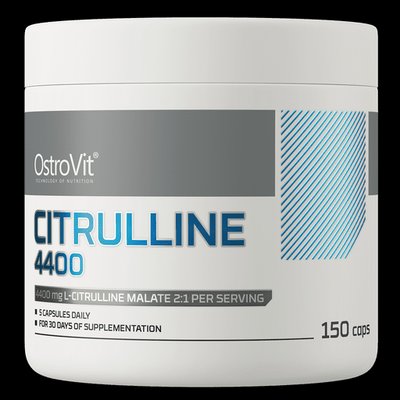 OstroVit Citrulline 4400€15.90 In stock 150caps and Olimp Citrulline Malate 200g Jahutav limonaad provide higher per-serving doses suited to the 6-8 g protocol directly.
Who Benefits
L-citrulline is most beneficial for:
- Endurance athletes (cyclists, runners, swimmers) performing sustained, high-intensity efforts
- Strength athletes doing high-volume, multiple-set training where cumulative fatigue limits reps
- Recreational athletes who train hard enough to feel muscle fatigue within sets
The evidence is weakest for low-intensity or low-volume training where ammonia and vascular bottlenecks are not the limiting factors. Beginners who are not yet training close to failure may see little benefit compared with intermediate or advanced trainees.
Honest Verdict
L-citrulline has one of the more solid evidence bases among pre-workout amino acids. The improvements in resistance-training volume and endurance performance are real, though the effect size is moderate — it will add reps and delay fatigue, not transform performance. The dose matters: the 6-8 g citrulline malate range used in positive trials is considerably higher than what most proprietary blends provide. If you are buying a blend, check the label for transparent dosing. Pure citrulline or citrulline malate as a standalone is the most reliable route to hitting an effective dose.
FAQ
Is citrulline malate better than pure L-citrulline?
Citrulline malate is the form used in most of the positive RCTs, so it has the stronger direct evidence base. Malic acid may add modest anti-fatigue effects, but the citrulline content is the primary driver. Both forms are effective; choose based on what delivers the citrulline dose you need.
When should I take L-citrulline?
About 60 minutes before training is the standard protocol from the research. This allows enough time for absorption and conversion to arginine and NO. Taking it daily at a consistent time (even on rest days) may provide a modest chronic benefit, though the evidence for this is weaker.
Can I stack L-citrulline with creatine?
Yes, and this is a common, sensible combination. Citrulline supports acute blood-flow and ammonia clearance during a session; creatine supports ATP regeneration and volume capacity over repeated sessions. Their mechanisms are complementary and no negative interactions are documented.
References
Perez-Guisado, J., & Jakeman, P. M. (2010). Citrulline malate enhances athletic anaerobic performance and relieves muscle soreness. Journal of Strength and Conditioning Research, 24(5), 1215-1222.
Rhim, H. C., Kim, S. J., Park, J., & Jang, K. M. (2021). Effect of citrulline on post-exercise rating of perceived exertion, muscle soreness, and blood lactate levels: A systematic review and meta-analysis. Journal of Sport and Health Science, 10(6), 739-746.
Bailey, S. J., Blackwell, J. R., Lord, T., Vanhatalo, A., Winyard, P. G., & Jones, A. M. (2015). L-citrulline supplementation improves O2 uptake kinetics and high-intensity exercise performance in humans. Journal of Applied Physiology, 119(4), 385-395. https://pubmed.ncbi.nlm.nih.gov/26023227/



