
Natural Food Sources of L-Citrulline
L-citrulline is a naturally occurring amino acid that plays a key role in the urea cycle and, in the context of sports nutrition, supports nitric oxide production and blood flow. Unlike many amino acids, L-citrulline is not found in significant amounts across a wide variety of foods — the list of meaningful dietary sources is short. Understanding what food sources of L-citrulline exist, how much they actually deliver, and when supplementation makes sense is practical knowledge for anyone training seriously.
Top Food Sources
Watermelon is by far the richest common food source of L-citrulline. A study measuring citrulline content in watermelon varieties found that watermelon flesh contains roughly 1.1–2.8 mg of citrulline per gram of fresh weight, with the rind containing approximately twice the concentration of the flesh (Rimando & Perkins-Veazie, 2005). This means that a generous 300–400 g slice of watermelon flesh would provide roughly 330–1100 mg of citrulline, depending on the variety.
Other foods contain smaller amounts:
- Cucumber: low but detectable concentrations in the same Cucurbitaceae family
- Bitter melon, pumpkin, and other gourds: variable trace amounts
- Onions and garlic: minor amounts
- Legumes: very low
The takeaway is that watermelon is the only practical dietary source that delivers L-citrulline in amounts approaching what research has studied for performance effects.
Bioavailability from Food vs Supplement
An important consideration is that L-citrulline from food and from pure supplement powder is comparably well absorbed. A study comparing watermelon juice and citrulline supplementation found that plasma citrulline levels rose similarly after ingestion of both sources (Collins et al., 2007). This is actually an argument in favour of food: if you can consume enough watermelon, you get citrulline with good bioavailability plus additional nutrients. However, the practical limitation is the volume required.
Daily Targets from Diet
Sports nutrition research on L-citrulline generally uses doses in the range of several grams per day to observe effects on performance, blood flow, and muscle soreness. Reaching those amounts from watermelon alone would require eating very large quantities daily — typically several kilograms of fresh watermelon flesh. That is impractical for most people, particularly outside summer.
For general health and modest nitric oxide support, smaller dietary amounts from regular watermelon consumption may contribute meaningfully. But for targeted pre-workout or recovery support at doses studied in trials, supplementation is the only practical route.
Cooking and Storage Effects
L-citrulline is relatively stable. Juice made from fresh watermelon retains the citrulline content well. Heating watermelon significantly degrades the citrulline content, so raw consumption is superior. Freezing appears to reduce citrulline levels somewhat, making fresh fruit preferable when available.
When Food Is Not Enough
If your goals include pre-workout pump, reduced muscle soreness, or supporting cardiovascular function at the amounts studied in research, supplementation is the practical solution. Supplements provide a precise, consistent dose regardless of season.
MST L-citrulline 1100mg 120caps and MST Amino Pump L-Citrulline + L-Arginine 60caps are solid options available at maxfit.ee. 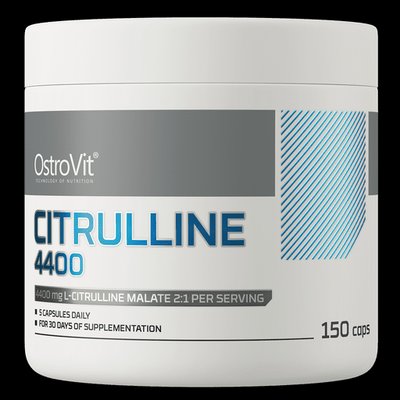 OstroVit Citrulline 4400€15.90 In stock 150caps provides a higher per-serving dose, useful for those aiming at the upper end of studied ranges. You can also explore the full L-sitrulliin category.
Supplements are standardised; food sources vary. For anyone who trains regularly and wants reliable citrulline intake, combining a food-first approach with a supplement on training days is a sensible strategy.
FAQ
How much watermelon would I need to eat to get a performance dose of L-citrulline?
Based on published citrulline content in watermelon flesh, you would need to eat a very large amount — several kilograms of fresh watermelon — to approach doses used in sports science studies. This is not practical as a daily strategy.
Does eating the watermelon rind give more L-citrulline?
Yes — the rind contains a higher concentration than the flesh per gram. However, the rind is not commonly eaten in most European countries. Rind juice or blended preparations would deliver more citrulline per volume.
Can I combine dietary sources with a citrulline supplement?
Absolutely. Food sources add to your total daily intake. Eating watermelon on training days while supplementing is a reasonable approach.
References
Rimando, A. M., & Perkins-Veazie, P. M. (2005). Determination of citrulline in watermelon rind. Journal of Chromatography A, 1078(1–2), 196–200. https://pubmed.ncbi.nlm.nih.gov/16007998/
Collins, J. K., Wu, G., Perkins-Veazie, P., Spears, K., Claypool, P. L., Baker, R. A., & Clevidence, B. A. (2007). Watermelon consumption increases plasma arginine concentrations in adults. Nutrition, 23(3), 261–266. https://pubmed.ncbi.nlm.nih.gov/17352962/
Paddon-Jones, D., Borsheim, E., & Wolfe, R. R. (2004). Potential ergogenic effects of arginine and creatine supplementation. Journal of Nutrition, 134(10 Suppl), 2888S–2894S.



