


L-Citrulline: A More Effective Route to Nitric Oxide
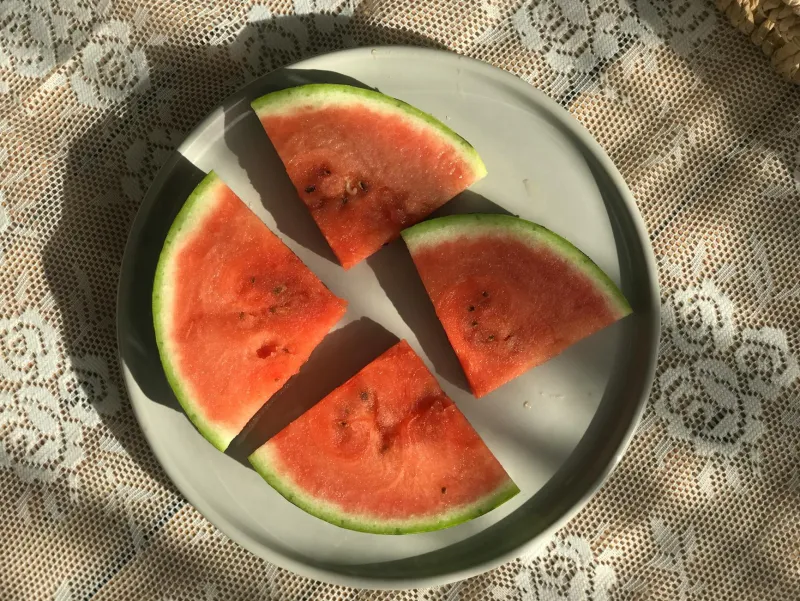
L-citrulline is a non-essential amino acid found naturally in watermelon and other foods. Unlike L-arginine -- the direct precursor to nitric oxide (NO) -- citrulline is not significantly catabolised in the intestine or liver before reaching the systemic circulation. Instead, it is absorbed intact and converted to arginine in the kidneys, resulting in a more sustained and reliable elevation of plasma arginine and NO levels than an equivalent oral dose of arginine itself.
This superior bioavailability makes L-citrulline one of the most studied amino acids for exercise performance, blood flow, and the specific type of fatigue that limits performance during high-intensity exercise.
Role in Energy Metabolism
L-citrulline's primary role in energy-related physiology is indirect, mediated through NO production. By raising plasma arginine, citrulline drives increased NO synthesis by endothelial NOS (eNOS) in blood vessel walls. NO-induced vasodilation increases the delivery of oxygen and energy substrates (glucose, fatty acids) to contracting muscles, which delays the transition to less-efficient anaerobic ATP production.
Schwedhelm et al. (2008) compared the pharmacokinetics of oral L-citrulline and L-arginine and confirmed that citrulline is a more efficient precursor for raising plasma arginine: oral citrulline produced higher and more sustained plasma arginine concentrations than the same dose of oral arginine, because citrulline bypasses the first-pass extraction by intestinal and hepatic arginases.
A second mechanism involves the urea cycle. Citrulline is an intermediate in the urea cycle -- the pathway responsible for converting toxic ammonia to urea for excretion. During intense exercise, ammonia accumulates and has been proposed as a contributor to both peripheral and central fatigue. By supporting urea cycle flux, citrulline may help reduce ammonia accumulation and thus extend time to fatigue.
Evidence in Fatigue
The evidence on L-citrulline for fatigue and exercise performance is among the more robust in the amino acid supplement literature. Perez-Guisado and Jakeman (2010) conducted a randomised, double-blind, placebo-controlled crossover trial in which trained male athletes took citrulline malate before a high-repetition chest press protocol. They found that citrulline malate significantly increased the total number of repetitions performed and reduced muscle soreness at 24 and 48 hours post-exercise compared to placebo. The reduction in soreness and the improvement in performance output both reflect a meaningful reduction in exercise-induced fatigue.
Wax et al. (2015) evaluated citrulline malate supplementation during repeated bouts of lower-body exercise in advanced weightlifters and found improvements in total repetitions and reductions in perceived exertion, supporting the finding that citrulline can extend performance under conditions of accumulated fatigue.
An important caveat: most positive trials use citrulline malate (citrulline combined with malic acid, a Krebs cycle intermediate that may also contribute to ATP production) rather than pure L-citrulline. The relative contribution of malate to the observed effects is not fully separated in the literature.
Products like MST L-citrulline 1100mg 120caps (17.90 € at the time of writing), MST Amino Pump L-Citrulline + L-Arginine 60caps, and MST L-Citrulline 240caps provide citrulline in straightforward forms. For those seeking the citrulline malate form specifically, check individual product labels for the malate combination.
Who Is Likely to Respond
L-citrulline is most likely to benefit:
- Athletes doing high-intensity, high-volume resistance training: The evidence from Perez-Guisado and Jakeman (2010) and Wax et al. (2015) applies specifically to this population. The anti-fatigue effect is most pronounced when performing multiple sets close to failure.
- Endurance athletes: Improved vasodilation means better oxygen delivery, which is directly relevant for sustained aerobic work. Time-trial and time-to-exhaustion outcomes in some endurance studies have shown modest improvements.
- People whose training quality degrades significantly in later sets or later in a session: Citrulline's cumulative anti-fatigue effect is most noticeable when you are training at high volumes and the quality of later sets matters.
- Anyone taking L-arginine for NO effects and not seeing results: Switching to citrulline may produce better outcomes due to its superior bioavailability (Schwedhelm et al., 2008).
Dose
Oral citrulline is typically taken before training. Follow the dosing instructions on your specific product label. The research literature generally uses citrulline malate; if your product is pure L-citrulline, the label will reflect appropriate dosing for that form. Explore the L-Citrulline category at maxfit.ee for the full range, and for more on choosing between forms and timing your dose, see our guides on the best L-citrulline form and when to take L-citrulline.
Citrulline is well-tolerated in most people. It has no stimulant effect and can be taken in the evening without disrupting sleep -- see our guide on L-citrulline for sleep and stress for more on non-training-day use. This makes it a useful complement to caffeine-containing pre-workouts without adding to stimulant load.
Realistic Expectations
L-citrulline is not a stimulant and will not produce an immediate feeling of energy or heightened alertness. Its effects are most apparent during and after exercise, not before the session begins. The primary benefit is the ability to perform more total work volume before fatigue sets in -- particularly relevant in resistance training where later sets are limited by accumulated metabolite fatigue.
For people whose training is already high-quality and limited by factors other than blood flow and metabolite clearance (e.g., motivation, sleep, caloric intake), the performance gains will be modest. Used consistently as part of a pre-workout routine, citrulline can be a meaningful addition to a well-designed training supplement stack -- it pairs naturally with a protein supplement post-workout and a creatine for strength work. It is available at maxfit.ee as part of a wide range of performance amino acids.
References
Perez-Guisado, J., & Jakeman, P. M. (2010). Citrulline malate enhances athletic anaerobic performance and relieves muscle soreness. J Strength Cond Res, 24(5), 1215-1222. https://pubmed.ncbi.nlm.nih.gov/20386132/
Schwedhelm, E., Maas, R., Freese, R., Jung, D., Lukacs, Z., Jambrecina, A., Spickler, W., Schulze, F., & Boger, R. H. (2008). Pharmacokinetic and pharmacodynamic properties of oral L-citrulline and L-arginine: impact on nitric oxide metabolism. Br J Clin Pharmacol, 65(1), 51-59. https://pubmed.ncbi.nlm.nih.gov/17662090/
Wax, B., Kavazis, A. N., Weldon, K., & Sperlak, J. (2015). Effects of supplemental citrulline malate ingestion during repeated bouts of lower-body exercise in advanced weightlifters. J Strength Cond Res, 29(3), 786-792. https://pubmed.ncbi.nlm.nih.gov/25226311/
FAQ
Does L-citrulline give you energy before a workout?
Not in a stimulant sense. You are unlikely to feel a sudden energy surge from citrulline before training starts. Its benefit is most apparent during the session -- specifically in the ability to maintain performance quality over more sets or a longer duration without the same degree of metabolic fatigue.
Is citrulline better than arginine for reducing fatigue?
For most people, yes. Citrulline more reliably raises plasma arginine and NO levels than an equivalent oral dose of arginine itself, because it bypasses first-pass catabolism in the gut and liver (Schwedhelm et al., 2008). The performance evidence base for citrulline is also more robust than that for arginine alone.
Does L-citrulline help with fatigue outside of exercise?
The evidence base for citrulline outside of an exercise context is limited. Its mechanisms -- vasodilation, ammonia clearance -- are most relevant when the body is under the metabolic stress of exercise. General or non-exercise fatigue is better addressed by sleep quality, micronutrient status, and other recovery strategies.


