L-Citrulline Dosage: Evidence-Based Guide
L-citrulline dosage has attracted strong research interest in the last decade because citrulline raises plasma arginine levels more effectively than arginine itself — making it the preferred route for boosting nitric oxide (NO) synthesis. This guide covers effective doses, the citrulline vs citrulline malate distinction, timing, and what the research actually shows for exercise performance.
What Is L-Citrulline and Why Does It Work?
L-citrulline is a non-essential amino acid found naturally in watermelon (its name comes from Citrullus lanatus). Unlike arginine, citrulline is not significantly metabolised in the intestine or liver before reaching the kidneys. The kidneys convert citrulline to arginine, which then enters circulation and serves as the substrate for nitric oxide synthase (NOS), producing NO. This bypass of gut first-pass metabolism is why citrulline raises arginine levels more effectively than oral arginine.
NO causes vasodilation — widening of blood vessels — which improves blood flow to exercising muscles and is the mechanism behind the performance benefits studied in clinical trials.
Studied Effective Dose Ranges
The dose range used in peer-reviewed exercise research varies by form:
L-citrulline (pure form):
- Doses of 3–6 g of pure L-citrulline have been used in pre-workout studies.
- Perez-Guisado and Jakeman (2010) used 8 g of citrulline malate (providing approximately 5 g of citrulline + 3 g malate) in resistance-trained men and found a significant improvement in the number of repetitions performed to failure across multiple sets compared to placebo.
Citrulline malate (1:1 or 2:1 ratio):
- The most commonly studied form in resistance exercise. A 2:1 citrulline malate product provides approximately two parts citrulline to one part malate.
- Standard doses in research range from 6–8 g of citrulline malate, delivering 4–5 g of citrulline.
- Note: if comparing products, check whether the label dose is total citrulline malate or pure citrulline — the difference matters for matching research doses.
| Form | Research dose | Citrulline equivalent |
|---|---|---|
| L-citrulline pure | 3–6 g | 3–6 g |
| Citrulline malate 2:1 | 6–8 g | 4–5.3 g |
| Citrulline malate 1:1 | 6–8 g | 3–4 g |
Dose by Goal
Muscular endurance and resistance exercise: The Perez-Guisado and Jakeman (2010) study (8 g citrulline malate) demonstrated increases in repetition performance and a reduction in post-exercise muscle soreness at 24 and 48 hours. For this goal, 6–8 g of citrulline malate or 3–6 g of pure citrulline are the evidence-based targets.
Aerobic performance and blood flow: Bailey et al. (2019) found that citrulline supplementation at 6 g/day increased plasma arginine and reduced blood pressure during sub-maximal exercise. The effects on oxygen cost and time to exhaustion showed trends toward improvement but were not statistically significant in all outcomes.
Blood pressure support: Some studies have shown that citrulline, by raising NO and arginine, produces modest reductions in systolic and diastolic blood pressure, particularly in people with prehypertension. This is a secondary effect at exercise doses.
Upper Limits and Safety Considerations
L-citrulline has an excellent tolerability profile. Gastrointestinal side effects are far less common than with equivalent arginine doses, because citrulline bypasses the gut metabolism that causes GI distress with high-dose arginine. Doses up to 15 g/day have been used in clinical research without serious adverse events. EFSA has not established a formal upper limit for citrulline as a food supplement ingredient.
Practically: most healthy adults tolerate 6–10 g without issue. Going above 10 g pre-workout offers diminishing returns and may cause mild GI discomfort in some individuals.
Timing Relative to the Dose
Peak plasma citrulline and the resulting arginine elevation occur approximately 60 minutes after oral ingestion. For pre-workout benefit, taking citrulline 45–60 minutes before training is optimal. Unlike many other performance supplements, citrulline can be taken on an empty stomach with minimal GI concern, though taking it with a small snack is also fine.
For daily blood pressure support (not pre-workout), splitting the dose across two daily servings — for example, morning and evening — maintains more consistent plasma arginine levels.
Practical Protocol
For most healthy adults seeking pre-workout blood flow and endurance support:
- Dose: 6–8 g citrulline malate (2:1) or 3–6 g pure L-citrulline
- Timing: 45–60 minutes before training
- Frequency: Before each training session; not necessary on rest days for acute performance goals
- Stack: Citrulline stacks well with arginine (as in combined pump products) and beta-alanine
At maxfit.ee you will find relevant products including MST L-citrulline 1100mg 120caps, MST Amino Pump L-Citrulline + L-Arginine 60caps, 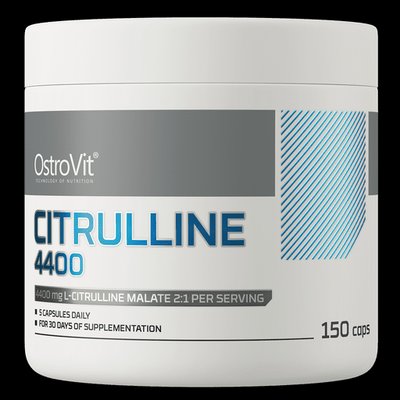 OstroVit Citrulline 4400€15.90 In stock 150caps, and Olimp Citrulline Malate 200g Jahutav limonaad in the l-sitrulliin category.
FAQ
What is the difference between l-citrulline and citrulline malate?
Citrulline malate is l-citrulline bound to malic acid (malate). Malate itself may contribute to energy metabolism via the citric acid cycle. Most sports research uses citrulline malate. For pure citrulline content, check the label ratio. When using pure l-citrulline, effective doses are generally 3–6 g rather than the 6–8 g of citrulline malate.
Is l-citrulline better than l-arginine for pump?
Yes, for most people. Oral citrulline raises plasma arginine concentrations more effectively than equivalent doses of oral arginine because it bypasses gut and liver first-pass metabolism. The 2010 Perez-Guisado study and subsequent research have shifted pre-workout formulations toward citrulline as the primary NO precursor.
How long until I feel the effect of l-citrulline?
Within a single session, the acute vasodilatory and performance effects are present if you time the dose 45–60 minutes before training. Plasma arginine peaks at approximately 60 minutes. Some training-related benefits (reduced soreness, slightly better endurance capacity) may be more apparent after several sessions of consistent use.
References
Perez-Guisado, J., & Jakeman, P. M. (2010). Citrulline malate enhances athletic anaerobic performance and relieves muscle soreness. Journal of Strength and Conditioning Research, 24(5), 1215-1222.
Bailey, S. J., Blackwell, J. R., Williams, E., Vanhatalo, A., Wylie, L. J., Winyard, P. G., & Jones, A. M. (2019). Two weeks of watermelon juice supplementation improves nitric oxide bioavailability but not endurance exercise performance in humans. Nitric Oxide, 89, 13-20.
Wegman, M. P., Guo, M. H., Bennion, D. M., Shankar, M. N., Chrzanowski, S. M., Goldberg, L. A., Seasholtz, S., Thompson, A. C., Block, A. J., Gruber, E. J., Knutson, M. D., Swanson, J. R., Furlow, J. D., & Walter, G. A. (2014). Practicality of intermittent fasting in humans and its effect on oxidative stress and genes related to aging and metabolism. Rejuvenation Research, 18(2), 162-172.



