L-Citrulline Benefits: Evidence-Backed Effects
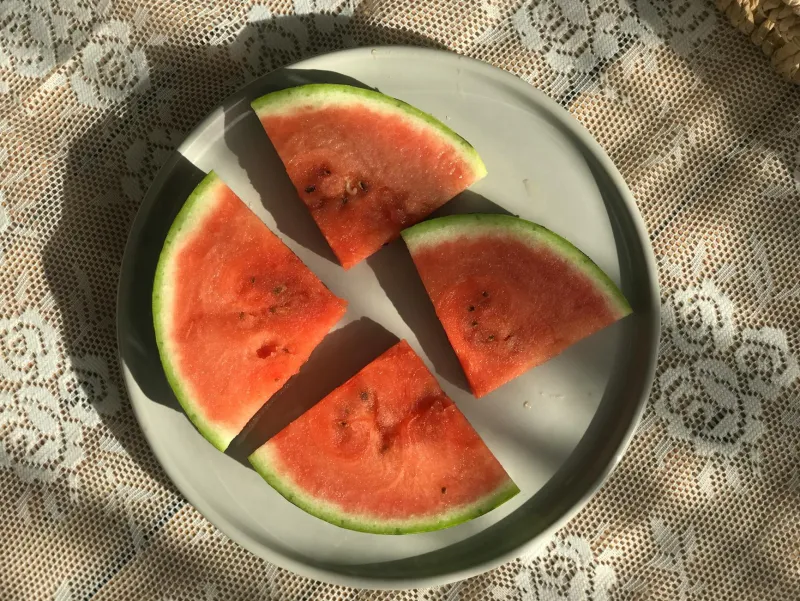
L-citrulline is a non-essential amino acid produced naturally in the body and found in high concentrations in watermelon. As a supplement, it has gained considerable attention among strength and endurance athletes for its role in nitric oxide (NO) metabolism. Understanding which l-citrulline benefits are well-supported by evidence — and which remain speculative — helps you decide whether it belongs in your stack.
Primary Evidenced Benefits
Increased Nitric Oxide Production and Blood Flow
L-citrulline is the main substrate for arginine synthesis in the kidney. Arginine is then used by nitric oxide synthase (NOS) to produce NO. Oral citrulline raises plasma arginine levels more effectively than oral arginine, because arginine is extensively degraded in the gut and liver, while citrulline bypasses this first-pass metabolism (Schwedhelm et al., 2008). Higher plasma arginine translates to greater NO production, vasodilation, and improved muscle perfusion during exercise.
Exercise Performance and Muscular Endurance
The clearest performance evidence for l-citrulline involves muscular endurance at submaximal loads. A well-cited randomised crossover trial found that citrulline malate supplementation significantly increased the number of repetitions performed to failure in bench press and leg press exercises, and reduced muscle soreness at 24 and 48 hours post-exercise (Perez-Guisado and Jakeman, 2010). The malate component may contribute via anaplerotic support of the Krebs cycle, though citrulline itself is the primary active agent.
Reduced Muscle Soreness
The same trial by Perez-Guisado and Jakeman (2010) reported a meaningful reduction in delayed onset muscle soreness (DOMS) ratings. This is consistent with the hypothesis that improved NO-mediated circulation accelerates metabolite clearance and oxygen delivery to recovering tissue.
Secondary and Emerging Effects
Aerobic Performance
Results in aerobic endurance contexts are more mixed. Some studies suggest modest improvements in time-trial performance in cyclists, while others show no effect. The benefit appears more consistent in resistance training than aerobic exercise.
Blood Pressure
Citrulline's NO-raising effect has led researchers to examine its impact on blood pressure. Some studies in prehypertensive individuals report modest reductions in systolic blood pressure, though this area requires larger confirmatory trials before firm conclusions can be drawn.
Erectile Function
A small placebo-controlled pilot study found that oral citrulline supplementation modestly improved erection hardness scores in men with mild erectile dysfunction (Cormio et al., 2011). This reflects the same NO-mediated vascular mechanism. The evidence is promising but preliminary.
Where Evidence is Weak
- Cognitive performance — theoretical links to cerebral blood flow exist, but no quality RCTs support citrulline as a cognitive enhancer.
- Fat loss — no credible mechanistic evidence or clinical trials.
- Immune modulation — citrulline is part of immune cell signalling, but supplementation effects on immunity in healthy adults are not established.
Who Gains Most
L-citrulline benefits are most consistently observed in:
- Strength-trained athletes doing high-volume resistance training (the DOMS and repetition-count data are strongest here)
- People with lower baseline NO availability — older individuals, those with cardiovascular risk factors
- Individuals who respond poorly to arginine due to first-pass degradation
Realistic Expectations
L-citrulline is not a stimulant. Its effects are subtle and cumulative. You are unlikely to feel a dramatic change on a single dose. The pump you may notice during training is real — it reflects vasodilation — but performance gains are measured in extra repetitions and reduced soreness, not dramatic output spikes.
Typical effective doses in studies are 6–8 g of pure l-citrulline or 6–8 g of citrulline malate (2:1 ratio), taken 30–60 minutes before training. Smaller doses may be less effective.
Products available at maxfit.ee include MST L-citrulline 1100mg 120caps, MST Amino Pump L-Citrulline + L-Arginine 60caps, and 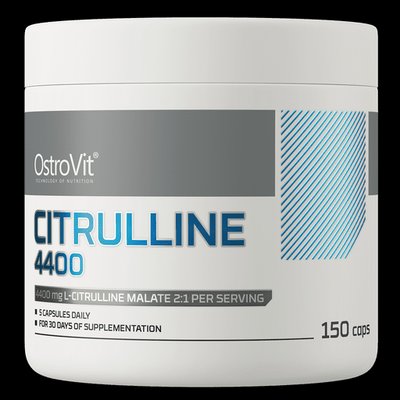 OstroVit Citrulline 4400€15.90 In stock 150caps — check individual serving sizes against the evidence-supported dose range.
FAQ
What is the difference between l-citrulline and citrulline malate?
L-citrulline is the pure amino acid. Citrulline malate pairs it with malic acid, which is involved in energy metabolism. Most performance studies have used citrulline malate, but there is no strong evidence that the malate is critical — the citrulline is the primary active component.
How long does l-citrulline take to work?
Acute effects (the pump) are noticeable within 30–60 minutes. Cumulative effects on recovery and endurance take at least 1–2 weeks of consistent use to become apparent.
Can I take l-citrulline with pre-workout supplements?
Yes. Many pre-workouts already contain citrulline. Check the label to avoid doubling up past the effective dose range and to avoid excessive stim load from the pre-workout's other ingredients.
References
Schwedhelm, E., Maas, R., Freese, R., Jung, D., Lukacs, Z., Jambrecina, A., Spickler, W., Schulze, F., & Boger, R. H. (2008). Pharmacokinetic and pharmacodynamic properties of oral L-citrulline and L-arginine: impact on nitric oxide metabolism. British Journal of Clinical Pharmacology, 65(1), 51-59. https://pubmed.ncbi.nlm.nih.gov/17662090/
Perez-Guisado, J., & Jakeman, P. M. (2010). Citrulline malate enhances athletic anaerobic performance and relieves muscle soreness. Journal of Strength and Conditioning Research, 24(5), 1215-1222.
Cormio, L., De Siati, M., Lorusso, F., Selvaggio, O., Mirabella, L., Sanguedolce, F., & Carrieri, G. (2011). Oral L-citrulline supplementation improves erection hardness in men with mild erectile dysfunction. Urology, 77(1), 119-122. https://pubmed.ncbi.nlm.nih.gov/21195829/



