What Is L-Arginine and What Does It Do?
L-arginine is a semi-essential amino acid — the body can produce it, but under high physical demand, dietary or supplemental intake may become important. Its most prominent role in sports nutrition is as a precursor to nitric oxide (NO), a signalling molecule that causes blood vessels to dilate (vasodilate).
When blood vessels dilate, more oxygen and nutrients are delivered to working muscles, and metabolic waste products are cleared more efficiently. This is the mechanism behind the muscle "pump" often sought during resistance training.
Additionally, l-arginine participates in the urea cycle (helping clear ammonia from muscle metabolism), supports wound healing, and plays a role in hormone signalling.
For beginners, the most relevant effect is the potential for improved blood flow during exercise, which may enhance the exercise experience and modestly support endurance performance.
How to Start Using L-Arginine
L-arginine is available in several forms:
- Powder: Can be mixed into a pre-workout drink or water. MST Arginine HCL 300g Maitsestamata is a straightforward example.
- Capsules/tablets: Easy to dose and travel with. ICONFIT L-Arginine 90caps and MST L-Arginine 120caps are clean capsule options.
- Combination products: Often paired with l-citrulline, which actually raises blood arginine levels more reliably than arginine itself when taken orally.
For timing:
- 30–60 minutes before training: Most users take it pre-workout to support blood flow during the session.
- Consistency: As with most amino acid supplements, daily consistent use tends to produce better results than sporadic use.
A note on l-citrulline: research shows that oral l-citrulline raises plasma arginine levels more effectively than l-arginine at equivalent doses, because l-arginine is largely broken down in the gut before reaching the bloodstream (Schwedhelm et al., 2008). Combination products pairing both are thus very common and well-designed. MST Amino Pump L-Citrulline + L-Arginine 60caps at maxfit.ee is a solid example.
Browse the full range at maxfit.ee/en/category/l-arginiin.
What to Expect and When
- Improved muscle pump during training: This is the most commonly reported and biologically supported effect. More blood flow to muscles means a fuller, more vascularised appearance during and after training.
- Modest endurance support: Some studies show small improvements in aerobic performance, particularly in untrained individuals (Pahlavani et al., 2017). The effect in well-trained athletes is less consistent.
- No dramatic strength gains: L-arginine is not anabolic in the way creatine or protein is. It is a vascular support tool.
- Timeline: Effects on blood flow can be experienced from the first few uses. Sustained cardiovascular or performance benefits take longer to establish with consistent use.
Common Mistakes Beginners Make
- Expecting l-arginine to replace a pre-workout formula. L-arginine does not contain caffeine or other stimulants. If you want energy and focus alongside the pump effect, a multi-ingredient pre-workout may be more appropriate.
- Taking it at the wrong time. L-arginine taken with a large high-protein meal may compete with other amino acids for absorption. Pre-workout on an empty stomach or a light snack is more practical.
- Using arginine alone when citrulline works better. If your goal is elevated plasma arginine and better pump, l-citrulline or a citrulline-arginine blend is more effective than arginine alone for most people.
- Expecting fat loss effects. Despite some marketing claims, l-arginine is not a meaningful fat burner in healthy adults at typical doses.
- Exceeding sensible doses. Very high doses of arginine can cause digestive discomfort. Stick to the label recommendation.
Choosing an L-Arginine Product
- L-arginine HCl: A stable salt form with good solubility. Common in powders.
- L-arginine base: Slightly higher arginine content per gram than HCl, but both forms are effective.
- Citrulline + Arginine blends: The most practical option for those focused on blood flow and pump. NOW Foods Arginine 500mg & Citrulline 120caps is a well-known product in this category.
- Pump-specific pre-workouts: Many contain arginine alongside citrulline, beta-alanine, and other pump ingredients.
For a straightforward option: NOW L-Arginine 500mg 100 veg. caps. or 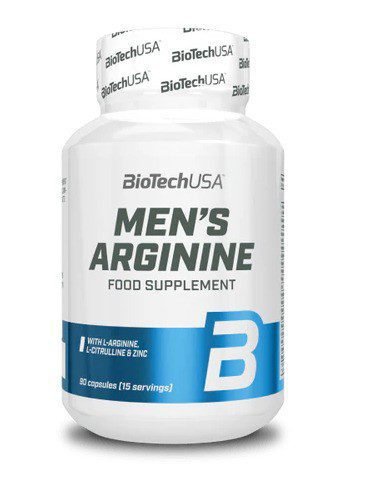 BIOTECHUSA Mens Arginine€17.90 In stock 90tab at maxfit.ee/et/category/l-arginiin.
FAQ
Is l-arginine the same as l-citrulline?
No — they are different amino acids, though l-citrulline converts to l-arginine in the kidneys. Research suggests that l-citrulline raises blood arginine levels more reliably than arginine itself when taken orally, because arginine is partially broken down in the intestine before it reaches circulation. Many effective pump-focused products combine both.
Can I take l-arginine if I have heart issues?
L-arginine can affect blood pressure and cardiovascular function. If you have any cardiovascular condition, consult a medical professional before taking arginine supplements. This guide is for healthy adults with no underlying health conditions.
Does l-arginine help build muscle?
Not directly. L-arginine does not stimulate muscle protein synthesis the way leucine or an adequate protein intake does. Its role is vascular — supporting nutrient delivery to muscles — which may marginally support the training environment, but it is not a muscle-builder in isolation.
References
Schwedhelm, E., Maas, R., Freese, R., Jung, D., Lukacs, Z., Rissler, J., Hasenfuss, G., Maas, R., & Boger, R. H. (2008). Pharmacokinetic and pharmacodynamic properties of oral L-citrulline and L-arginine: impact on nitric oxide metabolism. British Journal of Clinical Pharmacology, 65(1), 51-59. https://pubmed.ncbi.nlm.nih.gov/17662090/
Pahlavani, N., Entezari, M. H., Nasiri, M., Miri, A., Rezaie, M., Bagheri-Bidakhavidi, M., & Sadeghi, O. (2017). The effect of l-arginine supplementation on body composition and performance in male athletes. European Journal of Clinical Nutrition, 71(4), 544-548. https://pubmed.ncbi.nlm.nih.gov/28120856/



