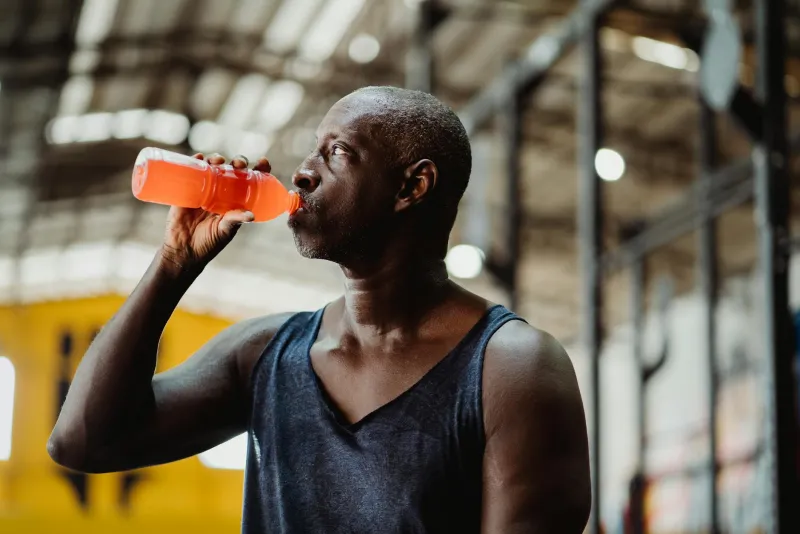
What Are Isotonic Drinks and Gels?
Isotonic drinks and gels for athletes are formulations designed so their osmolality closely matches that of blood plasma — roughly 280–300 mOsm/kg. This similarity allows fluids, carbohydrates, and electrolytes to pass through the gut wall rapidly, replenishing what exercise depletes without causing gastric distress. Gels deliver a concentrated carbohydrate hit in a small volume; isotonic drinks spread the same macronutrient across a larger fluid base.
Mechanism in Sport
During sustained exercise the body loses water and sodium through sweat, and muscle glycogen is progressively depleted. Isotonic solutions address both problems simultaneously. Sodium facilitates the active co-transport of glucose across the intestinal epithelium, accelerating absorption compared with plain water. Carbohydrate oxidation rate from a blend of glucose and fructose can reach higher levels than from glucose alone, because the two sugars use separate intestinal transporters (Jeukendrup & Moseley, 2010).
Energy gels exploit the same biochemistry in a portable, concentrated form. When taken with adequate water they effectively become an isotonic solution inside the gut.
Endurance Evidence
A meta-analysis of randomised trials found that carbohydrate ingestion during exercise lasting more than 60 minutes improved time-trial performance compared with placebo (Vandenbogaerde & Hopkins, 2011). The ergogenic effect is most consistent for efforts lasting 60–150 minutes at moderate-to-high intensity. For shorter or lower-intensity efforts the glycogen-sparing benefit is smaller.
Electrolyte replacement — particularly sodium — reduces the risk of hyponatraemia during prolonged events and may reduce voluntary fluid intake deficits, supporting sustained output.
Effective Protocol
Before exercise: Pre-hydrate with plain water; no need to use isotonic products at rest.
During exercise (>60 minutes): Aim for roughly 30–60 g of carbohydrate per hour from drinks or gels. Consume gels with 150–200 ml of water to approximate isotonic conditions in the stomach. Products available at maxfit.ee such as OstroVit Isotonic Drink 1500g Pirn, PowerBar Iso Active 600g Sidrun, and PowerBar PowerGel Hydro 67ml Kirss are formulated to these targets. OstroVit Isotonic 500g Apelsin is a practical single-session option.
Timing gels: Take an energy gel every 30–45 minutes during continuous effort. Always chase with water, not another carbohydrate drink, to avoid hyperosmotic load.
After exercise: Switch to a recovery drink or whole-food carbohydrate-protein combination; isotonic products are not optimised for the post-exercise window.
Who Benefits Most
- Endurance athletes (running, cycling, triathlon, rowing) competing or training for more than 60 minutes continuously.
- Team-sport players during a full 90-minute match with repeated high-intensity bouts.
- Athletes training in hot or humid conditions where sweat sodium losses are elevated.
Who benefits less: Gym sessions under 45–60 minutes at moderate intensity. In those scenarios plain water is sufficient for most people; the carbohydrate from an isotonic drink may simply add calories without a performance return.
Honest Verdict
Isotonic drinks and gels are genuinely useful tools for endurance performance, with robust evidence behind carbohydrate delivery during prolonged exercise. Their advantage comes specifically from the combination of fluid, fast carbohydrate, and electrolytes delivered at a gut-friendly osmolality. Outside the specific window of sustained aerobic effort, they offer little over water and a balanced diet.
References
Jeukendrup, A. E., & Moseley, L. (2010). Multiple transportable carbohydrates enhance gastric emptying and fluid delivery. Scandinavian Journal of Medicine & Science in Sports, 20(1), 112-121. https://pubmed.ncbi.nlm.nih.gov/19000102/
Vandenbogaerde, T. J., & Hopkins, W. G. (2011). Effects of acute carbohydrate supplementation on endurance performance: a meta-analysis. Sports Medicine, 41(9), 773-792. https://pubmed.ncbi.nlm.nih.gov/21846165/
Do isotonic drinks work for gym training?
For typical gym sessions under 45–60 minutes, plain water is sufficient. Isotonic drinks and gels show their strongest benefit during continuous aerobic exercise lasting more than an hour, where glycogen depletion and dehydration genuinely impair performance.
Can I use a gel without water?
Gels are concentrated (hypertonic) on their own. Without adequate water the gut must draw fluid from the body to dilute them, which can cause cramping and slow absorption. Always take a gel with at least 150 ml of water.
How many gels are too many during a race?
Consuming more carbohydrate than your gut can absorb provides no extra benefit and may cause gastric distress. Most athletes tolerate up to 60–90 g of carbohydrate per hour from mixed sources; start at the lower end and train your gut during long sessions before race day.



