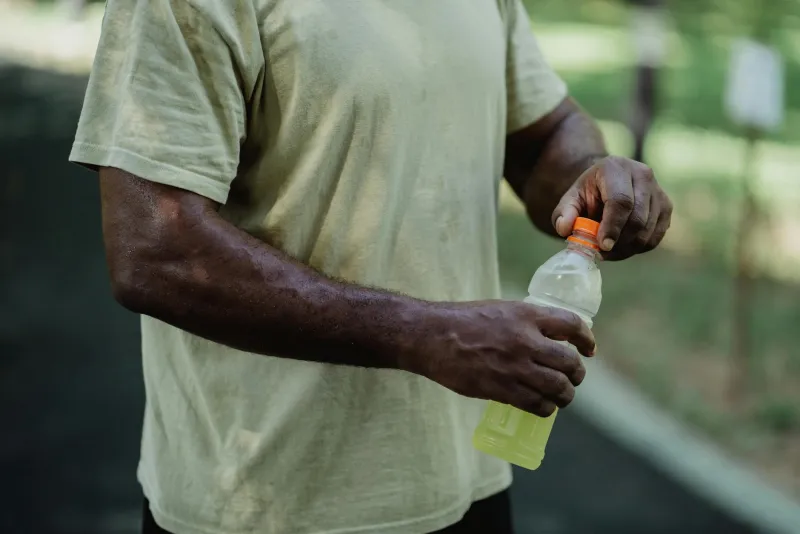
What Limits Isotonic Drinks & Gels Absorption
Isotonic drinks and gels deliver carbohydrates, electrolytes, and fluid during exercise — but their effectiveness depends entirely on how quickly these compounds move from the gut into the bloodstream. Gastric emptying rate is the primary bottleneck. The concentration of the solution matters: beverages with very high carbohydrate concentrations empty from the stomach more slowly than isotonic or hypotonic formulas (Jeukendrup & Moseley, 2010).
Exercise intensity also slows gastric emptying. At intensities above roughly 70–75% VO2max, blood is redirected from the gut to working muscles, which can delay fluid and carbohydrate delivery. This is why high-intensity intervals are not the ideal moment to take a large gel dose.
Cofactors That Help
Sodium is the key electrolyte cofactor for absorption. Sodium co-transports glucose across intestinal cells via the SGLT1 transporter, so a drink that contains both sodium and glucose absorbs more rapidly than glucose alone (Maughan & Shirreffs, 2010). Most quality isotonic products already include sodium for this reason.
Multiple transportable carbohydrates (glucose + fructose blends) can increase total carbohydrate absorption because glucose and fructose use different intestinal transporters. Research shows that glucose-fructose blends at a roughly 2:1 ratio can raise carbohydrate oxidation during exercise compared to glucose alone (Currell & Jeukendrup, 2008). Check the label of your chosen product — OstroVit Isotonic Drink 1500g Pirn and PowerBar Iso Active 600g Sidrun both use multiple-carbohydrate formulas designed for efficient uptake.
Form & Timing Effects
Liquid forms absorb faster than gels taken without water. Energy gels are concentrated and hypertonic; swallowing them without fluid means your gut must first dilute the mixture before absorption begins, which briefly pulls water into the intestinal lumen. Always take gels with 150–250 ml of water rather than an isotonic drink, to avoid creating a very concentrated mixture.
Timing within a session matters too. Begin hydrating before thirst sets in — the thirst mechanism lags behind actual fluid deficit. Starting exercise already slightly dehydrated lengthens the time needed for gut rehydration and can blunt perceived absorption benefit.
Food Pairings
High-fat and high-fibre foods eaten close to training slow gastric emptying substantially. If you plan to use isotonic products mid-exercise, keep the pre-training meal low in fat and fibre. A small quantity of easily digestible carbohydrates (bananas, white rice, plain bread) eaten 60–90 minutes before exercise is compatible with rapid intra-exercise absorption.
Caffeine does not meaningfully impair fluid absorption at typical sports-drink caffeine doses. Some evidence suggests moderate caffeine may even support sodium and water absorption in the gut, though this is not a primary reason to choose caffeinated isotonics.
Practical Tips
- Start early: Begin drinking before you feel thirsty — ideally within the first 15–20 minutes of exercise.
- Small, frequent sips: Taking 100–150 ml every 15–20 minutes keeps the gut from becoming overloaded and supports steady absorption.
- Match concentration to intensity: In lower-intensity, longer sessions, a true isotonic formula works well. For very high-intensity sessions, a hypotonic drink may empty faster.
- Gel rule: Always chase gels with plain water, not another concentrated drink.
- Train your gut: Intestinal carbohydrate transporters can upregulate with consistent in-exercise fuelling practice. Athletes who regularly use carbohydrates during training show better tolerance over weeks.
Isotonic drinks and gels available at maxfit.ee include both powder formats like OstroVit Isotonic 500g Apelsin and ready-to-mix options, covering a range of flavours and carbohydrate profiles. Pick a product whose sodium and carbohydrate content aligns with your session length and sweat rate.
References
Currell, K., & Jeukendrup, A. E. (2008). Superior endurance performance with ingestion of multiple transportable carbohydrates. Medicine & Science in Sports & Exercise, 40(2), 275–281. https://pubmed.ncbi.nlm.nih.gov/18202575/
Jeukendrup, A. E., & Moseley, L. (2010). Multiple transportable carbohydrates enhance gastric emptying and fluid delivery. Scandinavian Journal of Medicine & Science in Sports, 20(1), 112–121. https://pubmed.ncbi.nlm.nih.gov/19000102/
Maughan, R. J., & Shirreffs, S. M. (2010). Development of individual hydration strategies for athletes. International Journal of Sport Nutrition and Exercise Metabolism, 18(5), 457–472.
FAQ
Do I need to take a gel with water or an isotonic drink?
Always take gels with plain water. Gels are hypertonic, and combining them with an isotonic drink creates a high-concentration mixture that slows gastric emptying. Aim for 150–250 ml of water per gel.
How long before exercise should I drink an isotonic drink?
You can begin 30–60 minutes before exercise to pre-hydrate, then continue sipping during the session. Starting before thirst appears is more effective than trying to catch up mid-session.
Are isotonic drinks better than water for short workouts?
For sessions under about 45–60 minutes at moderate intensity, water is generally sufficient. Isotonic drinks and gels show their advantage in longer or high-intensity sessions where carbohydrate and electrolyte replacement matters.



