Iron Deficiency: Who Is Affected?
Iron deficiency anaemia affects over 1.2 billion people worldwide — making it the most common nutritional deficiency on the planet (WHO, 2021). High-risk groups in Estonia include:
- Women of reproductive age (menstrual losses)
- Pregnant women
- Intensively training athletes (especially women)
- Vegans and vegetarians (plant-based iron has lower bioavailability)
- People with digestive disorders (Crohn's disease, coeliac disease)
Iron Forms: What to Choose?
| Form | Absorption | Digestive Side Effects | Cost | Notes |
|---|---|---|---|---|
| Iron bisglycinate | 25%+ | Minimal | Higher | Best tolerance |
| Iron fumarate | 20%+ | Moderate | Moderate | Good compromise |
| Ferrous sulphate | 20%+ | Often problematic | Low | Common but worst tolerance |
| Iron gluconate | ~12% | Moderate | Low | Lower dose options |
| Iron oxide | ~2% | Minimal | Low | Negligible effect |
| Iron carbonate | ~12% | Moderate | Low | Moderate absorption |
Sources: Szarfarc et al. (2001), Tolkien et al. (2015)
Top Iron Supplements at maxfit.ee
NOW Iron 36mg Ferrochel 90caps uses clinically validated Ferrochel® iron bisglycinate — highly effective and among the best-tolerated forms available. Now Foods Iron 18mg 120caps is a moderate-dose daily option, suitable for maintenance.
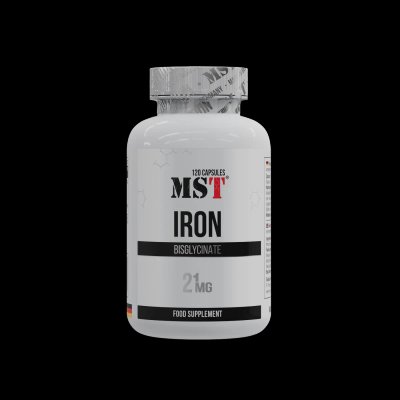 MST Iron bisglycinate€19.90 In stock 21mg 60caps delivers precisely dosed bisglycinate — ideal for those wanting a compact solution. NOW Iron Complex 100 Tablets combines iron with supporting nutrients (vitamin C, folate) in a single tablet.
Factors That Affect Iron Absorption
Absorption Enhancers:
- Vitamin C (ascorbic acid): 200 mg taken with iron increases absorption up to four-fold (Cook & Monsen, 1977)
- Empty stomach: iron absorbs better between meals
- Stomach acid: essential for inorganic iron forms
- Meat, poultry, fish (haem iron): enhances simultaneous non-haem iron absorption
Absorption Inhibitors:
- Calcium: competes with iron — take at different times
- Coffee and tea (tannins): reduce absorption by up to 60% — never combine with iron
- High-dose zinc: competes for the same transporters
- Phytic acid (grains, bread, legumes): binds iron
- Antacids: reduce stomach acidity needed for inorganic iron absorption
What Dose Do You Need?
| Group | Recommended Daily Intake |
|---|---|
| Adult men | 8 mg |
| Adult women (18–50) | 18 mg |
| Pregnant women | 27 mg |
| Breastfeeding women | 9 mg |
| Vegetarians/vegans | 1.8× the standard amount |
| Iron-deficiency anaemia (therapeutic) | 150–200 mg (with doctor) |
Important: men and post-menopausal women should NOT supplement iron without a confirmed deficiency. Excess iron is an oxidative stressor.
Avoiding Side Effects
Iron's most common problems — constipation, nausea, black stools — are primarily associated with inorganic forms (sulphate, fumarate). Iron bisglycinate absorbs without strong stomach acid, is gentler on the gut lining, and causes statistically fewer side effects (Tolkien et al., 2015).
If side effects occur:
- Halve the dose
- Take with food (not coffee!)
- Switch to bisglycinate form
- Split the dose across the day
Browse iron supplements in the minerals category at maxfit.ee.
FAQ
Should I take an iron supplement without a blood test?
Generally no. Men and post-menopausal women with normal ferritin should not add iron — excess is harmful. Women aged 18–50 can take a moderate dose (18 mg) preventively, but a blood test is recommended to identify true deficiency.
Does iron supplement stain teeth?
Some liquid iron preparations can temporarily stain teeth. Capsules and tablets generally do not cause this problem. Always drink a full glass of water.
How long does it take to correct iron deficiency?
Haemoglobin typically normalises within 1–2 months. Restoring ferritin (iron stores) fully takes 3–6 months. Continue supplementing for at least 3 months after haemoglobin normalises.
References
- World Health Organization. (2021). Iron Deficiency Anaemia: Assessment, Prevention and Control. WHO.
- Tolkien, Z., Stecher, L., Mander, A.P., et al. (2015). Ferrous sulfate supplementation causes significant gastrointestinal side-effects in adults. PLOS ONE, 10(2), e0117383.
- Szarfarc, S.C., de Souza, S.B., Furumoto, R.A., et al. (2001). Relative effectiveness of iron bis-glycinate chelate and ferrous sulfate in the control of iron deficiency. Archivos Latinoamericanos de Nutricion, 51(1 Suppl 1), 42–47.
- Cook, J.D., & Monsen, E.R. (1977). Vitamin C, the common cold, and iron absorption. American Journal of Clinical Nutrition, 30(2), 235–241.
- Institute of Medicine. (2001). Dietary Reference Intakes for Vitamin A, Vitamin K, Arsenic, Boron, Chromium, Copper, Iodine, Iron, Manganese, Molybdenum, Nickel, Silicon, Vanadium, and Zinc. National Academies Press.