Iron for Sleep & Stress: What the Evidence Shows
Iron is best known for its role in oxygen transport, but its involvement in neurological function — including sleep regulation and stress responses — is less widely appreciated. This article looks at the mechanisms connecting iron to sleep and stress, what the clinical evidence shows, and when supplementation is genuinely indicated.
Mechanism: How Iron Connects to Sleep and Stress
Iron is a cofactor in the synthesis of several neurotransmitters, including dopamine, serotonin, and norepinephrine. Dopamine is involved in mood regulation and is also the precursor to melatonin via serotonin. Iron-deficient states therefore have a plausible biological pathway to disrupted sleep and altered stress resilience.
The connection to restless legs syndrome (RLS) is particularly well established. RLS — which causes uncomfortable sensations in the legs at rest, severely disrupting sleep — is associated with reduced brain iron stores even when serum ferritin appears in the low-normal range. Studies have shown that oral iron supplementation reduces RLS symptom severity in a subset of patients (Allen et al., 2013). The hypothesised mechanism involves iron's role in dopaminergic signalling in the spinal cord and brain.
Separately, iron is required for the hypothalamic-pituitary-adrenal (HPA) axis to function correctly. Iron-deficient animals show dysregulation of cortisol responses, suggesting a link between iron status and stress reactivity — though direct evidence in humans is more limited.
RCT Evidence
Randomised controlled trials on iron and sleep have focused primarily on two populations: people with iron deficiency anaemia and people with restless legs syndrome.
A double-blind RCT found that intravenous iron improved sleep quality and reduced periodic limb movements in adults with iron deficiency and RLS (Earley et al., 2004). Oral iron trials show more mixed results, partly because oral iron raises serum iron more slowly than IV formulations and because ferritin response takes weeks to months.
For stress and mood, the evidence is more associative than causal. Cross-sectional studies consistently find correlations between low ferritin and higher rates of fatigue and mood disturbance, which aligns with the neurotransmitter mechanisms described above. RCT data specifically targeting stress outcomes with iron supplementation are limited.
Effective Dose and Timing
For iron deficiency correction, typical supplemental doses used in trials range from 60 mg to 200 mg of elemental iron per day. However, daily dosing at high amounts can reduce iron absorption through hepcidin upregulation — a regulatory protein that blocks intestinal iron uptake when iron stores rise. Some research suggests that alternate-day dosing may be as effective as daily dosing for raising ferritin while reducing gastrointestinal side effects (Stoffel et al., 2017).
Iron absorption is significantly higher when taken on an empty stomach but gastrointestinal tolerance is better with food. Vitamin C taken alongside iron meaningfully increases absorption; calcium and tea reduce it.
ICONFIT Capsules Ferrum + Vitamin C 90caps combines iron with vitamin C in one product — practically addressing the absorption-enhancement principle. NOW Iron 36mg Ferrochel 90caps uses ferrous bisglycinate chelate, a form associated with better tolerability and fewer gastrointestinal side effects than ferrous sulfate. 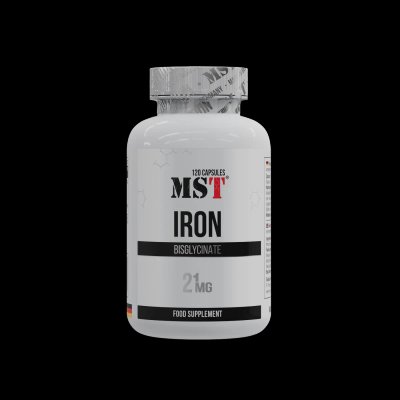 MST Iron bisglycinate€19.90 In stock 21mg 120caps offers a lower-dose bisglycinate option for those who prefer a gentler daily dose.
Who Benefits
Iron supplementation for sleep and stress is most justified in individuals who have documented iron deficiency (low serum ferritin, typically below 30 mcg/L) or iron deficiency anaemia. The sleep benefits, particularly for restless legs, appear most consistent in this group.
Supplementing iron without confirmed deficiency is not recommended as a strategy for general sleep improvement. Iron overload is a real risk — unlike many supplements, iron has a meaningful upper boundary and excess iron is genuinely harmful over time.
Groups at higher risk of iron deficiency who may benefit from attention to this area include premenopausal women with heavy menstrual periods, endurance athletes (especially female runners), and strict vegans or vegetarians.
You can explore iron supplement options at maxfit.ee/et/category/raud.
Honest Verdict
The link between iron and sleep is real and mechanism-supported, most clearly demonstrated in restless legs syndrome and iron deficiency contexts. The connection to general stress resilience is biologically plausible but less directly proven in controlled human trials. Iron supplementation makes clinical sense for those with documented deficiency — for everyone else, the evidence does not support using iron as a general sleep or stress aid.
FAQ
How do I know if I have iron deficiency?
A blood test measuring serum ferritin and haemoglobin is the standard approach. Ferritin is the storage form of iron and is a more sensitive marker of deficiency than haemoglobin alone. A physician or laboratory can order this test.
Can iron supplementation improve my sleep if I am not anaemic?
If your ferritin is in the low-normal range and you have restless legs symptoms, there may be a benefit. But if your iron status is truly normal, the evidence does not support iron supplementation as a sleep strategy.
Why does iron upset my stomach?
Ferrous sulfate, the cheapest and most common form, is associated with nausea, constipation, and stomach pain. Bisglycinate chelate forms like the products above are generally better tolerated. Taking iron with food also reduces side effects, though it slightly reduces absorption.
References
Allen, R. P., Auerbach, S., Bahrain, H., Auerbach, M., & Earley, C. J. (2013). The prevalence and impact of restless legs syndrome on patients with iron deficiency anemia. American Journal of Hematology, 88(4), 261-264. https://pubmed.ncbi.nlm.nih.gov/23494945/
Stoffel, N. U., Cercamondi, C. I., Brittenham, G., Zeder, C., Geurts-Moespot, A. J., Swinkels, D. W., & Zimmermann, M. B. (2017). Iron absorption from oral iron supplements given on consecutive versus alternate days and as single morning doses versus twice-daily split dosing in iron-depleted women. The Lancet Haematology, 4(11), e524-e533. https://pubmed.ncbi.nlm.nih.gov/29032957/
Earley, C. J., Heckler, D., Allen, R. P. (2004). The treatment of restless legs syndrome with intravenous iron dextran. Sleep Medicine, 5(3), 231-235. https://pubmed.ncbi.nlm.nih.gov/15165528/



