
Iron Side Effects and Safety: What You Need to Know
Iron is an essential mineral that carries oxygen in the blood and supports energy metabolism. Iron deficiency is the most common nutritional deficiency worldwide, and supplementation is often medically indicated. However, iron is also one of the most side-effect-prone minerals in supplement form, and supplementing without confirmed deficiency carries real risks. This guide covers what iron safety actually looks like.
Common and Rare Side Effects
Gastrointestinal side effects are by far the most common complaint with iron supplementation:
- Constipation — the most frequently reported effect, particularly with ferrous sulphate
- Nausea and stomach cramps — often dose-related
- Dark or tarry stools — normal and harmless, but alarming if unexpected
- Diarrhoea — less common, more often seen with liquid iron preparations
Ferrous bisglycinate (chelated iron) produces significantly fewer gastrointestinal side effects than ferrous sulphate at equivalent doses, making it a preferred form for those with sensitive stomachs. A randomised trial demonstrated that ferrous bisglycinate was as effective as ferrous sulphate for raising haemoglobin while causing fewer GI side effects.
Serious but rare risks include iron overload (haemochromatosis in genetically predisposed individuals) and acute iron toxicity, which is a medical emergency — primarily a risk in accidental ingestion by children.
Upper Safe Limits
The tolerable upper intake level established for adult iron supplementation is set by regulatory bodies to prevent overload. It is important to note that this limit applies to total intake from all sources. Most adults with a confirmed deficiency take a therapeutic dose prescribed by a clinician, which may temporarily exceed maintenance ULs under medical supervision.
For people without confirmed deficiency, routine iron supplementation is generally not recommended, as iron is a pro-oxidant and excess intake has been associated with oxidative stress and, in some observational data, with increased cardiovascular risk and colorectal cancer risk, though causality in population studies remains debated.
Drug and Nutrient Interactions
Iron has numerous important interactions:
- Levothyroxine: Iron reduces thyroid hormone absorption; separate by at least four hours.
- Calcium: Calcium inhibits iron absorption; avoid co-ingestion.
- Proton-pump inhibitors and antacids: Reduce stomach acid needed for ferric iron absorption (ferrous forms are less affected).
- Fluoroquinolone and tetracycline antibiotics: Iron chelates these and reduces their bioavailability.
- Vitamin C: Enhances non-haem iron absorption by reducing ferric to ferrous iron — commonly combined in supplements. ICONFIT Capsules Ferrum + Vitamin C 90caps pairs both for this reason.
- Tea and coffee: Tannins and polyphenols significantly inhibit non-haem iron absorption; avoid consuming them within one hour of iron supplements.
Who Should Be Cautious or Avoid Iron Supplements
- People without confirmed deficiency: Test serum ferritin and haemoglobin before supplementing — routine supplementation without deficiency is not recommended.
- Hereditary haemochromatosis: This genetic condition causes iron overload; any supplementation is contraindicated.
- Inflammatory conditions: C-reactive protein (CRP) elevation falsely lowers measured ferritin, and ferritin itself rises as an acute-phase reactant, making deficiency harder to diagnose during active inflammation.
- Men and post-menopausal women: These groups have lower iron requirements and are more susceptible to overload from unnecessary supplementation.
Quality and Contamination Concerns
Iron supplements exist in multiple forms with different characteristics:
| Form | Elemental iron | Tolerability | Notes |
|---|---|---|---|
| Ferrous sulphate | ~20% | Moderate | Cheapest, most studied |
| Ferrous bisglycinate | ~20% | High | Fewer GI side effects |
| Ferrous gluconate | ~12% | Good | Gentler but lower dose |
| Ferric iron | ~29% | Lower | Requires more stomach acid |
At maxfit.ee, the iron range includes ICONFIT Capsules Ferrum + Vitamin C 90caps, NOW Iron 36mg Ferrochel 90caps, Now Foods Iron 18mg 120caps, NOW Iron Complex 100tabs, 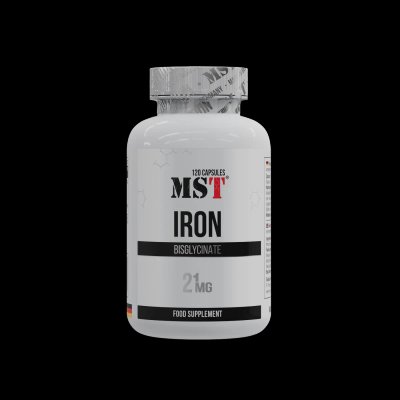 MST Iron bisglycinate€19.90 In stock 21mg 120caps, and
 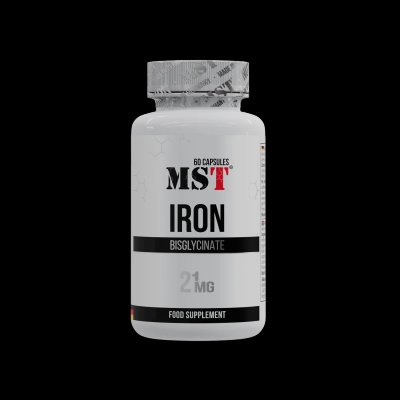 MST Iron bisglycinate€13.90 In stock 21mg 60caps — see the raud category for full details.
Choose a form appropriate for your sensitivity and confirm dosing with your healthcare provider. Third-party-tested products give added assurance of label accuracy.
FAQ
Should I take iron with or without food?
Iron is best absorbed on an empty stomach, but gastric side effects are much less common when taken with food. Taking iron with a small amount of vitamin C (or a vitamin C-containing food) rather than a full meal is a practical compromise that improves absorption while reducing irritation.
Why does iron supplementation cause constipation?
Unabsorbed iron interacts with the gut microbiota and can promote iron-reducing bacteria, alter bowel motility, and directly irritate the intestinal mucosa. Choosing ferrous bisglycinate over ferrous sulphate, increasing water intake, and ensuring adequate dietary fibre can help manage this side effect.
How long before iron levels improve with supplementation?
Haemoglobin levels in iron-deficiency anaemia typically begin to rise within two to four weeks of adequate supplementation. However, replenishing iron stores (as measured by serum ferritin) takes considerably longer — usually three to six months of continued supplementation after haemoglobin normalises.
References
Anker, S. D., Comin Colet, J., Filippatos, G., Willenheimer, R., Dickstein, K., Drexler, H., Luscher, T. F., Bart, B., Banasiak, W., Niegowska, J., Kirwan, B. A., Mori, C., von Eisenhart Rothe, B., Pocock, S. J., Poole-Wilson, P. A., & Ponikowski, P. (2009). Ferric carboxymaltose in patients with heart failure and iron deficiency. New England Journal of Medicine, 361(25), 2436-2448. https://pubmed.ncbi.nlm.nih.gov/19920054/
Zhu, A., Kaneshiro, M., & Kaunitz, J. D. (2010). Evaluation and treatment of iron deficiency anemia: a gastroenterological perspective. Digestive Diseases and Sciences, 55(3), 548-559. https://pubmed.ncbi.nlm.nih.gov/19841989/



