
Iron Myths vs Facts
Iron is one of the most commonly discussed minerals in nutrition - and one of the most misunderstood. From the belief that everyone needs an iron supplement, to claims that certain forms are dramatically superior, myths around iron abound. This article works through the most common ones against what the evidence actually shows.
Common Myths
Myth 1: Everyone benefits from iron supplementation
Fact: Iron supplementation is only beneficial when deficiency is present. In iron-replete individuals, additional iron does not improve energy, performance, or any other health marker. Moreover, excess iron can be harmful because the body has no efficient mechanism for excreting it. Always check serum ferritin before supplementing.
Myth 2: Plant foods cannot provide adequate iron
Fact: Non-haem iron from plant foods is indeed absorbed less efficiently than haem iron from meat. However, dietary patterns rich in vitamin C alongside non-haem iron sources substantially increase absorption. The assumption that plant-based diets inevitably lead to deficiency is not supported when dietary planning is adequate.
Myth 3: More iron means more energy
Fact: Iron deficiency anaemia causes fatigue, and correcting it restores energy. But this is a correction of a deficiency, not a performance enhancement. A 2012 meta-analysis confirmed that iron supplementation improved fatigue specifically in iron-deficient individuals, not those with normal iron status (Vaucher et al., 2012).
Myth 4: Ferrous sulphate is always best
Fact: Ferrous sulphate is well-studied and cost-effective, but it causes gastrointestinal side effects in many people. Bisglycinate forms show comparable absorption in some studies with better tolerability. A 2014 RCT found that iron bisglycinate produced similar haemoglobin responses to ferrous sulphate with fewer side effects (Szarfarc et al., 2001). The best form is the one you actually tolerate and take consistently.
What the Evidence Actually Shows
The evidence firmly supports iron supplementation for diagnosed iron deficiency or iron-deficiency anaemia. Benefits include restoration of haemoglobin levels, reduced fatigue, and improved exercise capacity in deficient individuals.
For athletes, particularly female endurance athletes and distance runners, iron status monitoring is warranted because training increases iron losses through sweat, gut, and mechanical haemolysis.
Products like ICONFIT Capsules Ferrum + Vitamin C 90caps, NOW Iron 36mg Ferrochel 90caps, and 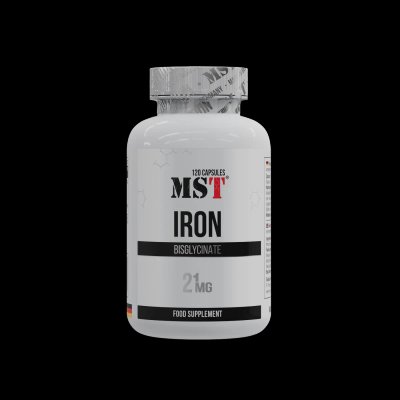 MST Iron bisglycinate€19.90 In stock 21mg 120caps represent the main approaches available at maxfit.ee - pairing iron with vitamin C (as ICONFIT does) reflects the evidence on absorption enhancement.
Marketing Claims vs Reality
Marketing often implies that iron supplements provide an energy boost for anyone who feels tired. This is misleading. Fatigue has many causes; iron deficiency is only one of them. Supplementing without confirmed deficiency wastes money at best and poses health risks at worst.
Some brands claim their form of iron is absorbed many times better than ferrous sulphate. While form does affect bioavailability, the differences in clinical outcomes between well-formulated products are smaller than marketing suggests.
Grey Areas
Iron status in athletes exists on a spectrum. "Iron depletion" without full anaemia may still impair performance, though the evidence is less definitive than for overt anaemia. Some sports medicine practitioners recommend supplementing once ferritin falls below a certain threshold even before haemoglobin drops. This is an area of ongoing debate.
Vegetarian and vegan athletes represent another grey area where monitoring is prudent rather than universal supplementation.
Bottom Line
Test before you supplement. If ferritin or haemoglobin confirms a deficit, iron supplementation is clearly warranted and effective. If levels are normal, additional iron offers no benefit and carries risk. Choose a form you tolerate, pair with vitamin C, and take on an empty stomach where possible for best absorption.
FAQ
Should I take iron if I feel tired all the time?
Not without a blood test first. Fatigue has many causes. A serum ferritin test is the most informative starting point. Supplementing without confirmed deficiency can cause gastrointestinal issues and, over time, iron overload.
Can I get enough iron from diet alone?
Most omnivores who eat meat regularly maintain adequate iron status from diet. Vegans and vegetarians need more dietary attention - pairing non-haem iron sources with vitamin C-rich foods is a practical strategy. Individual variation means monitoring is still wise.
Does iron absorption change throughout the day?
Iron is generally absorbed better on an empty stomach. However, if side effects are a problem, taking it with a small meal is a reasonable compromise. Avoid taking iron with calcium supplements or coffee, which can inhibit absorption.
References
Vaucher, P., Druais, P. L., Waldvogel, S., & Favrat, B. (2012). Effect of iron supplementation on fatigue in nonanemic menstruating women with low ferritin: a randomized controlled trial. CMAJ, 184(11), 1247-1254. https://pubmed.ncbi.nlm.nih.gov/22777991/
Szarfarc, S. C., de Cassana, L. M. N., Fujimori, E., Guerra-Shinohara, E. M., & de Oliveira, I. M. V. (2001). Relative effectiveness of iron bis-glycinate chelate (Ferrochel) and ferrous sulfate in the control of iron deficiency in pregnant women. Archivos Latinoamericanos de Nutricion, 51(1 Suppl 1), 42-47.



