Drug Interactions with Iron
Iron interactions with medications are clinically significant and can reduce the effectiveness of both the drug and the iron supplement. Understanding these interactions is essential for anyone supplementing iron alongside other treatments.
Proton pump inhibitors (PPIs) and antacids: These reduce stomach acid, which is required to convert ferric iron (Fe3+) to the more absorbable ferrous form (Fe2+). Taking iron supplements with antacids substantially impairs absorption. Separate iron from antacid doses by at least 2 hours.
Levothyroxine (thyroid hormone): Iron chelates with levothyroxine in the gut, forming insoluble complexes that reduce absorption of both compounds. Studies have demonstrated that iron can reduce levothyroxine absorption significantly when taken simultaneously (Benvenga et al., 2008). Standard guidance is to separate levothyroxine from iron by at least 4 hours.
Tetracycline and fluoroquinolone antibiotics: Iron forms insoluble chelates with these antibiotic classes, reducing both antibiotic and iron absorption. Take iron and these antibiotics at least 2–3 hours apart.
Levodopa (Parkinson's medication): Iron can reduce levodopa absorption. Separate dosing by 2 hours.
If you are on any long-term medication, consult a pharmacist or physician about iron supplement timing before starting.
Nutrient Competition and Synergy
Vitamin C (iron enhancer): Vitamin C is the most established iron absorption enhancer. It reduces ferric iron to the absorbable ferrous form and forms a soluble iron-ascorbate complex that resists precipitation at intestinal pH. Consuming vitamin C alongside non-heme iron can increase its absorption meaningfully (Teucher et al., 2004). ICONFIT Capsules Ferrum + Vitamin C 90caps already includes vitamin C in the formulation for this reason.
Calcium (iron inhibitor): Calcium and non-heme iron share transport mechanisms in the intestine. High-dose calcium taken with iron reduces iron absorption. Separate calcium supplements (especially large doses) from iron by at least 1–2 hours. This applies to calcium in dairy products consumed at the same meal as iron supplements.
Zinc (mutual inhibitor): Zinc and iron compete for the DMT-1 intestinal transporter. High-dose zinc supplementation can reduce iron absorption and vice versa. At supplemental doses, spacing them apart by 2 hours reduces competition.
Polyphenols and tannins (inhibitors): These compounds in coffee, tea, red wine, and some plant foods bind non-heme iron in the gut and form insoluble complexes. Coffee or tea consumed with or shortly before an iron-rich meal or supplement can reduce iron absorption substantially. This is particularly relevant for athletes relying on plant-based iron sources.
Heme iron vs non-heme iron: Meat-source heme iron is absorbed via a separate pathway (HCP1 transporter) and is not significantly affected by most inhibitors. Supplemental iron (non-heme) is more susceptible to all the interactions listed above.
Food Effects on Iron Absorption
Beyond specific nutrients, the broader food environment affects iron uptake:
- "Meat factor": A small amount of meat consumed with a non-heme iron source (plant food or supplement) enhances non-heme iron absorption — a phenomenon known as the "meat factor." The mechanism is not fully elucidated but may involve cysteine-containing peptides released during meat digestion.
- Phytate-rich foods: Whole grains, legumes, and seeds contain phytic acid, which binds iron tightly and reduces its absorption. Soaking, fermenting, or sprouting these foods reduces phytate content and can meaningfully improve non-heme iron bioavailability.
- Vitamin A and beta-carotene: These compounds can partially counteract the inhibitory effect of phytates on iron absorption, possibly by forming soluble iron complexes. Eating colourful vegetables alongside iron-rich plant meals is a practical strategy.
Who Must Be Cautious
- Athletes with iron deficiency anaemia: Iron deficiency is common in endurance athletes — particularly female runners — due to menstrual losses and exercise-induced haemolysis. These athletes often require supplemental iron and must be especially mindful of interaction timing.
- Vegetarians and vegans: Plant-based diets contain only non-heme iron, which is more sensitive to all dietary inhibitors. Careful meal planning and strategic supplement timing are more critical in this group.
- Older adults on polypharmacy: Multiple medications increase the probability of clinically significant drug-iron interactions.
- Pregnant athletes or pregnant women: Iron requirements increase substantially during pregnancy, and drug interactions are more consequential.
NOW Iron 36mg Ferrochel 90caps and 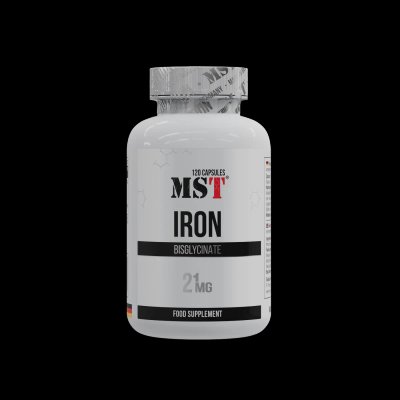 MST Iron bisglycinate€19.90 In stock 21mg 120caps use iron bisglycinate (ferrous glycinate), a chelated form less affected by dietary inhibitors than standard ferrous sulfate — useful for those with sensitive digestion or complex supplement stacks. Now Foods Iron 18mg 120caps and NOW Iron Complex 100tabs offer lower-dose options for maintenance.
Iron products are available at maxfit.ee.
Practical Rules
- Take iron on an empty stomach for maximum absorption — but if gastric discomfort is an issue, a small non-inhibitory meal is acceptable.
- Pair with vitamin C: 100–200 mg alongside non-heme iron increases absorption.
- Separate from coffee, tea, and dairy by at least 1 hour before and after.
- Separate from calcium supplements by at least 2 hours.
- Separate from levothyroxine by at least 4 hours; separate from other interfering medications by at least 2 hours.
- Choose bisglycinate forms if digestive tolerance is an issue or if you are stacking multiple supplements.
References
Benvenga, S., Bartolone, L., Pappalardo, M. A., Russo, A., Lapa, D., Giorgianni, G., Saraceno, G., & Trimarchi, F. (2008). Altered intestinal absorption of L-thyroxine caused by coffee. Thyroid, 18(3), 293–301. https://pubmed.ncbi.nlm.nih.gov/18341376/
Teucher, B., Olivares, M., & Cori, H. (2004). Enhancers of iron absorption: ascorbic acid and other organic acids. International Journal for Vitamin and Nutrition Research, 74(6), 403–419. https://pubmed.ncbi.nlm.nih.gov/15743017/
Hurrell, R., & Egli, I. (2010). Iron bioavailability and dietary reference values. American Journal of Clinical Nutrition, 91(5), 1461S–1467S. https://pubmed.ncbi.nlm.nih.gov/20200263/
FAQ
Can I take iron with vitamin C supplements?
Yes — vitamin C is the most effective way to enhance non-heme iron absorption. Taking iron alongside or shortly after a vitamin C source (supplement or vitamin C-rich food) is a standard strategy to improve uptake.
Why does coffee interfere with iron absorption?
Coffee contains polyphenols that bind non-heme iron in the gut and form insoluble complexes that cannot be absorbed. The effect is strongest when coffee is consumed during or within an hour of an iron supplement or iron-rich plant meal. Allowing 1–2 hours between coffee and iron largely avoids this interaction.
How do I know if I need iron supplementation?
Symptoms of iron deficiency include fatigue, pale skin, reduced exercise tolerance, and impaired concentration — but these are non-specific. A blood test measuring serum ferritin and haemoglobin is needed to confirm deficiency. Supplementing without confirmed deficiency is generally not recommended, as excess iron is poorly excreted and can accumulate.



