
Iron After 50: Benefits and Safety
Iron is an essential mineral, central to oxygen transport via haemoglobin and energy production in every cell. Yet the picture for iron for seniors is considerably more nuanced than for younger adults. After the age of 50 — particularly at menopause in women and with age-related changes in men — both iron requirements and the risks of supplementing change substantially. This review covers age-related need, absorption shifts, dose and safety, medication interactions, and when supplementation is actually warranted.
Age-Related Need: Men, Post-Menopausal Women, and Frail Older Adults
Before menopause, women require more iron than men because menstrual blood loss is the primary route of iron depletion. After menopause, women's requirements drop to the same level as men — around 8 mg per day from all dietary sources combined in most reference standards.
For most healthy older adults, this modest requirement is met through diet alone. Iron-rich foods — red meat, legumes, fortified cereals, leafy greens — provide sufficient iron for the majority of people over 50 who maintain a varied diet.
However, certain groups are at elevated risk of iron deficiency:
- Older adults with reduced appetite or monotonous diets
- Those with gastrointestinal conditions reducing absorption (atrophic gastritis, inflammatory bowel disease, coeliac disease)
- Patients with chronic kidney disease
- Individuals with unexplained fatigue or documented anaemia (confirmed by serum ferritin and haemoglobin testing)
National surveys in Europe consistently show that iron deficiency anaemia affects a meaningful proportion of adults over 65, particularly in care home populations.
Absorption Changes With Age
Several physiological changes reduce iron absorption efficiency in older adults:
Reduced gastric acid. Stomach acid is required to solubilise dietary non-haem iron (the plant-sourced form) and to facilitate iron release from food. Atrophic gastritis — common in older adults — and long-term proton pump inhibitor (PPI) use both reduce acid, impairing non-haem iron absorption.
Reduced haem iron intake. Older adults often reduce red meat consumption for health or cost reasons, shifting the diet toward less-bioavailable plant iron.
Inflammation. Low-grade chronic inflammation, common with ageing (sometimes called inflammageing), elevates hepcidin — the master iron regulatory hormone — which blocks intestinal iron absorption and iron release from storage. This creates a pattern where ferritin (an acute-phase protein) may appear falsely elevated even when functional iron for erythropoiesis is insufficient.
These factors mean that an older adult may need a higher dietary iron intake than the bare reference value to achieve the same net absorption as a younger person.
Dose and Safety
Iron supplements are available in different forms: ferrous sulphate (highest elemental iron, more gut side effects), ferrous gluconate, ferrous bisglycinate (gentler on the gastrointestinal tract, often better tolerated). Products available at maxfit.ee/et/category/raud include ICONFIT Capsules Ferrum + Vitamin C 90caps, NOW Iron 36mg Ferrochel 90caps, and 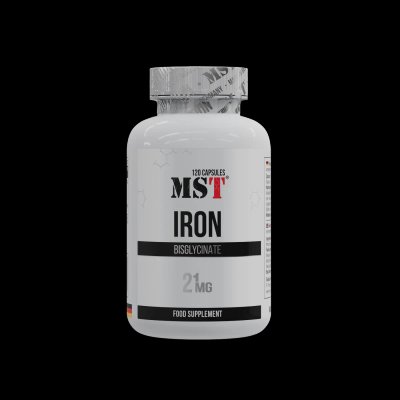 MST Iron bisglycinate€19.90 In stock 21mg 120caps — the bisglycinate and Ferrochel forms are generally better tolerated in older adults.
The tolerable upper intake level for adults from supplemental iron is set at 45 mg per day by most reference authorities. Iron supplementation should not be started without first confirming deficiency through blood testing — this is especially important for men and post-menopausal women, who are at lower background risk of deficiency.
Excess iron in older adults is not trivially excreted — humans have limited active mechanisms to excrete surplus iron. Iron overload is associated with oxidative stress and may worsen cardiovascular risk and contribute to neurodegenerative changes in some contexts.
Alternating days (every other day) of iron supplementation has been shown in some studies to improve absorption while reducing side effects compared with daily dosing, because it avoids hepcidin upregulation triggered by daily doses (Moretti et al., 2015).
Interactions With Medication
Iron supplements have clinically significant interactions with several medication classes frequently used in older adults:
- Levothyroxine (thyroid hormone): iron significantly reduces levothyroxine absorption; separate by at least 4 hours.
- Proton pump inhibitors and H2 blockers: reduce non-haem iron absorption by raising gastric pH.
- Quinolone and tetracycline antibiotics: iron chelates these drugs, reducing antibiotic efficacy and iron absorption simultaneously; separate by 2–3 hours.
- Bisphosphonates (e.g. alendronate for osteoporosis): iron may reduce absorption; timing separation is recommended.
- Levodopa (Parkinson's treatment): iron reduces absorption; separate by at least 2 hours.
When to Supplement
Iron supplementation in adults over 50 should be based on documented deficiency (low serum ferritin, low haemoglobin, or functional iron deficiency with elevated transferrin receptor), not on symptoms alone. Fatigue, which many older adults experience, has many causes; empirical iron supplementation without testing risks harm from overload in those who are not actually deficient.
Vegetarians and vegans over 50 have higher deficiency risk and may benefit from periodic ferritin monitoring and dietary attention to non-haem iron paired with vitamin C, which substantially enhances non-haem iron absorption.
References
Moretti, D., Goede, J. S., Zeder, C., Jiskra, M., Chatzirzoglou, V., Bhambani, S., Zimmermann, M. B. (2015). Oral iron supplements increase hepcidin and decrease iron absorption from daily or twice-daily doses in iron-depleted young women. Blood, 126(17), 1981–1989. https://pubmed.ncbi.nlm.nih.gov/26289639/
Camaschella, C. (2015). Iron-deficiency anemia. New England Journal of Medicine, 372(19), 1832–1843. https://pubmed.ncbi.nlm.nih.gov/25946282/
Murad, M. H., Ingle, N. A., Hayat, N., Farooqi, N., & Naz, F. (2011). The effect of vitamin C on iron absorption from ferrous bisglycinate supplements. Journal of Nutritional Science and Vitaminology, 57(3), 211–215.
FAQ
Should all seniors take iron supplements?
No. Most healthy adults over 50 with a varied diet meet their iron needs without supplementation. Supplementation should only be started after blood tests confirm iron deficiency. Unwarranted supplementation in men and post-menopausal women risks iron overload.
What is the best form of iron supplement for older adults?
Ferrous bisglycinate and iron bisglycinate chelate (such as Ferrochel) are generally better tolerated than ferrous sulphate, with fewer gastrointestinal side effects. Vitamin C taken simultaneously enhances non-haem iron absorption.
How long does it take for iron supplements to correct deficiency?
Haemoglobin typically begins to rise within 2–4 weeks of starting supplementation. Replenishing iron stores (ferritin) usually takes 3–6 months of consistent supplementation. Retesting after 3 months is standard clinical practice.



