Iron Dosage: How Much to Take
Iron is an essential trace mineral required for haemoglobin synthesis, oxygen transport, and cellular energy metabolism. Iron deficiency is the most common nutritional deficiency worldwide, particularly affecting women of childbearing age, vegetarians, and endurance athletes. Yet iron is also one of the few nutrients where supplementing without confirmed deficiency carries meaningful risk, making appropriate dosing especially important.
Studied Effective Dose Ranges
Daily iron requirements vary substantially by group. General reference values for elemental iron from all sources are approximately 8 mg/day for adult men and postmenopausal women, and 18 mg/day for premenopausal women.
For treating iron-deficiency anaemia, therapeutic doses are much higher. Clinical trials typically use 100–200 mg of elemental iron per day, often divided into two or three doses, for three to six months (Camaschella, 2015). However, recent research has suggested that lower-dose, alternate-day regimens may be equally effective and better tolerated due to favourable effects on hepcidin cycling (Moretti et al., 2015).
For prevention of mild deficiency in at-risk individuals without anaemia, daily intakes of 30–60 mg of elemental iron have been studied.
Dose by Goal
- Maintenance / dietary gap filling (no deficiency): 10–18 mg elemental iron/day from a multivitamin or low-dose iron supplement — matching roughly the daily requirement for your group
- Iron deficiency without anaemia (low ferritin): 30–60 mg elemental iron per day; consult a doctor to confirm diagnosis and duration
- Iron-deficiency anaemia (confirmed by blood test): 100–200 mg/day of elemental iron; must be medically supervised
- Alternate-day low-dose approach (prevention): 30–60 mg every other day may maintain stores with fewer digestive side effects (Moretti et al., 2015)
Upper Limits and Safety
The tolerable upper intake level for iron from all sources for healthy adults is 45 mg/day. Consistently exceeding this level is associated with gastrointestinal side effects (constipation, nausea, dark stools), and in rare cases with haemochromatosis-like iron overload in genetically susceptible individuals.
Iron overdose in children is a medical emergency — keep iron supplements out of reach of children.
Do not supplement with iron unless a blood test has confirmed low ferritin, low serum iron, or iron-deficiency anaemia. Supplementing with iron in the absence of deficiency does not improve performance or energy and carries risk.
Timing Relative to Dose
Iron is best absorbed on an empty stomach (one hour before or two hours after a meal), but this often causes gastrointestinal discomfort. Taking iron with a small amount of food — but not dairy or high-fibre foods — is a practical compromise.
Vitamin C taken simultaneously (or foods rich in vitamin C such as a glass of orange juice) significantly enhances non-haem iron absorption. Conversely, calcium, tannins (tea, coffee), phytates, and polyphenols reduce iron absorption and should be spaced at least two hours from iron supplementation.
New evidence suggests alternate-day iron supplementation may take advantage of hepcidin suppression after each dose, improving overall absorption efficiency compared to daily dosing at the same total weekly amount.
Practical Protocol
- Get a blood test (full blood count + ferritin) before starting iron supplementation.
- If ferritin is low but not anaemia, start with 18–30 mg elemental iron every other day with a small meal and vitamin C.
- If anaemia is confirmed, work with a doctor to establish the correct dose and duration.
- Retest after three to four months to confirm ferritin has normalised.
- Once stores are replenished, reduce to a maintenance dose or discontinue supplementation if diet provides sufficient iron.
At maxfit.ee you can find iron supplements including ICONFIT Capsules Ferrum + Vitamin C 90caps, NOW Iron 36mg Ferrochel 90caps, Now Foods Iron 18mg 120caps, and 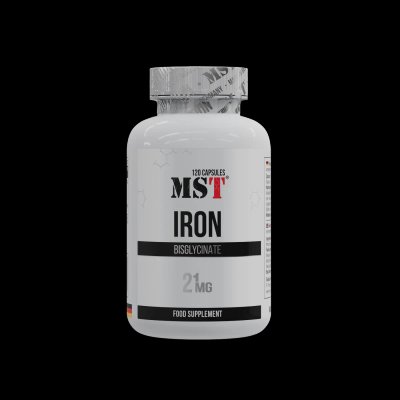 MST Iron bisglycinate€19.90 In stock 21mg 120caps. Browse the raud category for the current range.
FAQ
How do I know if I need an iron supplement?
The only reliable way is a blood test measuring ferritin (stored iron), serum iron, and full blood count. Symptoms such as fatigue, pallor, and cold hands can have many causes — do not self-diagnose iron deficiency.
What is the best form of iron supplement?
Iron bisglycinate (chelated iron) and ferrous fumarate are better tolerated than ferrous sulphate and have similar absorption rates. Products that combine iron with vitamin C (such as the ICONFIT Ferrum + Vitamin C) provide an absorption-enhancing nutrient in the same capsule.
Can endurance athletes take iron supplements?
Endurance athletes, particularly women, have elevated iron needs due to exercise-induced haemolysis and foot-strike haemolysis. However, supplementation should still be guided by blood test results and ideally supervised by a sports medicine professional.
References
Camaschella, C. (2015). Iron-deficiency anemia. New England Journal of Medicine, 372(19), 1832-1843. https://pubmed.ncbi.nlm.nih.gov/25946282/
Moretti, D., Goede, J. S., Zeder, C., Jiskra, M., Chatzinakou, V., Tjalsma, H., ... & Zimmermann, M. B. (2015). Oral iron supplements increase hepcidin and decrease iron absorption from daily or twice-daily doses in iron-depleted young women. Blood, 126(17), 1981-1989. https://pubmed.ncbi.nlm.nih.gov/26289639/



