Why Iron Matters More Than You Think
Iron is one of the most critical micronutrients the human body requires. It forms the core of haemoglobin and myoglobin — proteins responsible for carrying oxygen in the blood and muscles. Without adequate iron, the consequences are far-reaching: chronic fatigue, impaired concentration, reduced immune function, and diminished athletic performance (Haas & Brownlie, 2001).
At-risk groups are broader than most people realise. Menstruating women, pregnant individuals, vegetarians, vegans, and endurance athletes all face elevated iron demands. Studies estimate that up to 35% of women in Europe have suboptimal iron status (Camaschella, 2015).
The Problem With Traditional Iron Supplements
Walk into any pharmacy and the most common iron supplement is ferrous sulfate. It is cheap, but its track record is poor:
- Gastrointestinal distress — nausea, cramping, bloating are the leading reasons people stop taking it
- Constipation — a near-universal complaint at higher doses
- Metallic aftertaste — unpleasant and demotivating
- Relatively low bioavailability — competing dietary compounds significantly reduce absorption
What Makes Bisglycinate Different?
Iron bisglycinate is a chelated form of iron where a single iron atom is bonded to two glycine amino acid molecules. This molecular 'wrapper' protects the iron from binding to inhibitors in food (phytates, tannins, calcium) and allows it to pass through the intestinal wall intact rather than as a free ion.
Head-to-head comparisons are striking:
| Parameter | Ferrous Sulfate | Iron Bisglycinate |
|---|---|---|
| Bioavailability | ~10–15% | ~25–40% |
| GI side effects | Frequent | Rare |
| Can take on empty stomach | Rarely | Yes |
| Interaction with food | High | Low |
A study published in the American Journal of Clinical Nutrition showed iron bisglycinate can be absorbed up to 3.3 times more efficiently than ferrous sulfate (Bovell-Benjamin et al., 2000).
Who Needs Iron Bisglycinate?
Women of Reproductive Age
Monthly blood loss creates iron demands that diet alone often cannot meet, especially for those eating little red meat. RDA for menstruating women is 18 mg/day.
Endurance Athletes
Runners face haemolysis — the mechanical destruction of red blood cells with each footstrike — increasing iron turnover significantly. Even well-nourished runners frequently show low ferritin levels.
Vegetarians and Vegans
Plant-based non-haem iron is far less bioavailable than haem iron from animal products. Bisglycinate bridges this gap better than any other non-haem source.
Pregnant Women
Iron requirements jump from 18 mg to 27 mg daily during pregnancy. Given the common pregnancy-related nausea, the gentle profile of bisglycinate is particularly valuable.
Recommended Products
Available at maxfit.ee, 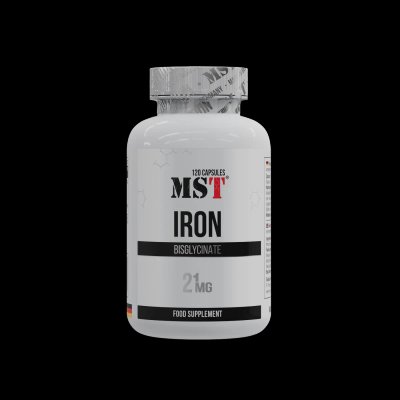 MST Iron Bisglycinate€19.90 In stock 21mg 120caps delivers 21 mg of elemental iron in ferrochel bisglycinate form — a clinically studied chelate with excellent tolerability. For those with confirmed deficiency requiring a higher dose, NOW Iron 36mg Ferrochel 90caps provides 36 mg elemental iron in the same well-tolerated form. Now Foods Iron 18mg 120caps is a gentle maintenance-dose option.
Iron Interactions to Know
Iron absorption is significantly enhanced by vitamin C — co-ingestion can double uptake (Hallberg et al., 1987). However, avoid taking iron at the same time as:
- Calcium supplements — share the same intestinal transporter
- Coffee, tea, wine — tannins and polyphenols bind iron
- Antacids — reduce gastric acidity needed for iron absorption
Best practice: take iron bisglycinate in the morning on an empty stomach or two hours away from meals and other supplements.
How to Monitor Your Status
Do not supplement with iron without a blood test first. Key markers:
- Ferritin: reflects stored iron; below 30 µg/L indicates depletion
- Haemoglobin: below 120 g/L (women) or 130 g/L (men) signals anaemia
- Transferrin saturation: below 20% suggests functional deficiency
Excess iron is oxidative and potentially toxic — supplementing without need is counterproductive.
FAQ
Can iron bisglycinate be taken on an empty stomach?
Yes — this is one of its key clinical advantages. The chelated structure greatly reduces mucosal irritation, making it well-tolerated without food, unlike ferrous sulfate which typically causes nausea when taken fasted.
Does iron bisglycinate cause black stools?
At moderate doses (up to 30 mg elemental iron), bisglycinate produces significantly less stool darkening than ferrous sulfate. Very high doses may still cause some discolouration.
How long before I notice improvement?
Ferritin normalisation typically takes 3–6 months of consistent supplementation. Fatigue symptoms often improve within 4–8 weeks as haemoglobin levels recover.
Choosing the Right Iron Bisglycinate Product
When selecting an iron bisglycinate supplement, check the label for elemental iron content — this is the amount of absorbable iron per dose, not the total weight of the compound. Ferrochel® is a registered chelate brand that guarantees high-quality binding and has the most clinical data behind it.
Practical tips for daily use: take iron first thing in the morning before coffee or tea. A small glass of vitamin-C-rich juice (100–150 ml of orange juice) taken simultaneously can increase absorption significantly. For those managing confirmed deficiency, splitting the daily dose — for example, 21 mg in the morning and a supplemental dose at lunch — provides more stable absorption than a single large dose.
Iron levels change slowly. A blood test every 3 months during active supplementation is the best way to confirm whether your chosen dose is working. Monitor ferritin as the primary indicator — haemoglobin changes lag behind ferritin improvements by several weeks.
References
- Haas, J. D., & Brownlie, T. (2001). Iron deficiency and reduced work capacity: a critical review of the research to determine a causal relationship. Journal of Nutrition, 131(2), 676S–690S.
- Bovell-Benjamin, A. C., Viteri, F. E., & Allen, L. H. (2000). Iron absorption from ferrous bisglycinate and ferric trisglycinate in whole maize is regulated by iron status. American Journal of Clinical Nutrition, 71(6), 1563–1569.
- Camaschella, C. (2015). Iron-deficiency anemia. New England Journal of Medicine, 372(19), 1832–1843.
- Hallberg, L., Brune, M., & Rossander, L. (1987). Iron absorption in man: ascorbic acid and dose-dependent inhibition by phytate. American Journal of Clinical Nutrition, 45(5), 988–996.
- Layrisse, M., García-Casal, M. N., Solano, L., et al. (2000). New property of vitamin C and A: formation of their union with non-heme iron. Journal of the American College of Nutrition, 19(1), 110–116.



